

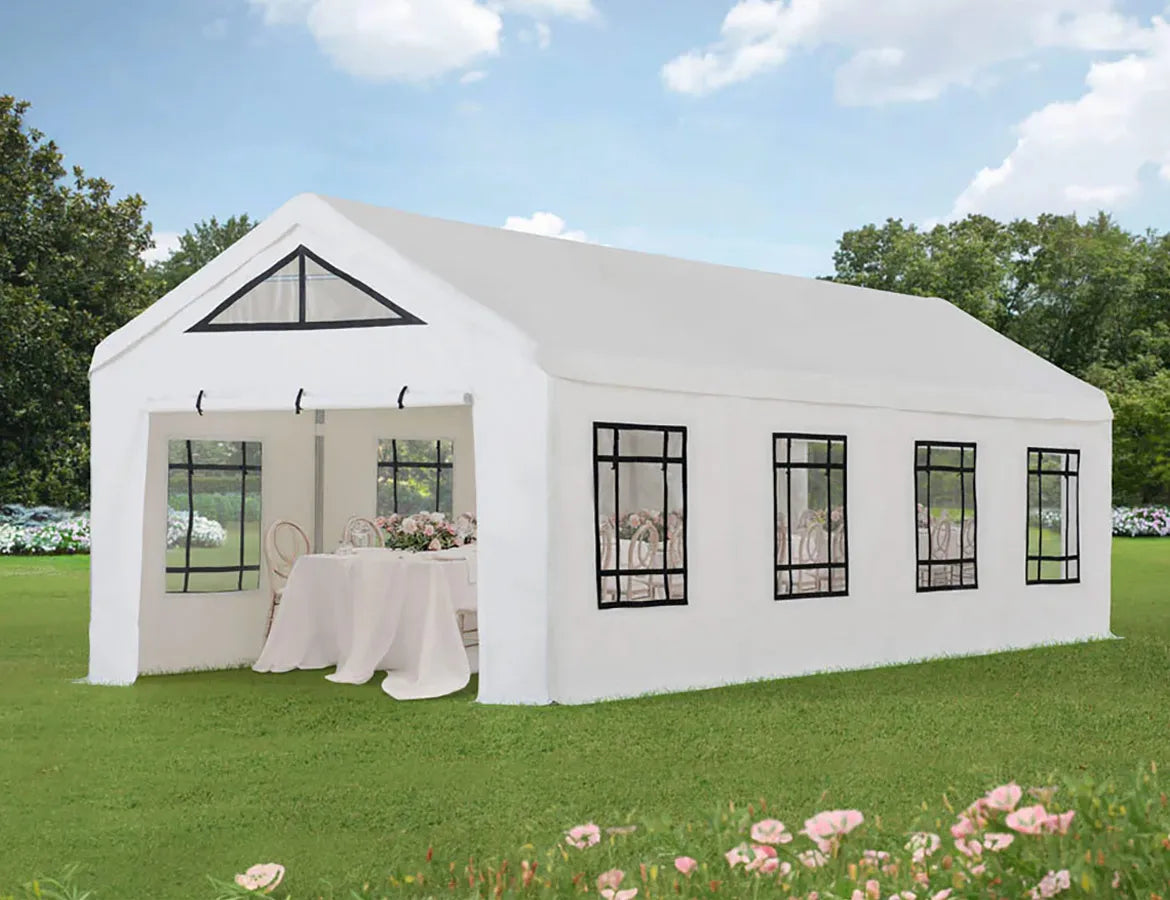
Fabric carports are everywhere.
They’re advertised as affordable, flexible, and easy to install. For homeowners who need quick coverage for a vehicle, boat, or outdoor equipment, fabric carports often seem like an obvious solution.
But that leads to a fair and increasingly common question:
Are fabric carports actually worth it—or are they just a temporary fix?
The honest answer is: it depends on how you plan to use them.
This guide breaks down what fabric carports do well, where they fall short, and how to decide whether they make sense for your home. Instead of focusing on marketing claims, we’ll look at real-world use, durability, weather performance, and long-term value—the factors that actually matter.
Clear Answer First: Are Fabric Carports Worth It?
Yes—fabric carports are worth it for specific, short- to mid-term needs.
No—they are not a replacement for permanent or heavy-duty structures.
Fabric carports work best when:
You need quick, affordable coverage
The structure is temporary or semi-temporary
You’re protecting vehicles from sun, light rain, and debris
Flexibility matters more than longevity
They are not ideal if you want a set-it-and-forget-it structure that lasts for decades.
What Exactly Is a Fabric Carport?
A fabric carport typically consists of:
A steel or metal frame
A fabric or polyethylene (PE) canopy
Anchoring systems for ground or concrete
Unlike permanent carports, fabric models are designed to be:
Lighter
Easier to assemble
Easier to relocate or remove
Brands like SUNJOY design fabric carports for homeowners who want practical protection without permanent installation, making them especially popular for renters or seasonal use.
Why Homeowners Choose Fabric Carports
Fabric carports remain popular for good reasons.
1. Lower Upfront Cost
Fabric carports cost significantly less than metal-roof or permanent structures. For many homeowners, this alone makes them attractive—especially when coverage is needed quickly.
2. Fast Installation
Most fabric carports can be assembled in a few hours using basic tools. There’s no need for pouring concrete or hiring contractors.
3. Flexible Use
Fabric carports can be:
Used seasonally
Moved if needed
Repurposed for storage, boats, or equipment
This flexibility is a major advantage for homeowners with changing needs.
Where Fabric Carports Fall Short
Understanding limitations is just as important as knowing benefits.
1. Limited Lifespan
Fabric canopies wear out faster than metal roofing. UV exposure, wind friction, and temperature changes all reduce fabric life over time.
In real-world conditions, many fabric covers last several years, not decades.
2. Lower Weather Resistance
Fabric carports provide protection from:
Sun
Light rain
Falling leaves or debris
They are not designed for extreme wind, heavy snow loads, or prolonged storms. Proper anchoring helps, but physics still applies.
3. More Maintenance
Fabric structures require:
Periodic tightening
Cleaning
Inspection for tears or wear
They’re not maintenance-free, especially if used year-round.
Fabric Carports vs Metal Carports: A Quick Comparison
|
Feature |
Fabric Carport |
|
|
Cost |
Lower |
Higher |
|
Installation |
Quick, DIY |
More involved |
|
Durability |
Moderate |
High |
|
Weather Resistance |
Light to moderate |
Strong |
|
Portability |
High |
Low |
|
Long-Term Value |
Short to mid-term |
Long-term |
This comparison highlights why fabric carports are best viewed as practical solutions, not permanent investments.
When a Fabric Carport Makes Sense
Fabric carports are worth it if you:
Need immediate coverage
Want a budget-friendly solution
Plan to move or reconfigure later
Live in areas with mild to moderate weather
Use the carport seasonally
In these cases, fabric carports deliver excellent value for the price.
When You Should Consider a More Permanent Option
A fabric carport may not be the right choice if:
You want long-term, low-maintenance coverage
Your area experiences heavy snow or strong winds
You prefer a fixed structure that blends into your property
You don’t want to replace the canopy over time
Understanding this distinction prevents disappointment later.
How SUNJOY Fabric Carports Are Designed for Practical Use
SUNJOY fabric carports are built around balanced expectations.
They focus on:
Stable steel frames
Taut, weather-resistant fabric
Practical anchoring options
Clear assembly instructions
Rather than promising permanence, they’re designed to provide reliable everyday protection for homeowners who value flexibility.
Real-World Use Cases That Prove Their Value
Fabric carports are commonly used for:
Temporary vehicle protection
Seasonal storage
Boat or trailer coverage
Overflow parking
Workshop or utility shelter
In these scenarios, fabric carports often outperform expectations—because they’re used exactly as intended.
Common Mistakes Buyers Make
Avoid these pitfalls:
Expecting fabric to perform like steel
Skipping proper anchoring
Leaving snow buildup on the canopy
Ignoring maintenance checks
Using a fabric carport correctly extends its life and improves safety.
Structured FAQ
Are fabric carports durable?
They are durable for short- to mid-term use when properly anchored and maintained.
Do fabric carports protect from rain and sun?
Yes. They offer effective protection from sun, light rain, and debris.
Can fabric carports handle snow?
They are not designed for heavy snow loads and should be cleared regularly.
Are fabric carports permanent structures?
No. They are considered temporary or semi-temporary solutions.
Are fabric carports worth the money?
Yes, when used for the right purpose and expectations are realistic.
Final Verdict: Are Fabric Carports Worth It?
Fabric carports are worth it when flexibility, affordability, and ease of use matter more than permanence.
They’re not meant to replace permanent structures—but they don’t need to. For many homeowners, fabric carports solve real problems efficiently and affordably.
When chosen with realistic expectations, they deliver exactly what they promise: practical protection without long-term commitment.
Leave a comment
All comments are moderated before being published.
This site is protected by hCaptcha and the hCaptcha Privacy Policy and Terms of Service apply.