

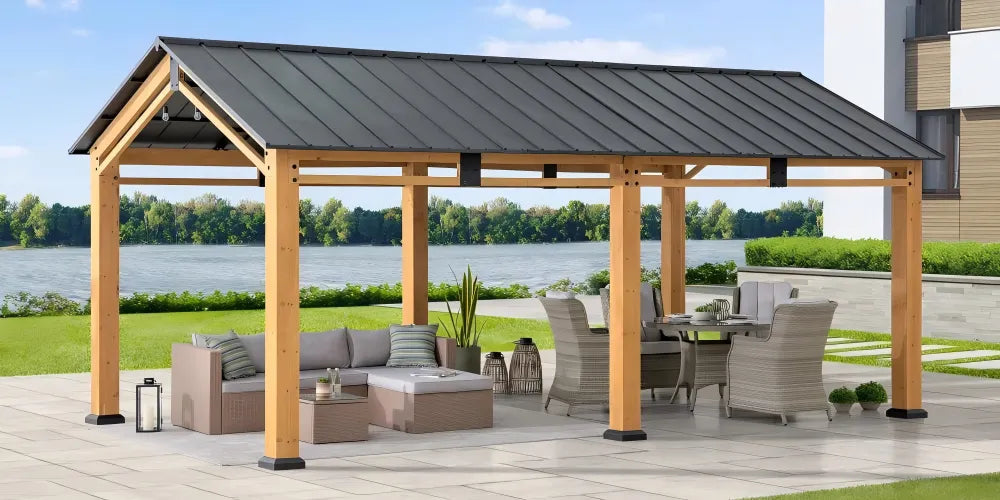
How to protect a vehicle from the sun, hail, and snow? The question can be a headache for many homeowners. It does not always require a full garage, a carport does the job for a fraction of the cost. However, once homeowners decide to build a carport, a bigger question comes up. Should you build it yourself or buy a prefab kit? Both paths can get you a solid structure, but the right choice depends on budget, time, and construction experience.
What Does It Actually Take to DIY a Carport?
Time and Skill Required
Building a carport from scratch requires more than basic carpentry. You'll need accurate measuring and framing skills, an understanding of local wind and snow load requirements, and the ability to safely use power tools, ladders, and personal protective equipment. Depending on the project's size and your experience, construction may take several days or multiple weekends to complete.
Professional Installation
According to Angi, professional installation is recommended for large or permanent metal carports because proper assembly, secure anchoring, and compliance with local building codes are essential. DIY installation may also require lifting heavy panels and specialized equipment.
Hidden Costs of Going Solo
Alan's Factory Outlet notes that prefabricated carport kits are manufactured with pre-cut components designed to simplify installation and reduce on-site fabrication. By comparison, building entirely from raw materials may result in additional material waste, purchasing errors, and longer construction times.
For example, measuring errors, incorrect cuts, misplaced drilling, or incompatible hardware can all force DIY builders to purchase replacement materials and spend extra time on rework.
What Does It Actually Take to Install a Prefab Carport Kit?
Preparation Before Installation
Before installation, you'll need to choose a suitable location, verify local zoning or permit requirements, and prepare a stable foundation. Most manufacturers also specify minimum clearance requirements and anchoring methods based on local wind and snow loads, so reviewing the installation guidelines in advance is important.
Materials and Design Options
Prefab carport kits are available in a wide range of materials and designs to suit different climates, architectural styles, and functional needs. Many manufacturers also offer multiple roof styles, sizes, colors, and optional accessories. These options allow buyers to choose a configuration that fits both their property and intended use without designing the structure from scratch.
Installation and Support
Unlike a fully custom build, prefab carport kits are manufactured with pre-engineered, pre-cut components that are designed to fit together according to detailed instructions. Most kits include the necessary hardware for assembly, while many suppliers also provide technical documentation, customer support, or installation services.
DIY vs. Prefab Carport Kit Comparison
|
Comparision |
DIY Carport Build |
Prefab Carport Kit |
|
Typical Cost |
Under $1,000 for a basic DIY project; $4,000–$12,000+ for larger permanent builds |
Typically $2,000–$7,000 installed |
|
Installation Time |
Several weekends or longer |
Usually 1–2 days with professional installation |
|
Skill Level |
High (measuring, cutting, framing, roofing) |
Low to moderate |
|
Material Waste |
Higher due to measuring errors, cutting mistakes, and extra material purchases |
Minimal, thanks to pre-cut and pre-engineered components |
|
Design Options |
Fully customizable but requires more planning and fabrication |
Wide range of sizes, roof styles, colors, and optional upgrades |
|
Tools Required |
Multiple construction tools and equipment |
Basic assembly tools (or handled by installers) |
|
Permit Requirements |
May require permits depending on local codes |
Permit requirements vary by location and installation type |
DIY Cost Breakdown
According to Fixr, professionally built custom carports generally cost $4,000–$12,000, although larger or more complex projects can exceed that range. On the opposite end, a small DIY wood flat-roof carport may cost under $1,000 when using basic materials and a simple design, but most permanent residential builds cost considerably more.
Prefab Kit Cost Breakdown
Prefab carports generally range from $2,000 to $7,000 installed, according to Fixr. HomeAdvisor places the broader average around $3,142 to $9,679, with polycarbonate kits on the affordable end and custom metal on the expensive end.
For most homeowners, a prefab kit ends up costing less overall once labor, tools, and wasted materials are considered.
Permits and Local Codes
Some jurisdictions exempt certain small or temporary carports from permitting, while others require permits regardless of size or construction method. Larger or permanently anchored carports typically require a building permit, which often costs $75 to $800, depending on local regulations and project scope.
Your local building department can confirm setback requirements, wind and snow load standards, and whether a permit is required for your specific project. Skipping the permit process can result in fines, stop-work orders, delays during property sales, or even removal of a non-compliant structure.
Should You Build a DIY Carport or Choose a Prefab Carport Kit?
The right choice depends on your budget, experience, timeline, and project goals. While both approaches can provide reliable vehicle protection, they differ significantly in the amount of planning, labor, and technical knowledge required.
|
If You... |
Best Fit |
|
Have carpentry or metalworking experience |
DIY |
|
Want a fully custom size or design |
DIY |
|
Want a faster, more predictable timeline |
Prefab Kit |
|
Prefer fixed pricing with fewer surprises |
Prefab Kit |
A DIY carport may be a good option if you already have construction experience, own the necessary tools, and want complete control over the design. Building from raw materials also allows for fully custom dimensions and layouts, although it typically requires more time for planning, sourcing materials, and on-site fabrication.
A prefab carport kit is often a practical choice for homeowners who want a faster and more predictable installation process. Because the structural components are pre-engineered and manufactured in advance, assembly is generally more straightforward than building entirely from scratch. Many manufacturers also offer multiple sizes, roof styles, colors, and optional accessories, making it possible to balance customization with installation efficiency.
Is There a Middle Ground Between DIY and Prefab?
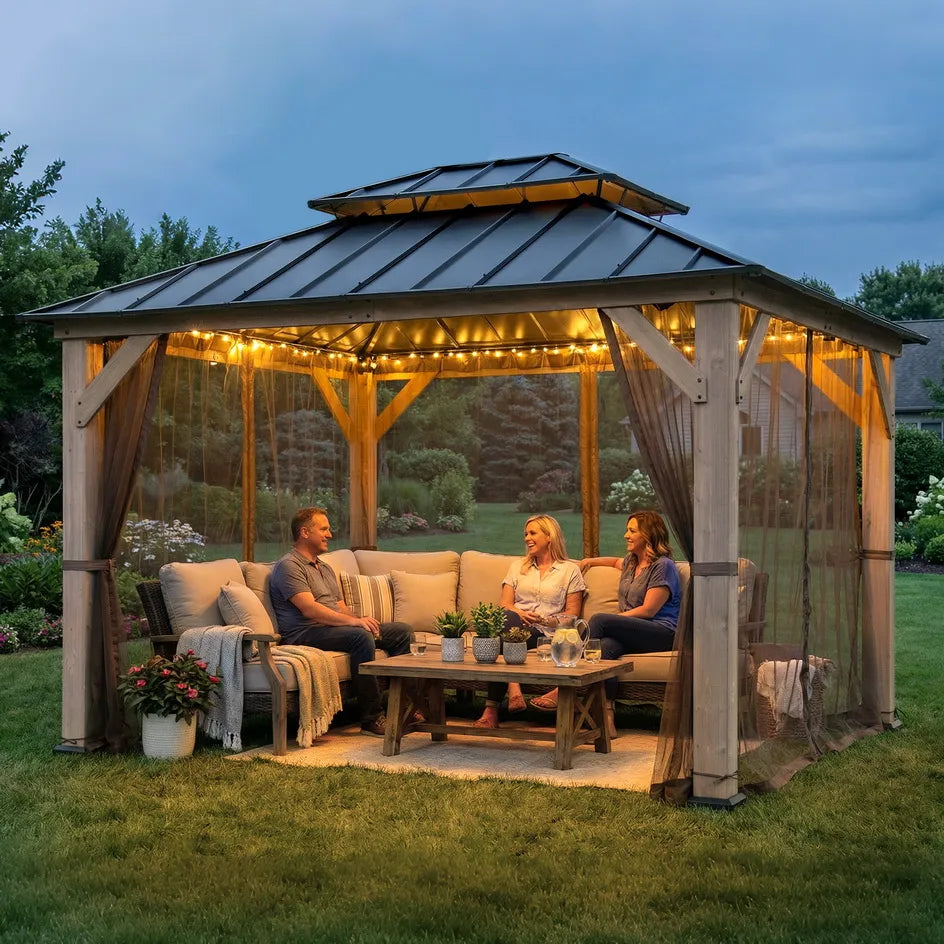
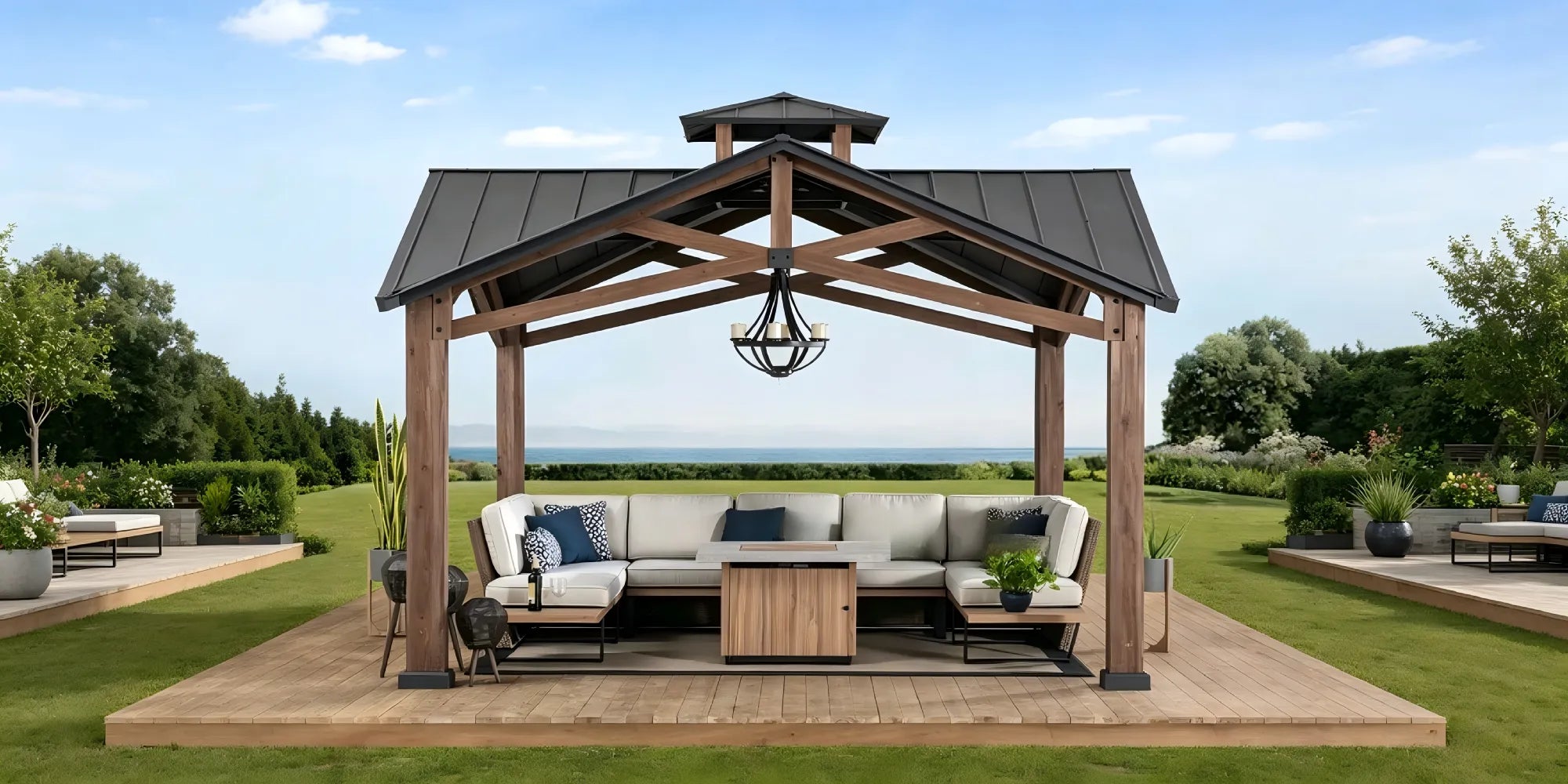
For homeowners who want a prefab kit with a more refined look, our Timberland Premium Wood Carport combines a cedar wood frame with a powder-coated steel roof. It works as covered parking during the week and can easily become a shaded space for outdoor dining or family gatherings on weekends.
Final Thoughts
Whether you build from scratch or choose a prefab kit, the best solution depends on your specific needs rather than a one-size-fits-all answer. If customization and hands-on construction are your priorities, a DIY build may be worth the extra effort.
If you prefer a balance of durability, design flexibility, and installation convenience, a prefab carport kit can offer a practical alternative with less on-site fabrication and planning. At SUNJOY, we provide customizable prefab carport kits engineered for long-term durability, with multiple material, size, and roof-style options to help homeowners and businesses find a solution that fits their specific requirements.
Leave a comment
All comments are moderated before being published.
This site is protected by hCaptcha and the hCaptcha Privacy Policy and Terms of Service apply.