

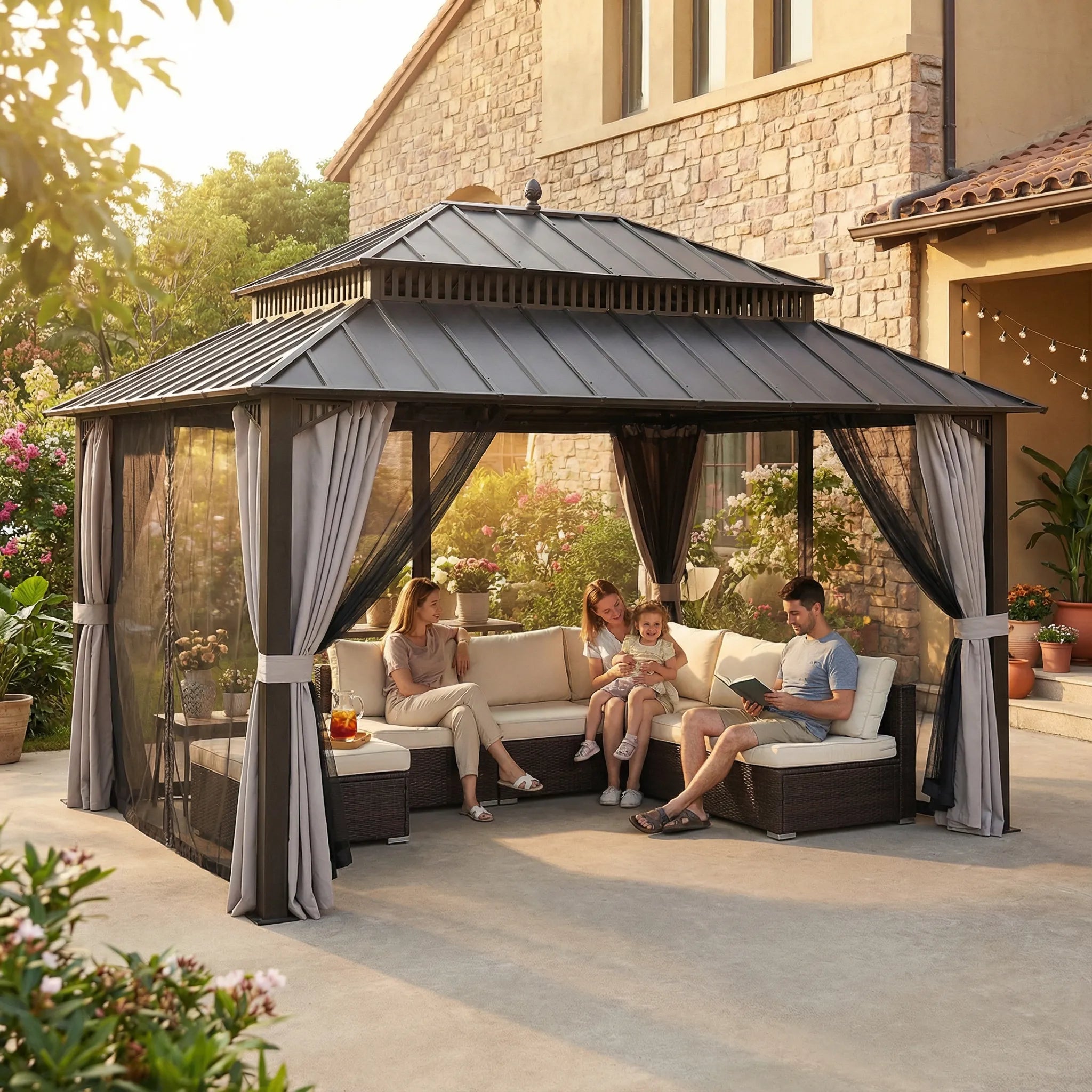
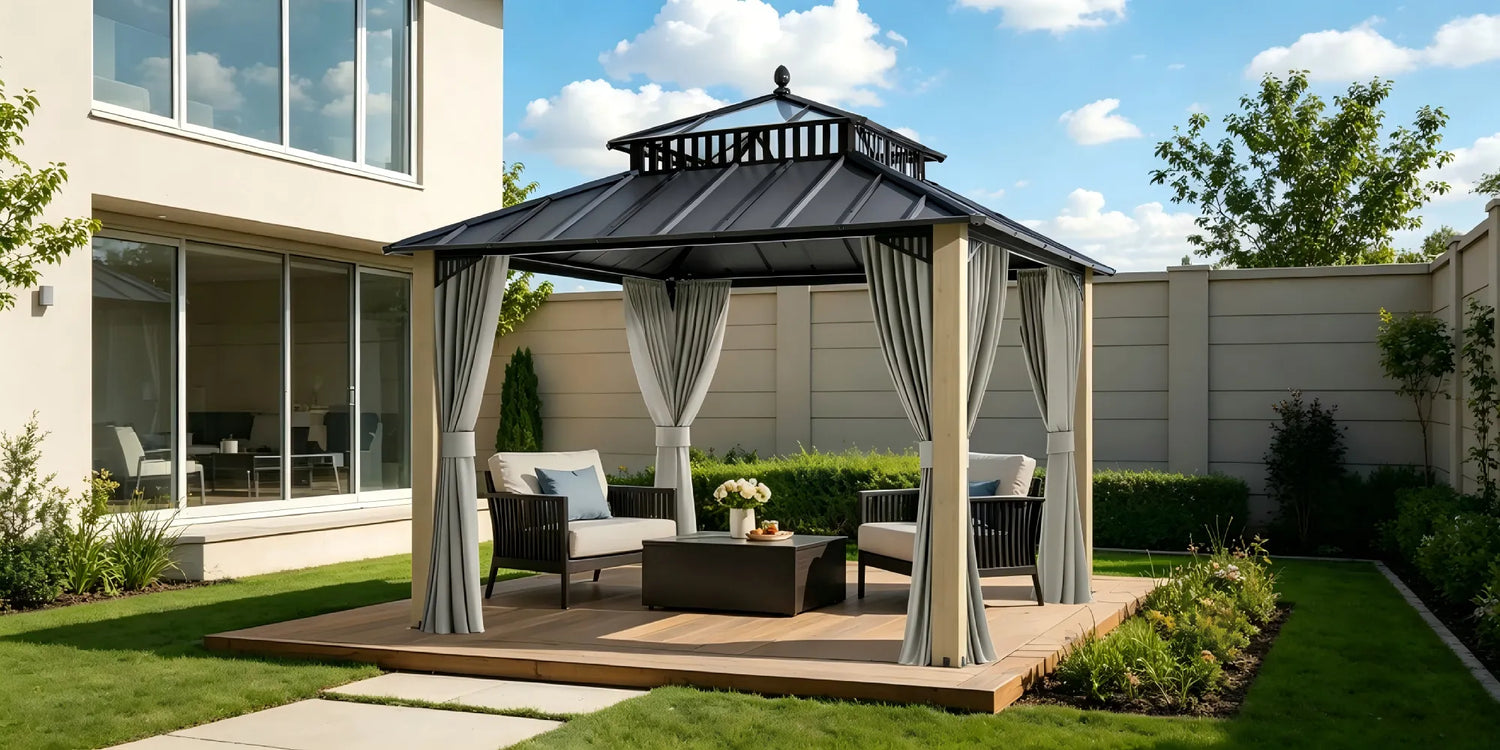
Imagine this: you have spent weeks planning a family backyard barbecue. The grill is heated up, the kids are running around, and suddenly, dark clouds roll in. You rush to shelter the food and your family under your outdoor gazebo, but you discover that water is dripping right through the roof seams onto your table. A leaky gazebo can turn a relaxing afternoon into a mess.
Learning how to waterproof a gazebo is one of the most practical skills a homeowner can master. Whether you are dealing with an aging structure or just installed a new one, proper gazebo waterproofing ensures your backyard retreat stands up to heavy rain, snow, and harsh sun.
Why Should You Waterproof a Gazebo?
Even if your gazebo survived its first few rainstorms, that does not mean it is truly waterproof. Over time, weather takes a heavy toll on outdoor structures. A proactive approach to waterproofing is much better than waiting for a problem to appear.
Common Causes of Leaks
To fix a problem, you first have to understand where it starts. Most leaks do not happen because the entire roof fails. Instead, they start at the joints and seams. When a hardtop gazebo is assembled, screws and bolts create tiny holes in the panels. If these fasteners are not properly sealed, water will find its way through.
Another common culprit is the roof pitch. If the slope is too shallow, water will pool instead of running off the edge. For fabric canopies, UV rays slowly degrade the material over time, causing the stitching to loosen and the fabric to lose its water-resistant coating. Finally, poor ground drainage can cause water to pool around the base, which can eventually lead to wood rot at the bottom of the posts.
Benefits of Waterproofing
Waterproofing your gazebo is about more than just staying dry. When water penetrates the roof, it can warp wood frames, rust metal joints, and cause mold to grow on fabric surfaces. By maintaining a waterproof gazebo roof, you extend the lifespan of the entire structure.
Proper waterproofing also protects your family’s comfort and your outdoor furniture. Nobody wants to sit on damp cushions or worry about water dripping onto electrical outlets. A well-sealed gazebo acts as a reliable, four-season room where your family can seek shelter, enjoy meals, and stay protected from sudden summer storms
How to Waterproof a Gazebo Step by Step
Waterproofing a gazebo is a straightforward weekend project, but it requires patience and the right technique. Follow these steps to understand a leak-free structure.
Clean and Inspect
Before you can apply any sealant, the gazebo should be clean. Dirt, mildew, and debris will prevent sealants from bonding to the surface. Use a soft-bristle broom to sweep off the roof and frame, then wash it down with a hose and mild soapy water.
Once the gazebo is dry, perform a careful inspection. Look for cracked caulk around the edges, rusty screws, or tears in the fabric. If you are checking a wood structure, look for signs of soft, rotting wood.
Seal Roof Seams and Fasteners
Every screw hole and panel overlap is a potential entry point for water. You need to create a watertight barrier at these vulnerable spots. A proper way to do this is to apply an outdoor-grade silicone caulk along the seams of the roof panels.
If you are assembling a new gazebo, apply the sealant as you build, laying a bead of caulk under each panel before screwing it down. For existing structures, check every screw. If a screw is rusty or loose, replace it with a stainless steel one and apply a small dab of sealant over the head.
Protect Wood or Metal Surfaces
The materials that make up your gazebo need their own protective layers. Cedar and pressure-treated wood naturally resist insects and rot, but they still absorb moisture. If water seeps into the wood grain, freezing winter temperatures can cause the wood to crack.
To protect the frame, apply a high-quality outdoor wood sealant or oil. For metal frames, check for any scratches in the powder coating. Exposed metal will quickly rust. Lightly sand any rusty spots and touch them up with rust-preventative paint to keep the structure solid and leak-free.
Improve Drainage
A waterproof gazebo roof is useless if the water has nowhere to go. If water pools on the roof or floods the base, leaks are inevitable. Check the slope of your roof. It should have a noticeable angle to encourage water runoff.
Next, look at the ground around the gazebo. The soil should slope away from the posts so that rainwater drains into the yard, not toward your foundation. You can also install gutters or rain chains on the corners of a hardtop gazebo to direct water safely away from the seating area.
Perform Regular Maintenance
Gazebo waterproofing is not a one-time job. The sun, rain, and temperature changes will slowly break down your sealants over time. Make it a habit to inspect the roof seams every spring and fall.
Reapply fabric waterproofing sprays annually before the rainy season. Every two to four years, check the wood surfaces. If water stops beading on the surface and starts soaking into the wood, it is time to reapply a fresh coat of sealant.
What Is a Proper Waterproof Sealant for a Gazebo?
Choosing the right sealant depends on what your gazebo is made of. Using the wrong product can cause damage or fail to stop the leak. For example, standard indoor caulk will dry out and crack under the harsh outdoor sun. You need flexible, weather-resistant products designed for exterior use.
Here is a quick comparison to help you choose a proper sealant for your gazebo materials:
|
Gazebo Material |
Best Sealant Type |
Key Benefits |
Application Tip |
|
Polycarbonate / Metal Roof |
Neutral-Cure Silicone Caulk |
Highly flexible, UV resistant, waterproof |
Apply on a dry day; smooth with a wet finger for a clean finish. |
|
Cedar / Wood Frame |
Penetrating Wood Oil / Stain |
Protects against rot, repels water, highlights grain |
Apply generously with a brush; wipe off excess after 15 minutes. |
|
Fabric Canopy |
Silicone-Based Water Repellent Spray |
Restores waterproofing, breathable, prevents mold |
Spray evenly until saturated; let dry completely before folding. |
|
Screw Heads / Fasteners |
Silicone Caulk Dab |
Seals fastener holes, prevents rust |
Apply a small dab directly over the head of each screw. |
Choose a Gazebo Designed for Long-Term Weather Protection
If you are tired of patching leaks or are in the market for a new outdoor structure, a good way to create a dry backyard is to start with a gazebo engineered for harsh weather. Rather than buying a flimsy kit that requires constant DIY fixes, investing in a purpose-built structure saves you time and frustration down the road.
This is where SUNJOY comes in. We have founded in 2001 and sold over 10 million gazebos across North America, building a reputation on heavy-gauge frames and weather-resistant materials.
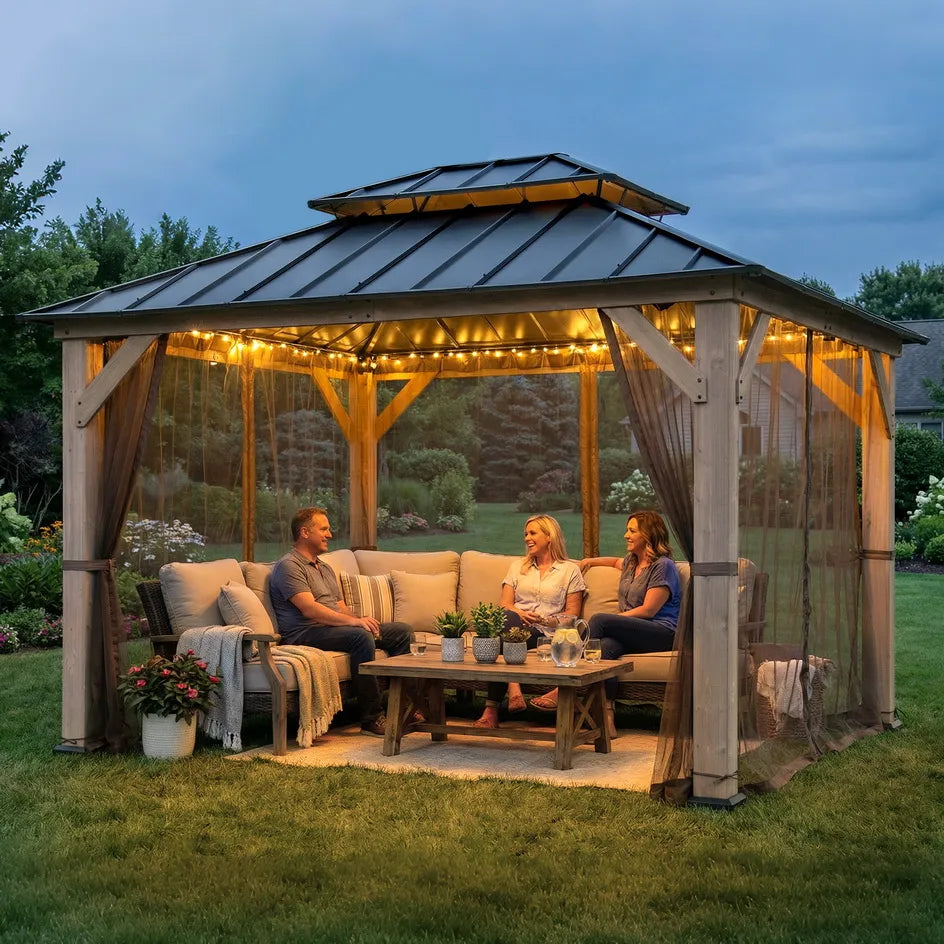
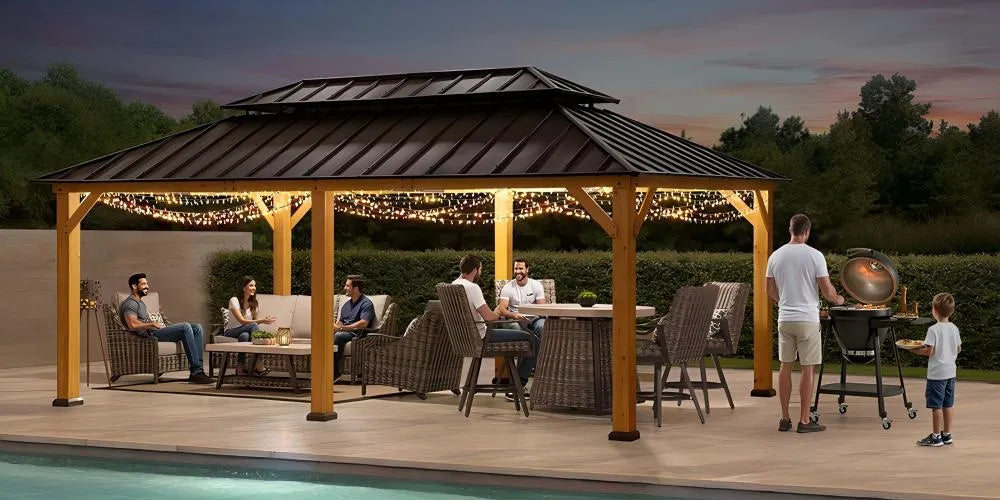
An example of this engineering is our Kingston Horizon PC-Vent Cedar Gazebo. Instead of relying on thin fabric or leak-prone joints, this gazebo features a heavy-duty galvanized steel roof combined with a translucent polycarbonate (PC) vent. The roof is designed with a 27-degree pitch, which forces rainwater to quickly run off the edges rather than pooling on top.
Furthermore, we understands that leaks happen at the hardware. To combat this, this gazebo uses stainless steel screws in all roof eave and exterior-facing areas to prevent corrosion. The solid cedar posts naturally resist decay and insects, while the rust-proof aluminum frame provides a rigid skeleton.
With a massive 2,500 lbs snow load capacity and a 50 MPH wind rating, this structure is built to handle severe weather from the ground up, significantly reducing your future waterproofing workload.
Upgrade Your Outdoor Space with a Weather-Resistant Gazebo
Keeping your family dry during an outdoor gathering does not have to be a gamble. By understanding how to waterproof a gazebo, you can seal roof seams, treat wood frames, and improve drainage to create a leak-proof sanctuary. Remember to use the right sealant for your specific materials and avoid common mistakes like sealing wet surfaces.
If you are ready to upgrade your backyard and skip the endless cycle of patching and resealing, starting with a high-quality structure is the best step you can take. To find a gazebo that is engineered to withstand the elements from day one, explore the durable, weather-resistant designs available from SUNJOY, we're here to help!
Leave a comment
All comments are moderated before being published.
This site is protected by hCaptcha and the hCaptcha Privacy Policy and Terms of Service apply.