

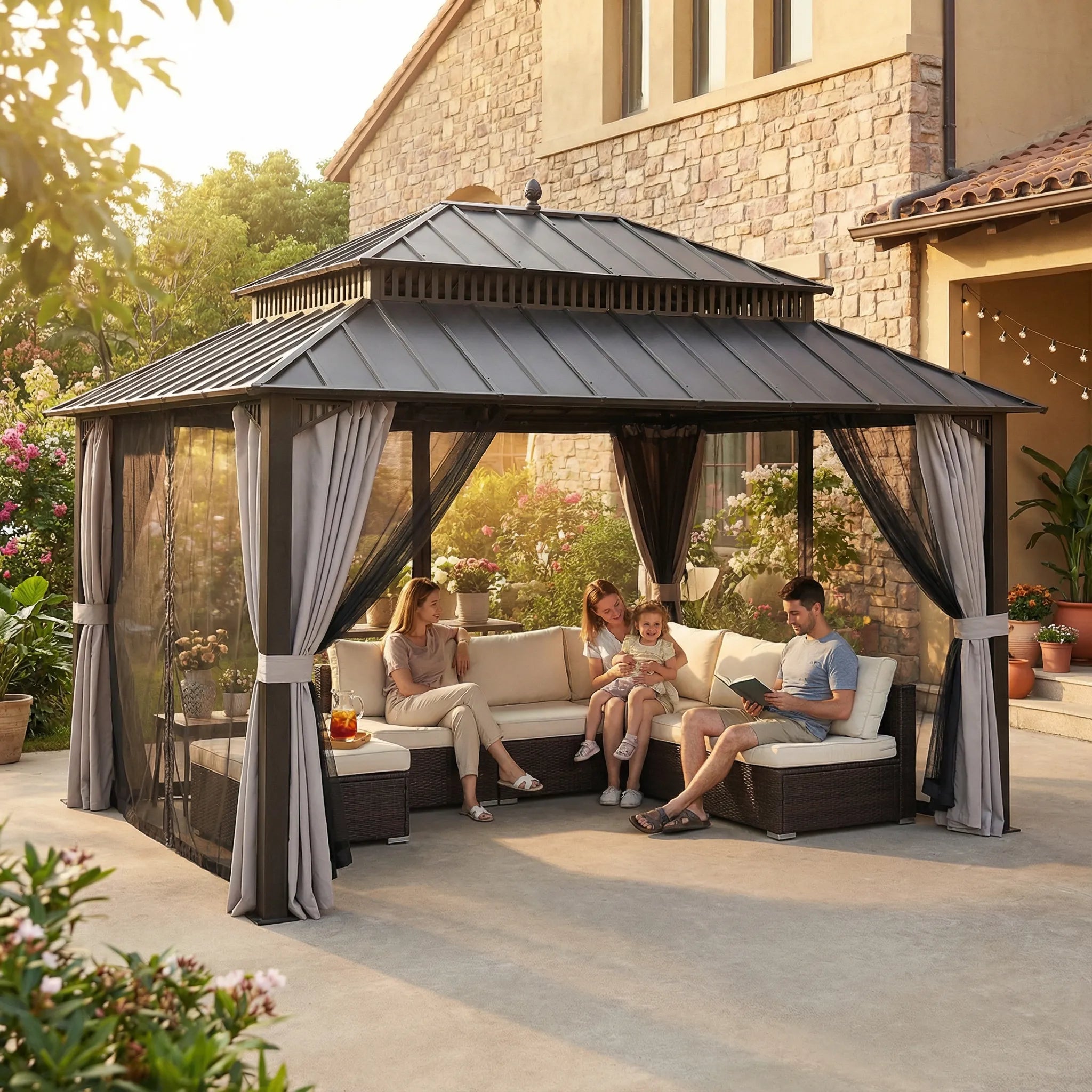
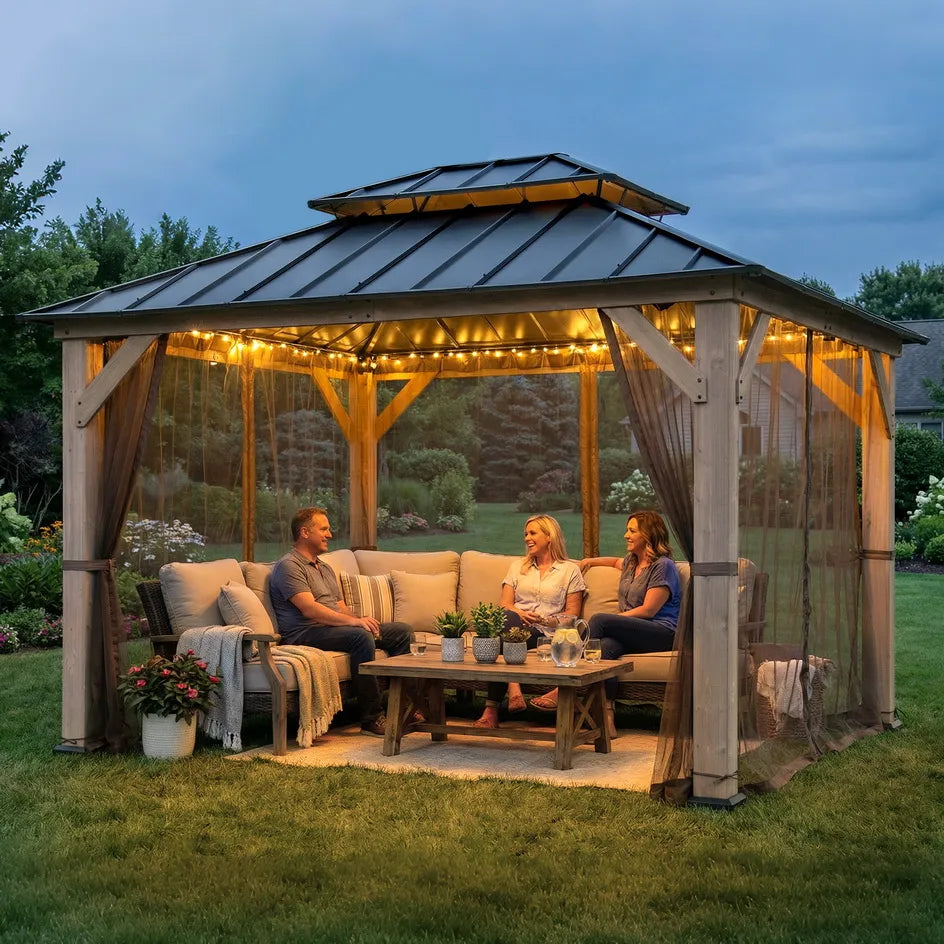
Hardtop gazebos have become a popular choice for homeowners who want to improve their outdoor living space. When comparing a hard-roof gazebo with softer fabric structures, the decision often comes down to durability, maintenance, and long-term value. Brands like SUNJOY offer a wide range of hardtop gazebos designed for year-round use, making them a common reference point for buyers considering an upgrade.
What Makes Hardtop Gazebos Different
A hardtop gazebo uses solid roofing materials such as galvanized steel or polycarbonate panels instead of fabric. This structural difference directly affects performance. Unlike seasonal shade structures, a hardtop gazebo is designed to stay installed for long periods and handle changing weather conditions.
A hard-roof gazebo typically provides better resistance to sun exposure, rain, and wind compared to soft-top alternatives. This makes it suitable for homeowners who want a more stable and permanent backyard structure rather than something that needs frequent seasonal removal or replacement.
Durability and Long Term Value
One of the strongest arguments in favor of hardtop gazebos is lifespan. Industry comparisons show that fabric-based gazebos often last only a few years before requiring replacement, especially in areas with strong sun or heavy rain exposure. In contrast, hardtop models can last significantly longer with basic maintenance such as occasional cleaning and hardware checks.
This durability affects total cost over time. While the upfront investment for a hardtop structure is higher, it reduces the need for repeated replacements. Over several years, this difference can make hardtop gazebos more cost-efficient for long-term homeowners.
Weather Performance and Everyday Use
Weather resistance is another key factor when evaluating whether a hard-roof gazebo is worth it. Hardtop designs are generally better at handling rain runoff and providing stable shade in strong sunlight. Many models are also built to withstand wind and light snow loads depending on the frame design.
This makes them more practical for year-round outdoor use. Homeowners can keep furniture underneath, install lighting, or create a dining or lounge area without needing to take the structure down seasonally.
Maintenance Requirements and Lifestyle Fit
Maintenance for hardtop gazebos is relatively simple. Most care involves cleaning roof panels, checking bolts, and clearing debris. Compared with fabric roofs that may need washing, drying, or replacement, the maintenance workload is significantly lower.
However, hardtop gazebos are less flexible in terms of mobility. Once installed, they are intended to remain in place. This makes them better suited for homeowners who view their backyard as a long-term living space extension.
SUNJOY Hardtop Gazebos as an Example
We at SUNJOY offer a variety of hard-roof gazebo designs that focus on combining structural stability with outdoor comfort. Their models typically include metal frames and durable roof systems designed for long-term backyard installation. This reflects the broader market trend where hardtop structures are positioned as semi-permanent outdoor living solutions rather than temporary shade products.
Conclusion
So, are hardtop gazebos worth it? For most homeowners planning to invest in a long-term outdoor setup, the answer is yes. While the initial cost is higher, the benefits in durability, weather resistance, and reduced maintenance make them a practical option over time. A hard-roof gazebo from SUNJOY is especially suitable for those who want a stable and usable outdoor space across multiple seasons, rather than a temporary seasonal structure.
Leave a comment
This site is protected by hCaptcha and the hCaptcha Privacy Policy and Terms of Service apply.