

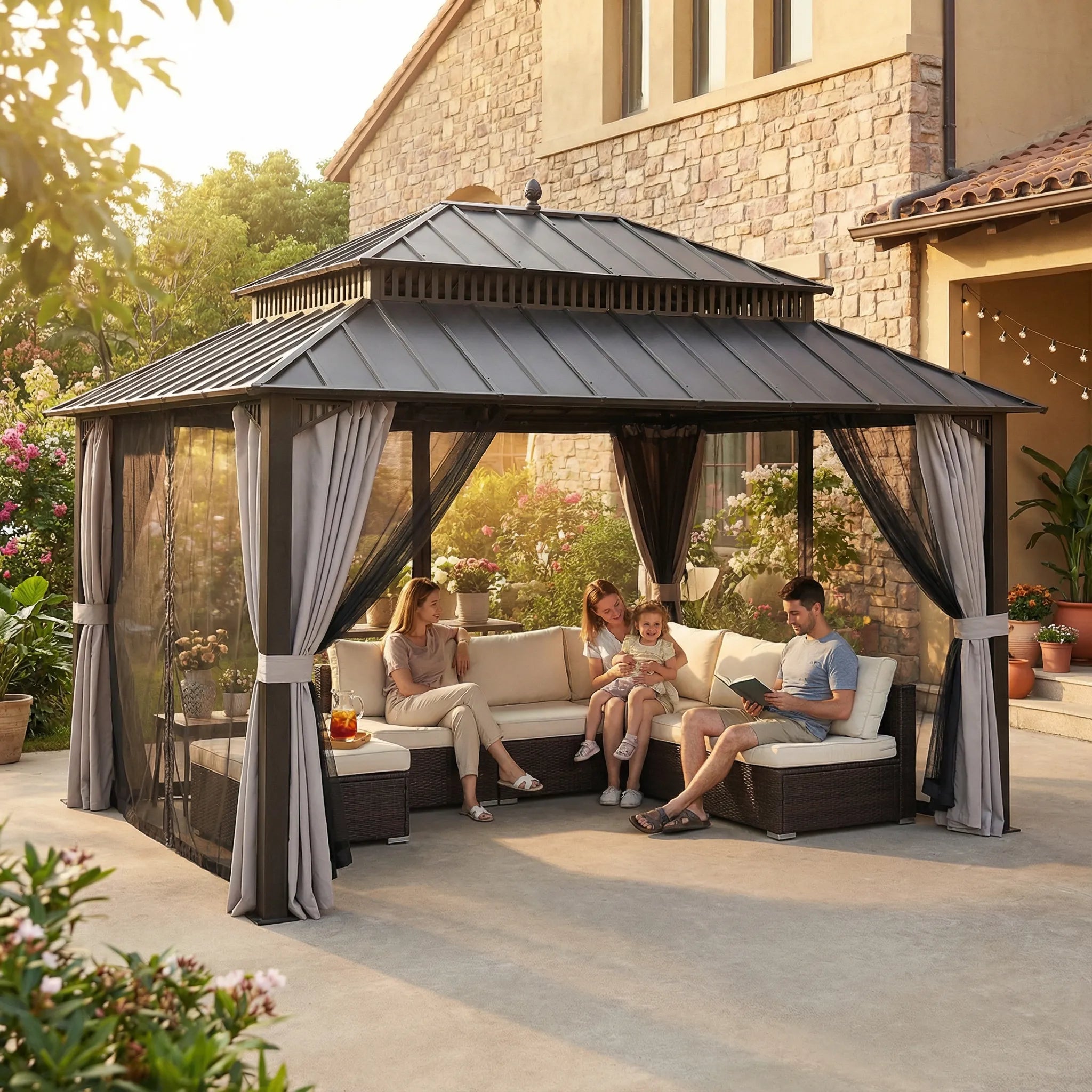
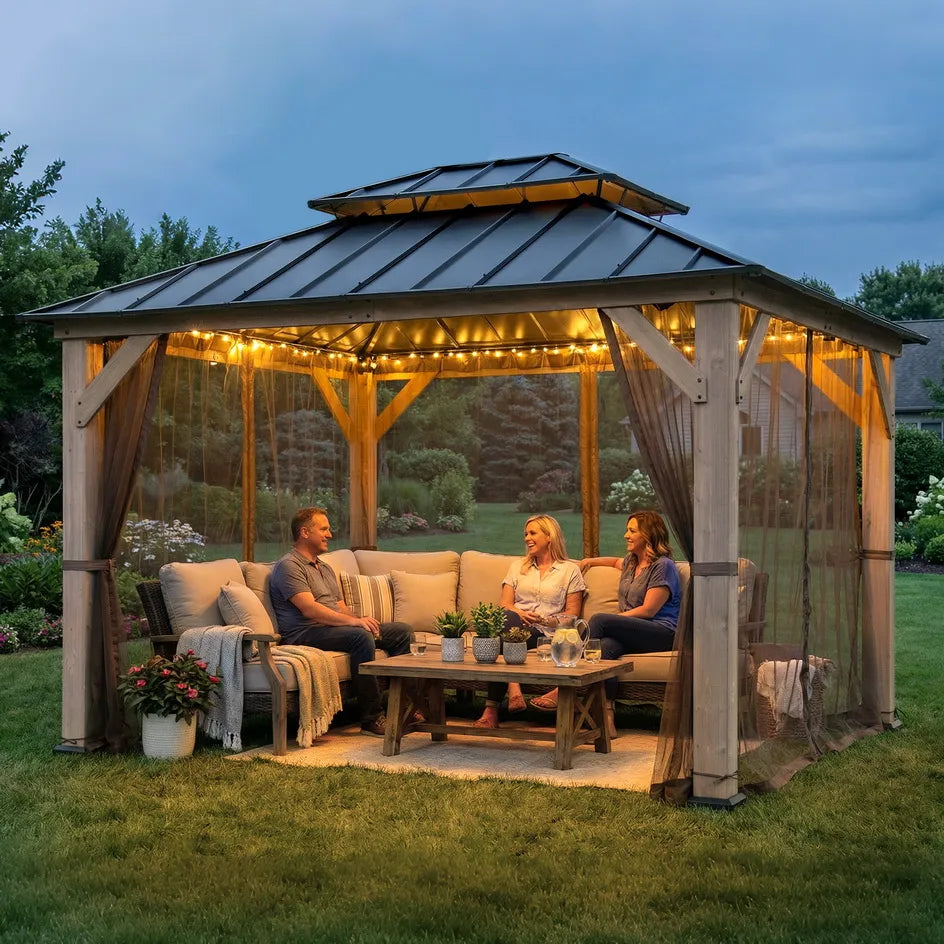
A climbing plant can turn an ordinary outdoor structure into a greener and more inviting retreat, but not every vine is suitable for every framework. At SUNJOY, we see a patio Pergola as part of a complete outdoor living space, so choosing plants should involve more than appearance. Before training a heavy climber onto a small Pergola, we need to consider plant weight, growth habits, structural strength, anchoring, maintenance, and the design of the canopy.
Understand How Heavy Climbing Plants Affect a Small Pergola
The short answer is that we should be cautious. Some climbing plants can become surprisingly heavy as their stems mature and their foliage spreads. Rain can add further weight, while dense growth can also catch the wind. The Royal Horticultural Society notes that pergolas may need to support considerable foliage weight and withstand wind buffeting, so the structure should be appropriate for the expected plant growth.
A small Pergola may be suitable for climbing plants, but we should not assume every structure can support mature, woody, vigorous vines. The eventual size and spread of the plant matter just as much as its size when purchased. RHS guidance recommends checking a climber's eventual height and spread because some species can grow vigorously in both directions.
Start by Identifying the Plant's Growth Habit
Different climbers interact with a patio Pergola in different ways. Twining plants wrap around supports, tendril climbers grasp narrow structures, scrambling plants often need to be tied in, and self-clinging plants use aerial roots or adhesive pads. Understanding the growth habit helps us decide whether additional support is necessary.
Light or moderately vigorous climbers may be easier to manage on a small Pergola. Heavier woody plants, however, require closer attention. Wisteria, mature climbing roses, vigorous grapevines, and other strongly growing plants can eventually develop substantial stems and dense foliage. We should research the mature plant rather than making a decision based only on its appearance during its first growing season.
Check the Pergola Frame Before Adding Heavy Growth
The frame should always be evaluated before planting. We should consider the material, post dimensions, braces, beam connections, anchoring method, and the manufacturer's intended use. A strong-looking patio Pergola is not automatically designed for every additional load created by a mature plant.
Our Palladio Wood-Grain Metal Pergola with Adjustable Canopy, 12x14 uses a powder-coated steel structure with a heat-transfer wood-grain finish. The steel frame provides a metal structure with a heat-transfer wood-grain finish.
This model also features 4.7 x 4.7-inch steel posts and eight reinforcing braces as part of its structural design. Covered anchoring plates provide a more finished appearance at ground level. These structural details describe the pergola's frame, but they should not be interpreted as approval for attaching heavy vegetation to the adjustable canopy.
Keep Heavy Plants Away from an Adjustable Canopy
This is especially important for a Pergola with a movable roof system. A climbing plant may be trained along suitable fixed parts of the frame, but we should avoid allowing heavy stems, dense foliage, or tendrils to interfere with moving canopy components.
The Palladio model features an adjustable canopy that can be moved from side to side with a sliding roof handle. We can position the shade overhead during midday or shift it toward either side as the sun changes. If climbing plants grow across the moving canopy, they may restrict its operation and make regular adjustment or maintenance more difficult.
For this reason, we recommend separating the plant support system from the adjustable canopy. We can use suitable external trellises, wires, or other dedicated supports positioned beside the fixed posts, provided they do not interfere with the pergola's operation. Most climbers need a support system to twine around or attach to, and RHS advises putting appropriate supports in place before planting.
Anchor the Patio Pergola Securely
Heavy climbing plants can create additional forces beyond their direct weight. Dense foliage can increase wind resistance, and uneven growth can place more stress on one side of the structure. Secure installation is therefore an essential part of using any small Pergola near vigorous vegetation.
The Palladio Wood-Grain Metal Pergola is designed with covered anchoring plates, and its product information lists a 35 MPH wind rating. We should follow the installation instructions and use an appropriate mounting method for the installation surface. The published wind rating should not be treated as a guarantee under all conditions, especially after substantial vegetation has been added to the structure.
If a plant is expected to become especially large or woody, we should consider giving it an independent support system. This can reduce the amount of plant load transferred directly to the patio Pergola and make future pruning, replacement, or structural inspection easier.
Train Growth Gradually and Distribute the Load
We should not allow a young climber to grow unchecked until a large mass suddenly accumulates on one section of the structure. Instead, we can guide new stems gradually and distribute growth as evenly as practical.
RHS recommends tying in climbers to provide initial support and position stems where we want them. Heavy or woody stems may require several ties along their length, while ties should also be checked regularly and loosened when necessary. This approach can help us keep the plant organized without forcing too much growth onto a single beam or support point.
Regular pruning is equally important. Removing overgrown stems can help maintain the desired shape, prevent excessive crowding, and keep the structure accessible for inspection. Vigorous climbers can cover pergola crossbeams over time and may need to be restricted to prevent uncontrolled growth.
Choose the Right Balance Between Greenery and Function
A patio Pergola can support an attractive combination of structure, shade, and planting, but we should preserve its intended function. On the Palladio 12x14 model, the adjustable canopy is designed to let us control shade as sunlight moves. Allowing heavy vegetation to cover the sliding roof could reduce that flexibility.
The pergola's size is 14.3 feet long, 12.3 feet wide, and 7.4 feet high, while its internal post-to-post dimensions are 12 feet by 10 feet. This creates a outdoor zone, but careful plant placement remains important for maintaining comfortable circulation and access around the structure. Although the Palladio 12 x 14 model is larger than a compact pergola, its adjustable canopy illustrates why heavy vegetation should be kept away from moving roof components.
Build a Greener Outdoor Space With Careful Planning
We can grow climbing plants around a small Pergola, but heavy or vigorous varieties require more planning than lightweight climbers. We should assess the mature plant, understand how it climbs, protect movable canopy components, anchor the structure correctly, distribute growth, and maintain the plant through regular training and pruning.
At SUNJOY, our goal is to help create outdoor living spaces that balance beauty with everyday function. The Palladio Wood-Grain Metal Pergola with Adjustable Canopy combines a wood-grain steel frame with an easily adjustable shade system, allowing us to enjoy flexible comfort while planning greenery around the structure. With the right plant and support strategy, a patio Pergola can become a welcoming garden feature without compromising usability.
Leave a comment
This site is protected by hCaptcha and the hCaptcha Privacy Policy and Terms of Service apply.