

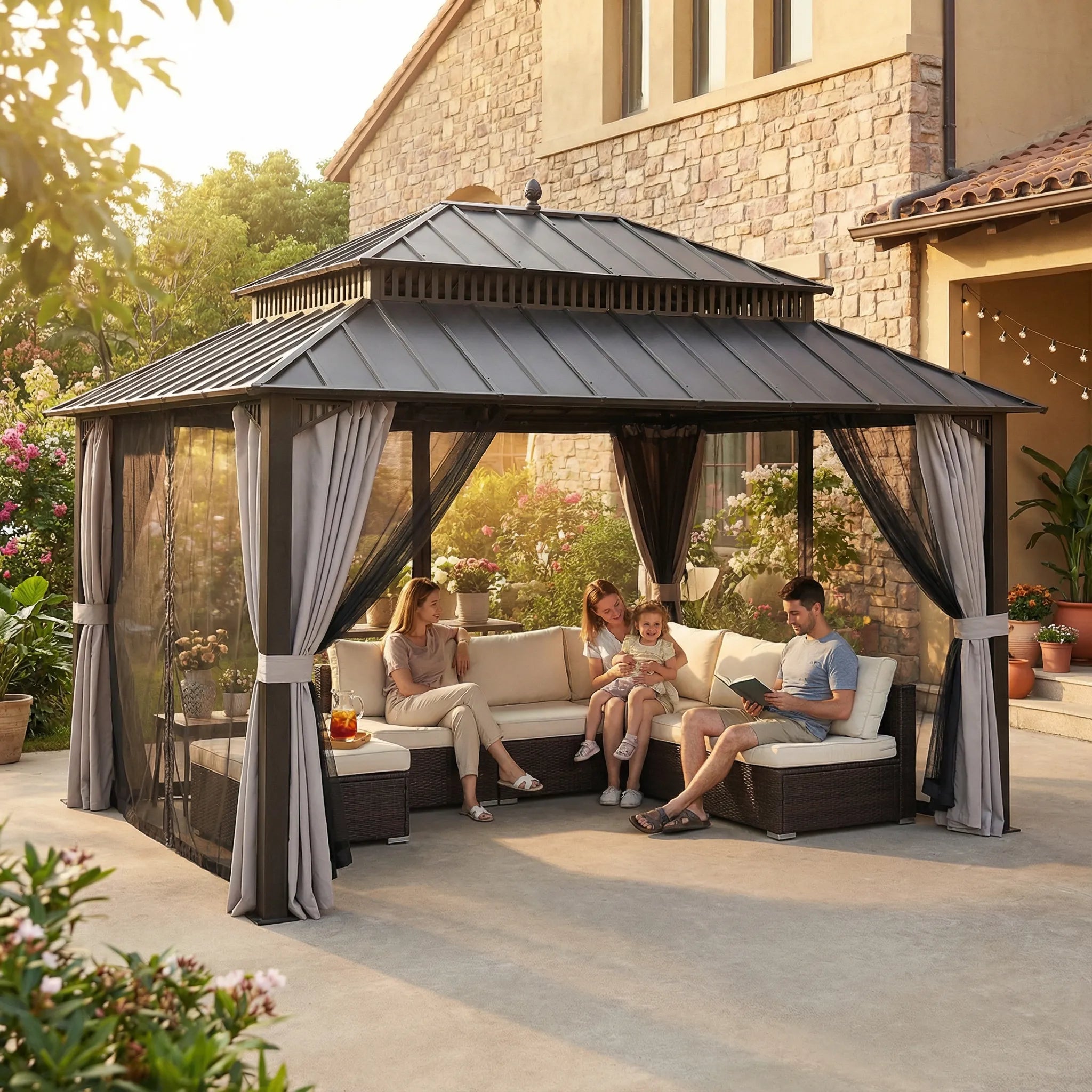
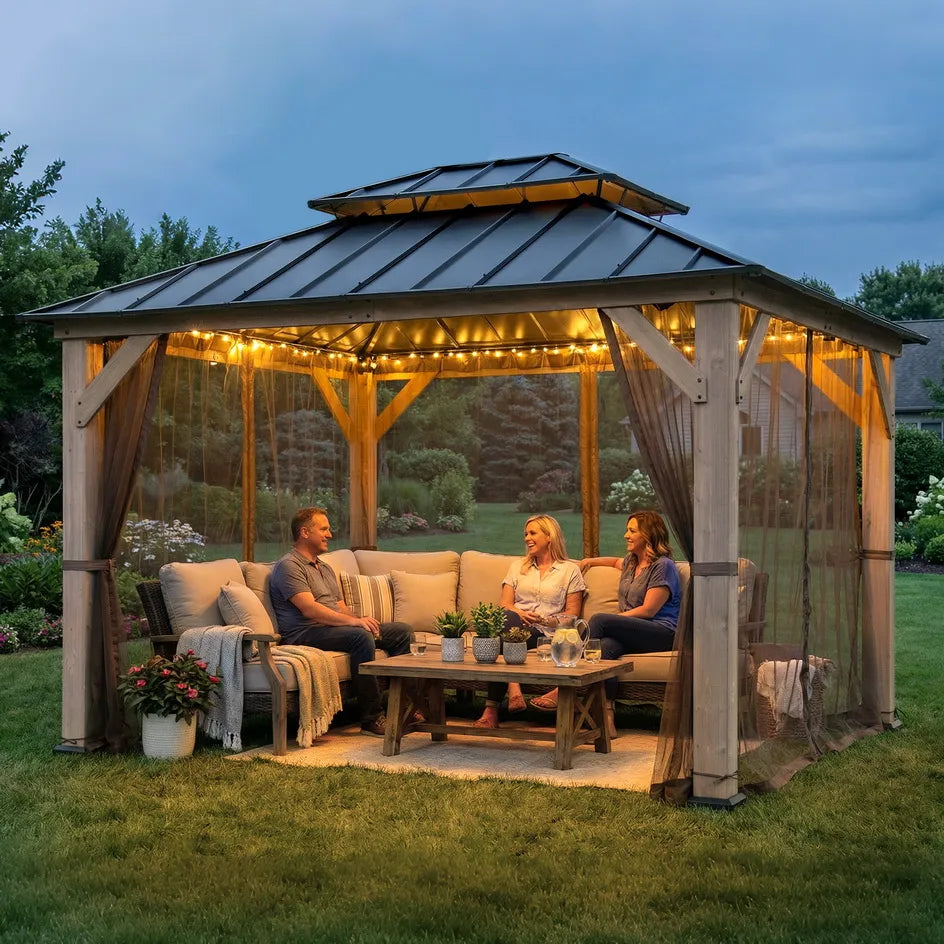
Wood adds architectural warmth to a garden, but a cedar gazebo also requires adequate clearance, effective drainage, and visible surfaces for routine inspection. Outdoor Gazebo performs best when surrounding planting complements the frame without concealing structural posts or retaining moisture against the timber. The design goal is to integrate the natural character of wood with the landscape while preserving practical access for inspection and maintenance.
A good appearance does not solve crowding cedar posts with dense planting, irrigation, or furniture and treating natural resistance as maintenance-free. The useful evidence comes from garden views, mature plant size, drainage, foundation, sun, access, and the preferred furniture arrangement.
Observed at the times and in the weather when the area is actually used. With that evidence, we can shape an arrangement in which planting softens the approach while the timber frame remains visible and inspection routes stay open, giving the plan a practical outcome instead of a decorative one.
Connect Timber Proportion to the Garden
The timber options available through SUNJOY allow us to respond to different garden scales and uses. We compare hardtop, soft-top, pop-up, grill, metal, and cedar gazebo choices for patios, decks, gardens, dining areas, and entertaining spaces against footprint, roof material, intended furniture layout, and local weather.
Access, anchoring surface, and model-specific limits, then preserve open inspection routes around posts and roof edges. This keeps the wood visible as an intentional part of the landscape. Site measurements for classic wood-gazebo design extend into every place that people, equipment, water, or moving parts may occupy.
Door swings, eaves, cables, anchors, work zones, and storage routes all belong in the sketch. Recording them early helps us protect a garden structure that gains character without being hidden or neglected, without creating a new obstacle elsewhere in the yard. A final site note documents garden views.
Mature plant size, drainage, foundation, sun, access, and the preferred furniture arrangement, which makes later questions about clearance, drainage, movement, or maintenance much easier to resolve. We apply the intended format as a practical filter by checking usable footprint, roof material, and frame construction.
Anchoring surface, furniture clearance, drainage, accessories, and product-specific wind or snow guidance. In this category, our gazebo range combines solid-roof and fabric-roof formats, steel or aluminum frames, cedar options, and accessories such as curtains or mosquito netting on selected models.
That background guides the comparison, but the deciding evidence remains whether the selected configuration can support garden dining, reading, family gatherings, and a warm architectural focal point on this particular site. Daily use gives classic wood-gazebo design its final shape.
When we test everyday movement, we trace the movement of people, furniture, vehicles, tools, food, cords, panels, or stored items as the topic requires. When planting softens the approach while the timber frame remains visible and inspection routes stay open, the setup supports day-to-day use instead of asking the household to work around the item.
Preserve the Wood While the Landscape Matures
For a wooden pavilion, a useful format comparison begins with fit, then considers permanence, portability, installation, weather, care, and total usable space. We also account for delivery or packed measurements because access can rule out an otherwise attractive configuration.
The preferred format supports a garden structure that develops character without being obscured or neglected, while avoiding unnecessary complexity. When preparing for a classic wooden gazebo build, follow instructions specific to the exact product, not generic category guidelines. We verify substrates, components, hardware, required tools, labour, liftingpower demands, anchors where applicable, and suitable weather conditions. Our guidance extends beyond purchase to address ongoing maintenance. For classic wooden gazebos, roof debris, surface coatings, timber members, anchors, curtains, netting, and drainage all require material-appropriate inspection.
When we test maintenance needs, we schedule inspections around actual exposure and use, paying special attention after severe weather, storage, transport, heavy operation, or any change in appearance, alignment, sound, airflow, drainage, or stability. Every format discussed under classic wood-gazebo design has operating limits.
Our position is reflected in this category principle: we design gazebos as overhead shelter that can frame family gatherings, dining, barbecues, reading, events, or a central backyard lounge. We therefore monitor anchoring, roof loading, drainage, coating or timber condition, curtains or netting, and local wind, rain, or snow.
Allow Natural Character to Remain Deliberate
At SUNJOY, a fair cost comparison for classic wood-gazebo design gives every option the same boundaries. We add preparation, delivery, assembly, anchoring or power, required accessories, maintenance, storage, and likely replacement items to the purchase price. We treat crowding cedar posts with dense planting and irrigation.
Or furniture and treating natural resistance as maintenance-free as a rejection test: a model that leaves the same difficulty in place does not belong on the final shortlist. When a wood gazebo reaches the shortlist, we check mature planting, irrigation, post access, foundation, drainage, and the preferred garden view together.
The right structure can weather naturally without being hidden or kept damp by the landscape. When we test core performance, the priority list for classic wood-gazebo design is straightforward but specific: the item must fit, serve garden dining, reading, and family gatherings, be a warm architectural focal point, and stay within its stated limits.
And allow practical maintenance. If we prioritise core performance, we then consider visual details and accessories that belong with the chosen model. A cedar gazebo should mature with the garden while remaining visible, dry, and accessible for care. When the landscape and timber are allowed to complement rather than compete, natural character becomes part of the design.
Leave a comment
This site is protected by hCaptcha and the hCaptcha Privacy Policy and Terms of Service apply.