

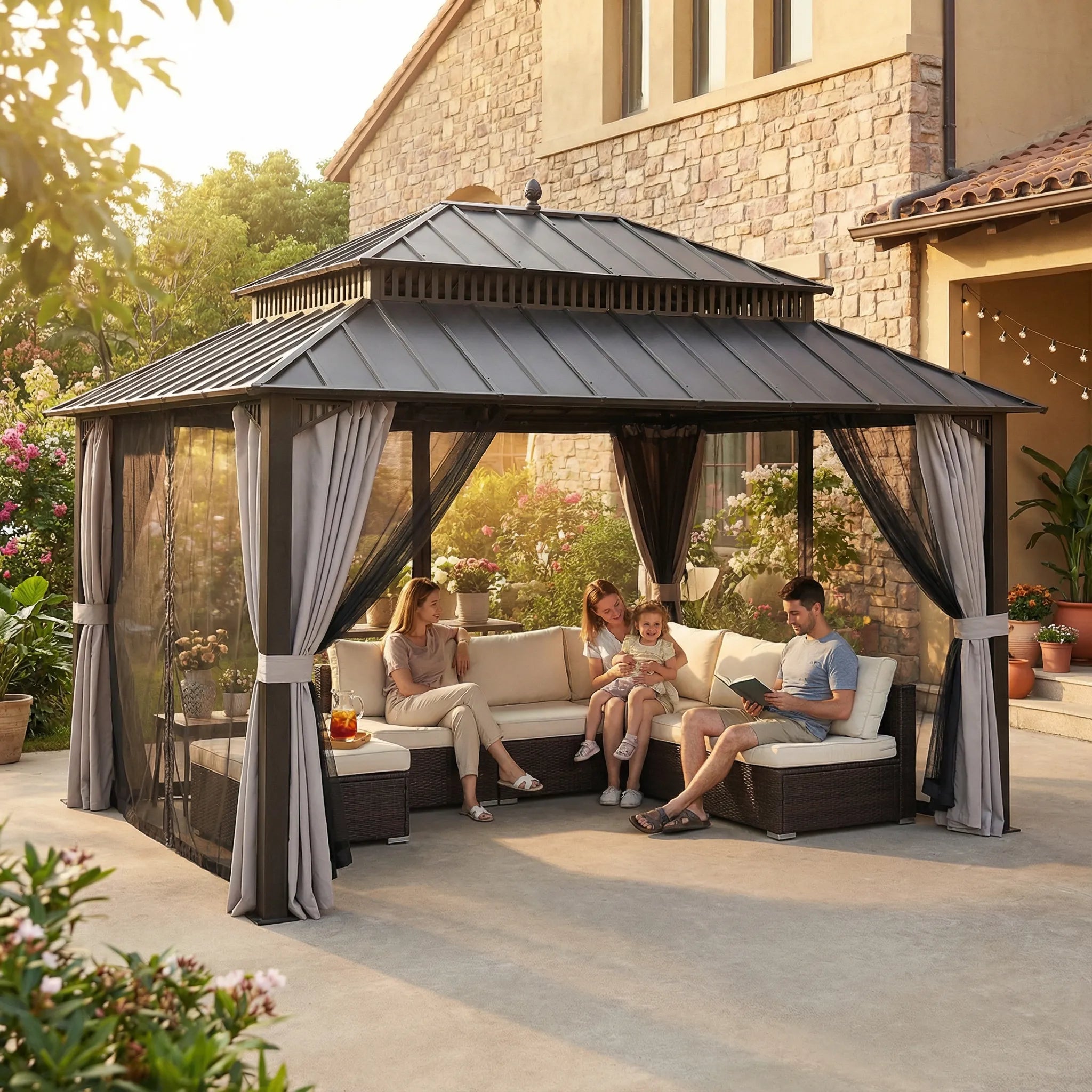
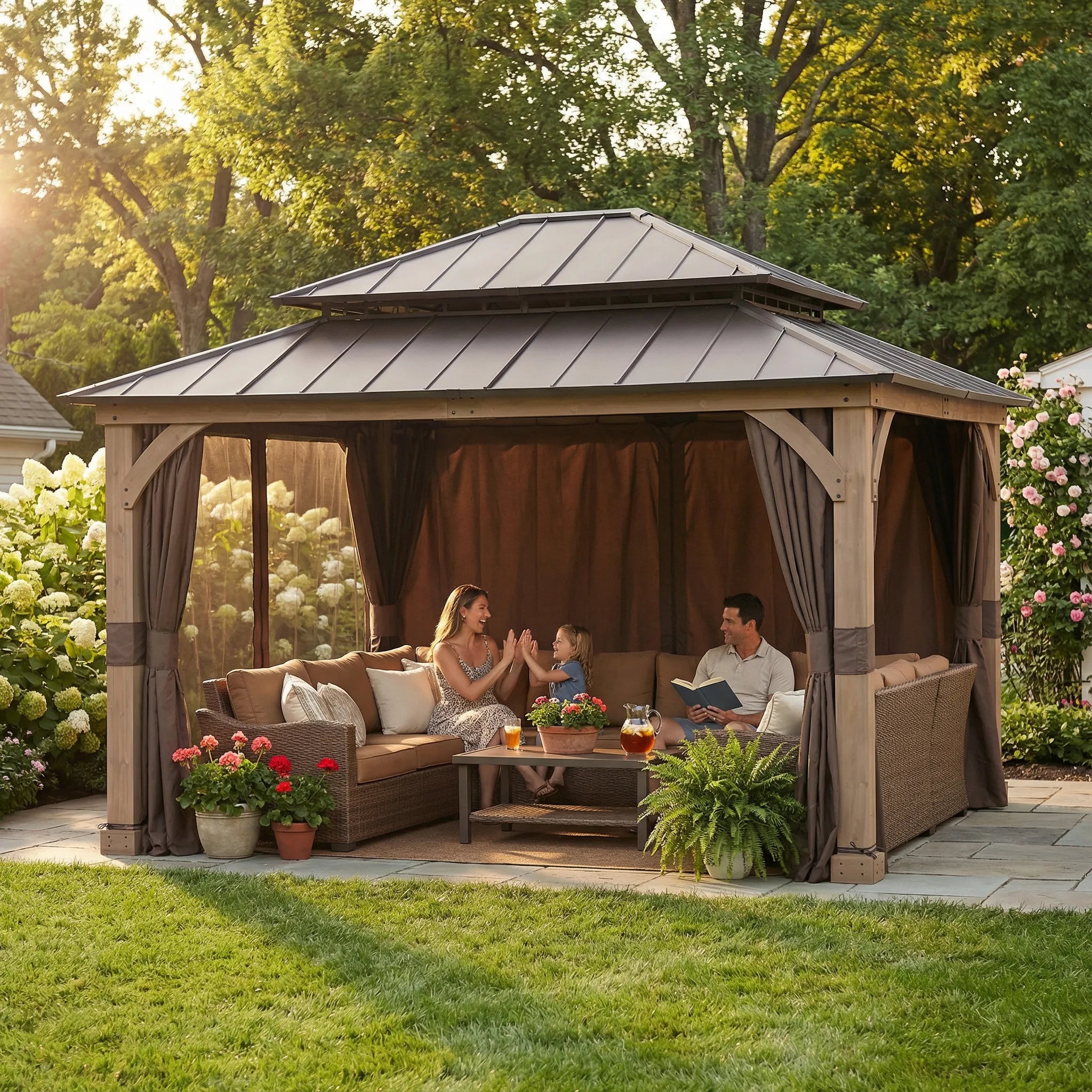
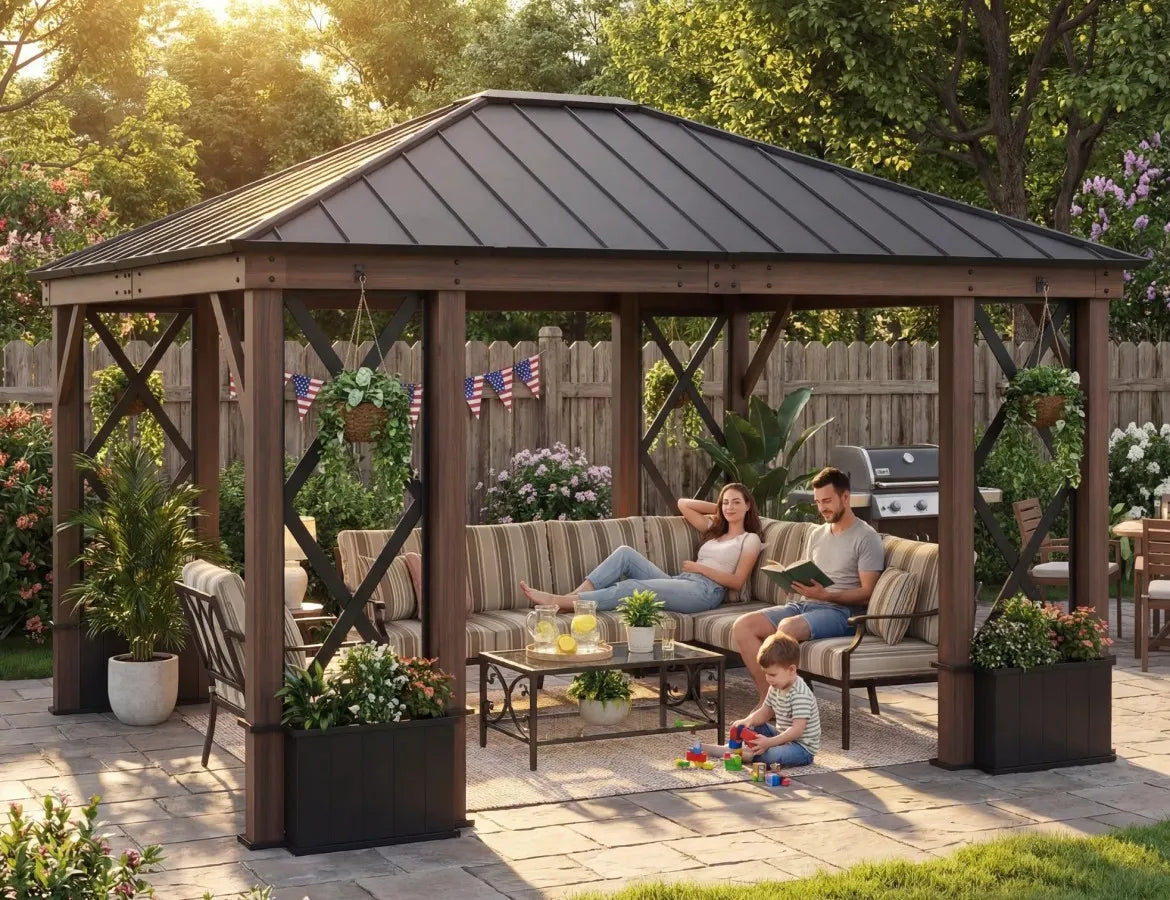
When setting up a gazebo tent on grass or sand, the key question is not just what tools to use, but how to match the anchoring method to the ground itself. At SUNJOY, we often see that stability issues come from using the same setup approach on different surfaces. Grass and sand behave very differently, so securing an outdoor gazebo properly starts with choosing the right method for each condition.
Step 1: Anchoring a Gazebo Tent on Grass
For grass surfaces, anchoring is usually more straightforward because the soil underneath can provide resistance. We recommend inserting metal stakes through the base plates of the gazebo tent, ideally at a slight angle rather than straight down. This angled placement improves grip and helps prevent loosening over time.
If the ground is firm, standard stakes are often enough for a typical outdoor gazebo. However, if the soil feels loose or dry, longer stakes or additional anchoring points can improve stability. Lightly watering the ground before installation can also make a difference, as slightly compact soil tends to hold stakes more securely.
Step 2: Securing a Gazebo Tent on Sand
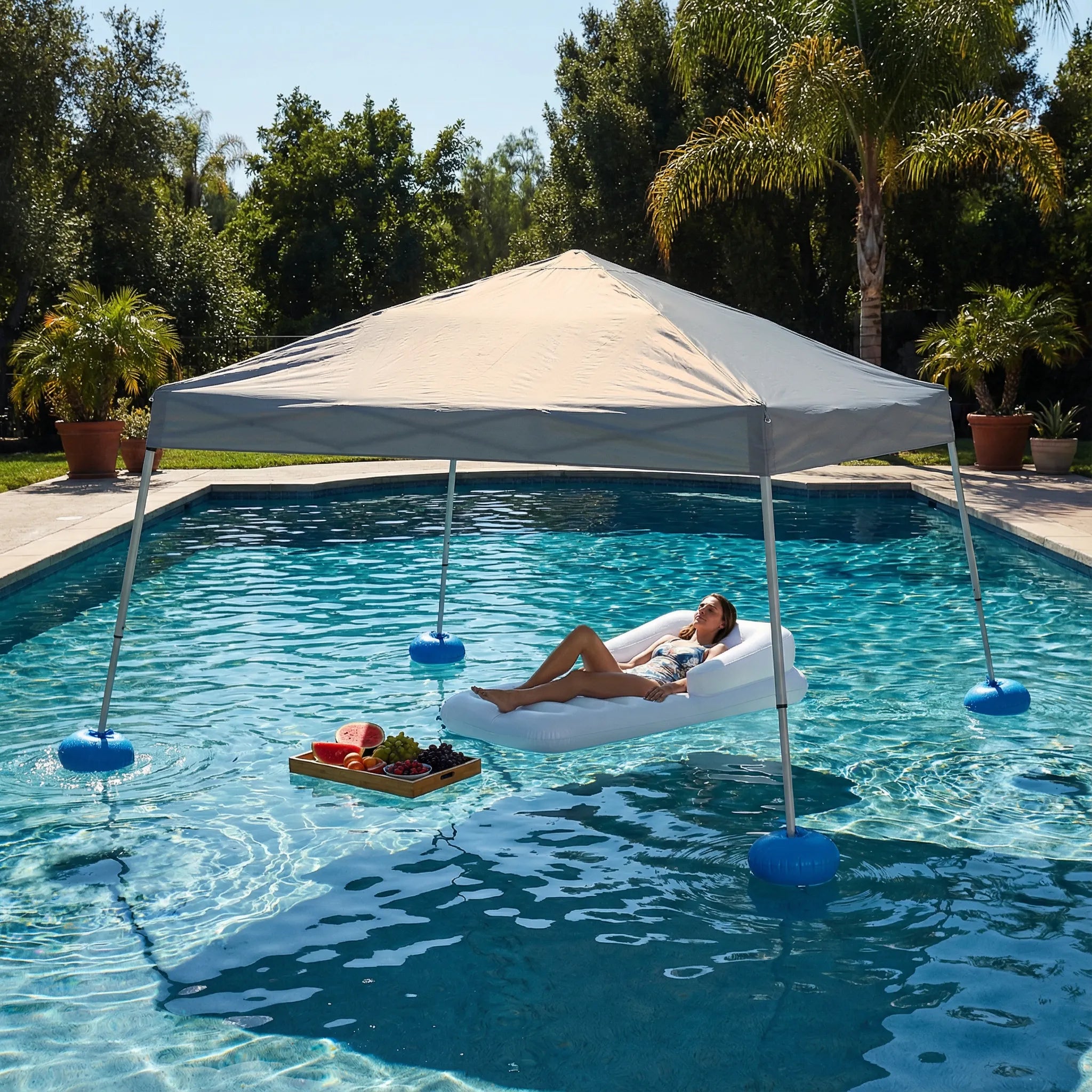
Anchoring on sand requires a different approach because the surface shifts easily. Instead of relying only on stakes, we usually combine deep anchors with added weight. Spiral or auger-style stakes work well for a gazebo tent on sand, as they are designed to hold in loose terrain.
In addition, we suggest using sandbags or water weights at each leg of the outdoor gazebo. This extra weight helps counter movement caused by wind or uneven pressure. In beach or lakeside settings, this combination—anchors plus weight—creates a more stable setup than either method alone.
Step 3: Adjusting for Real Outdoor Conditions
Even with the right tools, anchoring should always reflect actual outdoor conditions. Wind exposure, surface slope, and surrounding structures all affect how stable a gazebo tent will be. Placing the setup in a slightly sheltered area can reduce stress on anchors, especially on sand.
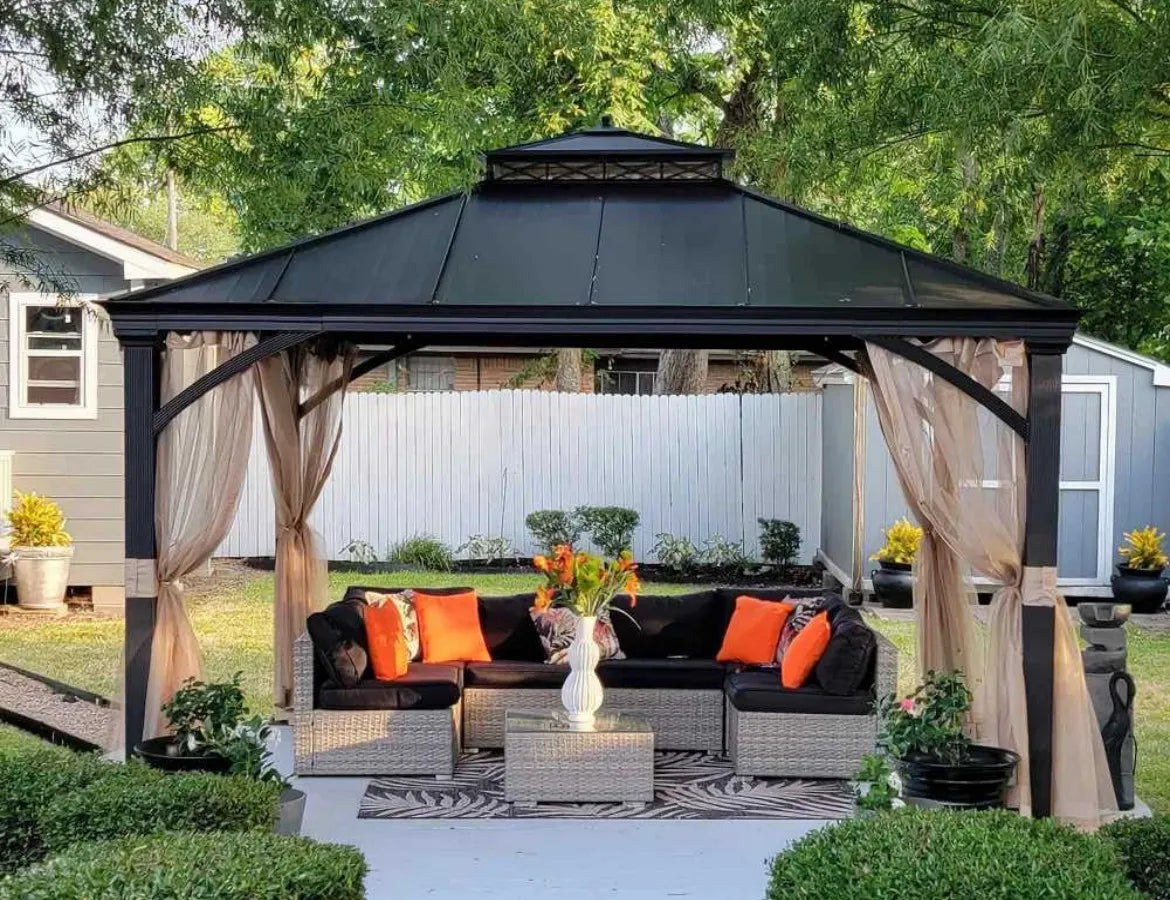
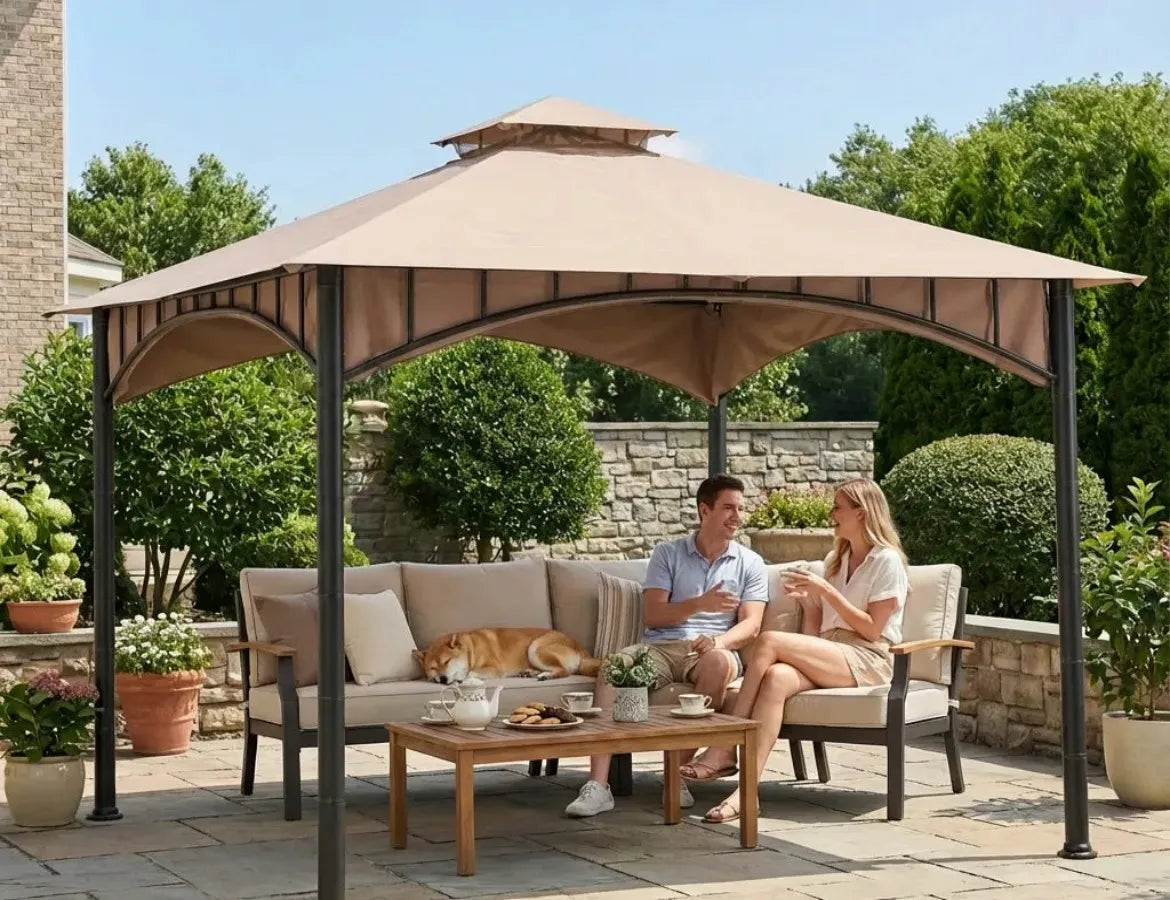
At SUNJOY, we design our outdoor structures with flexibility in mind, so they can adapt to different backyard or outdoor environments. For example, a portable gazebo can be repositioned more easily if conditions change, allowing users to maintain stability without overcomplicating the setup process.
Conclusion: Matching the Method to the Ground
In conclusion, learning how to anchor a gazebo tent on grass or sand comes down to using the right technique for each surface. Grass typically supports angled stakes for a firm hold, while sand requires deeper anchors combined with added weight. A stable outdoor gazebo is achieved not through a single solution, but by adjusting the setup to real conditions.
Leave a comment
This site is protected by hCaptcha and the hCaptcha Privacy Policy and Terms of Service apply.