

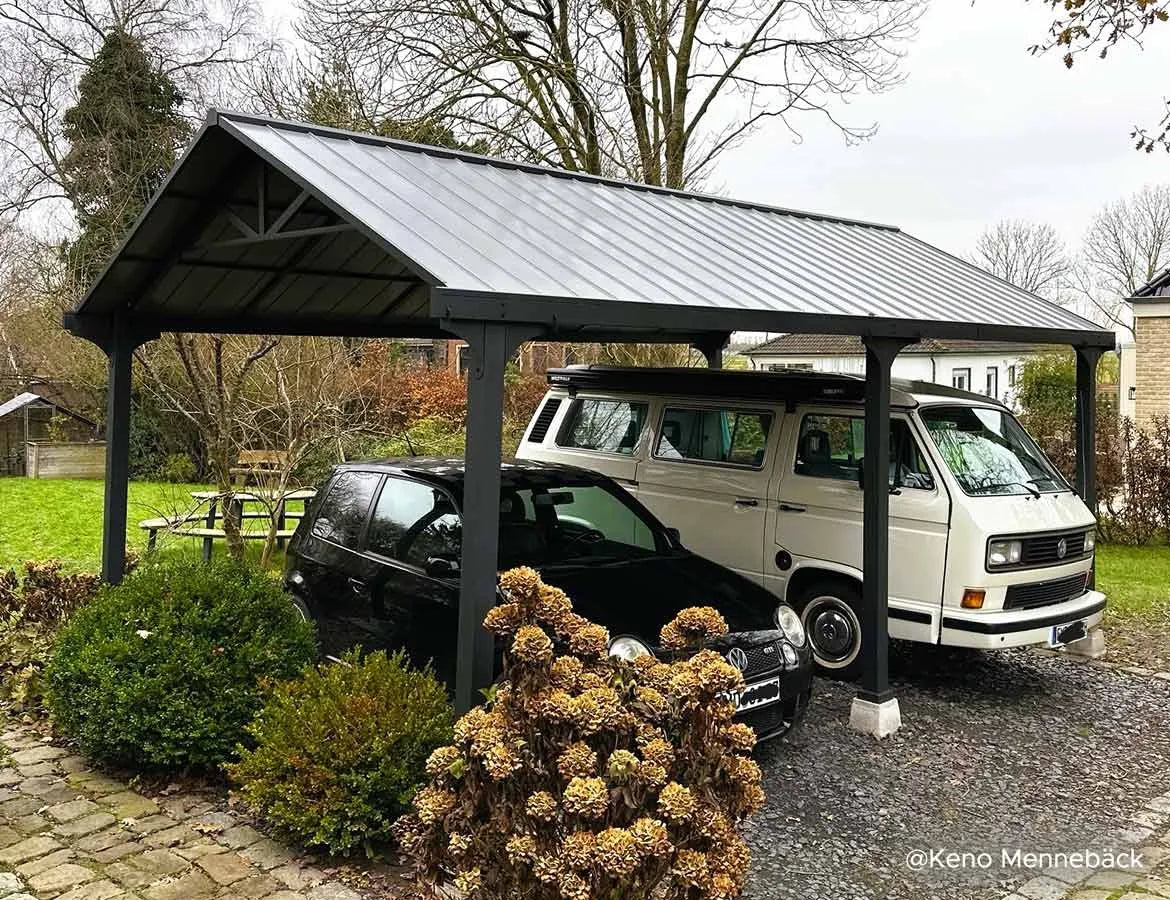
A metal carport is one of the smartest outdoor investments for protecting vehicles, equipment, tools, and recreational gear. Its sturdy frame and durable roof provide reliable shelter against year-round weather—from scorching sun to snowstorms. But even the strongest metal roof needs routine care to preserve appearance, prevent corrosion, and ensure long-term structural integrity.
Cleaning and maintaining a metal carport roof may seem simple, but the right approach is essential. This complete guide explains how often to clean your carport roof, what tools to use, how to handle seasonal maintenance, how to prevent rust, and when professional help is needed. It also includes authoritative weather data and product comparisons to help homeowners understand why proper roof care truly matters.
Whether your structure is a flat-roof metal carport, a gable-roof model engineered for heavy snow, or a SUNJOY wood-and-metal hybrid design, this guide ensures it stays strong, safe, and beautiful for decades.
1. Why Cleaning Your Metal Carport Roof Matters
Many homeowners underestimate how much debris accumulates on a metal carport roof. But the combination of leaves, pollen, sap, dust, road salt, and bird droppings can significantly accelerate wear.
✔ NOAA Weather Data that Homeowners Should Know
The National Oceanic and Atmospheric Administration (NOAA) reports that the United States experiences:
100,000+ thunderstorms annually
Up to 5,000 damaging hailstorms a year
Heavy rainfall events increasing in frequency across most regions
Snowfall exceeding 50–100 inches in northern states
This creates constant stress on outdoor metal structures, especially roofs.
✔ Metal Roof Corrosion Data
The Metal Roofing Alliance (MRA) found that corrosive contaminants—such as acidic bird droppings, road salt, and wet leaves—can speed up steel coating deterioration by 300% if not cleaned regularly.
✔ Snow Load Data from ASCE
The ASCE 7 Snow Load Standard indicates that wet snow can weigh 21 pounds per cubic foot.
For a typical 12x20 metal carport roof (240 sq ft), a single snowstorm could deposit:
3–6 inches: 1,200–2,400 lbs
12 inches of wet snow: 4,800+ lbs
This weight stresses panels, screws, beams, and support anchors—making roof maintenance critical.
Conclusion: Cleaning and maintaining your metal carport roof is not just cosmetic—it's structural protection.
2. How Often Should You Clean a Metal Carport Roof?
Cleaning frequency depends on climate, foliage, and usage, but the following schedule applies to most US homes:
✔ Every 3–6 months
General cleaning
Rinsing dust, pollen, leaves, sap
Quick spot inspections
✔ After major storms
Clear branches, leaves, and pooled water
Look for dents or bent panels
✔ Every winter
Check snow load
Remove heavy accumulation using a roof rake
✔ Annually
Full deep-clean
Tighten hardware
Inspect seams and fasteners
Touch-up coating if needed
Homes in forested, coastal, or high-snow areas may need more frequent cleaning.
3. Safety First: Preparations Before Cleaning
Cleaning a metal carport roof must be done safely—metal surfaces can be smooth and slippery.
Wear slip-resistant footwear
Rubber soles provide grip even on damp metal.
Use a stable ladder with a spotter
Avoid risky climbing positions.
Avoid walking directly on unsupported panels
Metal roofs can dent under weight if pressure is applied between structural beams.
Do not use high-pressure washers
The Metal Building Manufacturers Association (MBMA) warns that pressure washers can:
- Strip protective coatings
- Warp thinner roof panels
- Force water under seams
Safer alternatives include garden hoses and soft-bristle brushes.
4. Step-by-Step Guide: How to Clean a Metal Carport Roof Properly
This method is safe for coated steel, aluminum, galvanized metal, and polycarbonate roof inserts.
Step 1: Remove Loose Debris
Use a leaf blower, broom, or extension brush to remove:
Leaves
Sticks
Pine needles
Dust and pollen
Bird nests
Dry debris is easiest to remove before washing.
Step 2: Mix a Safe, Neutral pH Cleaning Solution
A mild detergent mix works best:
Warm water
A few drops of gentle dish soap
Optional for heavy stains:
Vinegar solution (50/50) for mineral deposits
Oxygen bleach for algae or mildew
Avoid harsh chemicals such as ammonia or chlorine bleach—they degrade coatings.
Step 3: Pre-Rinse the Roof
Use a garden hose with moderate pressure to wet the surface. This loosens grime and prevents scratches when scrubbing.
Step 4: Scrub with a Soft Brush
Use long strokes to clean problem areas:
Near overhanging trees
Under roof seams
Around fasteners
Areas where water pools
Tip: Long-handled brushes allow you to clean from the ground or ladder safely.
Step 5: Rinse Thoroughly
Rinse from top to bottom to wash away debris and soap. Make sure no cleaner remains, as residues attract dust and reduce reflectivity.
Step 6: Inspect While You Clean
Cleaning time is inspection time.
Look for:
Rust spots
Loose or missing screws
Uneven roof panels
Chips in protective paint
Drainage issues
Early detection prevents costly repairs.
Step 7: Let the Roof Dry & Reinspect Drainage
Areas with slow drying may reveal pitch problems or blocked channels.
Correcting minor drainage issues extends the lifespan of the structure.
5. Seasonal Maintenance: Adapting Care to Each Season
Season-specific care ensures your metal roof withstands every climate.
🍃 Spring Maintenance
Spring brings storms, pollen, and rapid plant growth.
Remove pollen before it becomes sticky buildup
Wash off bird droppings promptly
Inspect after severe thunderstorms
Trim tree branches growing toward the structure
☀️ Summer Maintenance
High temperatures can accelerate metal expansion.
Inspect fasteners for thermal loosening
Remove sap and organic acids
Check coating for fading or cracking
Ensure ventilation openings aren't blocked
🍂 Fall Maintenance
Fall is the most debris-heavy season.
Remove wet leaves weekly
Clear gutters or roof channels
Handle acorns (which can dent panels)
Prepare for winter with a full inspection
❄️ Winter Maintenance
Winter is the greatest stress test for metal roofs.
Remove snow with a roof rake
Avoid using metal tools
Check for ice dams
Inspect after freezing rain
This helps avoid structural strain and deformation.
6. Preventing Corrosion, Rust, and Long-Term Wear
The best metal roof care is proactive.
✔ Address scratches immediately
Use touch-up paint to prevent rusting.
✔ Remove corrosive substances quickly
This includes:
Bird droppings
Fertilizer overspray
Tree sap
Salt residue
✔ Inspect fasteners annually
Thermal cycling can loosen screws by ⅛–¼ turn per year, according to MBMA.
✔ Avoid mixing metals
Galvanic corrosion can start within 18–24 months if incompatible metals touch.
7. Expert-Level Maintenance Techniques (With Construction Standards)
These practices are used by professional metal roofing contractors:
Clean from the ground whenever possible
Long brushes and flow-through poles reduce risk of falls or panel denting.
Maintain roof finishing
Panels with intact coatings last significantly longer than unprotected steel.
Wash roof twice a year in coastal states
Salt accelerates corrosion at up to 3x normal speed (MRA data).
Confirm anchor integrity
A roof is only as strong as its anchoring system—check brackets annually.
8. Comparison Table: Best SUNJOY Metal Carports for Easy Maintenance
| Feature / Model | SUNJOY Metal Carport | SUNJOY Gable Roof Metal Carport | SUNJOY Wood Carport (Metal Roof) |
|---|---|---|---|
| Roof Type | Flat / Slight Slope | Gable Roof | Gable Roof with Cedar Beams |
| Snow Shedding | Good | Excellent | Very Good |
| Ease of Cleaning | Easiest | Easy | Medium |
| Wind Resistance | High when anchored | High | Medium–High |
| Aesthetic Appeal | Industrial / Modern | Traditional / Practical | Premium / Architectural |
| Best Use Case | Everyday car protection | Snow-heavy states | Homeowners seeking style |
📝 Interpretation
Gable roof = best for snow & water runoff
Flat roof = simplest to clean
Wood+metal hybrid = most aesthetic but higher maintenance
⭐ 9. When to Call a Professional
Not all issues can be resolved with DIY care.
Call a pro if you see:
Large rust patches
Panel bending from storm impact
Missing fasteners
Major seam gaps
Structural sway or roof sag
Leaks around joints or beams
A professional can assess whether the structure needs reinforcement, panel replacement, or re-sealing.
10. SUNJOY Carports Are Built for Easy Maintenance
SUNJOY designs metal carports with:
Galvanized steel or powder-coated metal
Rust-resistant fasteners
Reinforced frames for wind & snow
Strong roof panels engineered for runoff
Simple-to-clean finishes
Compatible roof angles for easy debris removal
These features ensure SUNJOY structures remain durable and low-maintenance for years with proper roof care.
Leave a comment
All comments are moderated before being published.
This site is protected by hCaptcha and the hCaptcha Privacy Policy and Terms of Service apply.