

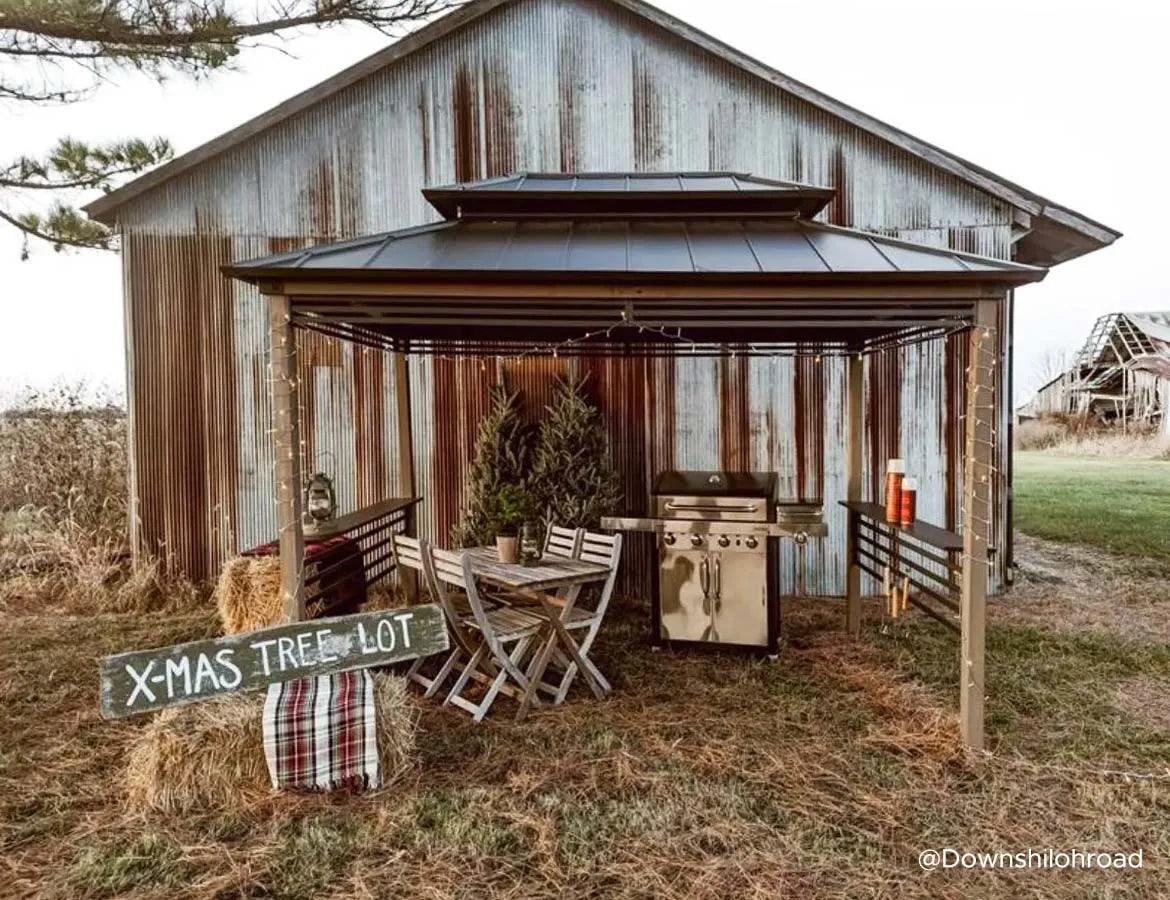
Is Your Old Metal Gazebo Frame Still Worth Keeping? A Data-Based Guide
If you have an old metal gazebo frame sitting in your backyard, you’re not alone.
For many homeowners, the roof fabric has worn out, panels are missing, or the gazebo no longer fits their outdoor layout. The structure itself, however, often still feels too solid to throw away—which leads to a common question people ask online:
What should I do with an old metal gazebo frame?
The answer isn’t one-size-fits-all. The right decision depends on structural integrity, safety, reuse potential, and long-term value. This guide breaks down your realistic options—repair, repurpose, recycle, or replace—using clear conclusions, technical checks, real examples, and measurable criteria so you can decide with confidence.
Clear Conclusion First: Is an Old Metal Gazebo Frame Worth Keeping?
Yes, if the frame is structurally sound and safely anchored.
No, if corrosion, joint fatigue, or deformation compromises stability.
A metal gazebo frame can often last 10–20 years depending on material, coating, and environment. The key is knowing how to evaluate it properly before investing time or money.
Step 1: How Do You Know If a Metal Gazebo Frame Is Still Safe?
Key Structural Checks (With Data)
Before deciding what to do, inspect the frame using these criteria:
|
Inspection Area |
What to Look For |
Why It Matters |
|
Steel or aluminum posts |
Rust penetration, cracks |
Structural load capacity |
|
Connection joints |
Loose bolts, warped brackets |
Wind resistance |
|
Crossbeams |
Sagging or bending |
Roof weight support |
|
Coating condition |
Flaking or bare metal |
Corrosion acceleration |
Rule of thumb:
If corrosion goes deeper than surface rust or if joints no longer hold torque, the frame should not be reused as a load-bearing structure.
FAQ: Can an old metal gazebo frame still support a roof?
Short answer: Sometimes—but only after inspection.
Testing data from outdoor structure manufacturers shows that even mild deformation in roof beams can reduce load capacity by 30–40%, especially under wind uplift or snow accumulation. A frame that looks fine may no longer meet safe thresholds.
Option 1: Can You Repair or Refurbish an Old Metal Gazebo Frame?
When Repair Makes Sense
Repair is viable if:
Rust is surface-level only
Frame geometry is intact
Joints and anchors remain solid
Common refurbishment steps include:
Rust removal and re-coating
Replacing bolts with stainless steel hardware
Installing a lighter replacement canopy
Real-World Example
A homeowner reused a 12-year-old steel gazebo frame by stripping surface rust and adding a new powder-coated roof panel. The total cost was 40–50% lower than buying new—but required ongoing maintenance.
Trade-off: Lower upfront cost, higher long-term upkeep.
Option 2: Creative Ways to Repurpose a Metal Gazebo Frame
If full restoration isn’t practical, repurposing is a popular choice.
Common Repurposing Ideas
Pergola-style shade frame
Outdoor storage structure
Covered seating or lounge frame
Garden trellis or vine support
FAQ: Is it safe to repurpose a gazebo frame without a roof?
Yes—if it’s not used for load-bearing or overhead cover. Removing roof weight significantly reduces structural risk and extends usable life.
Option 3: Should You Recycle an Old Metal Gazebo Frame?
Recycling Data
Steel and aluminum frames are typically 95–100% recyclable. Scrap yards often accept gazebo frames once fabric, plastic, and hardware are removed.
When Recycling Is the Best Choice
Severe corrosion at joints
Bent or twisted load-bearing posts
Missing structural components
Recycling eliminates safety risks and recovers material value.
Option 4: When Replacing Is the Smarter Long-Term Decision
Replacement becomes the best option when:
Repair costs exceed 50–60% of a new structure
Frame no longer meets modern wind or snow ratings
You want improved safety, features, and lifespan
This is where modern designs outperform older frames significantly.
How Modern Gazebos Improve on Older Metal Frames
Today’s outdoor structures use:
Thicker-gauge steel or aluminum
Galvanized or powder-coated finishes
Reinforced joints and engineered load ratings
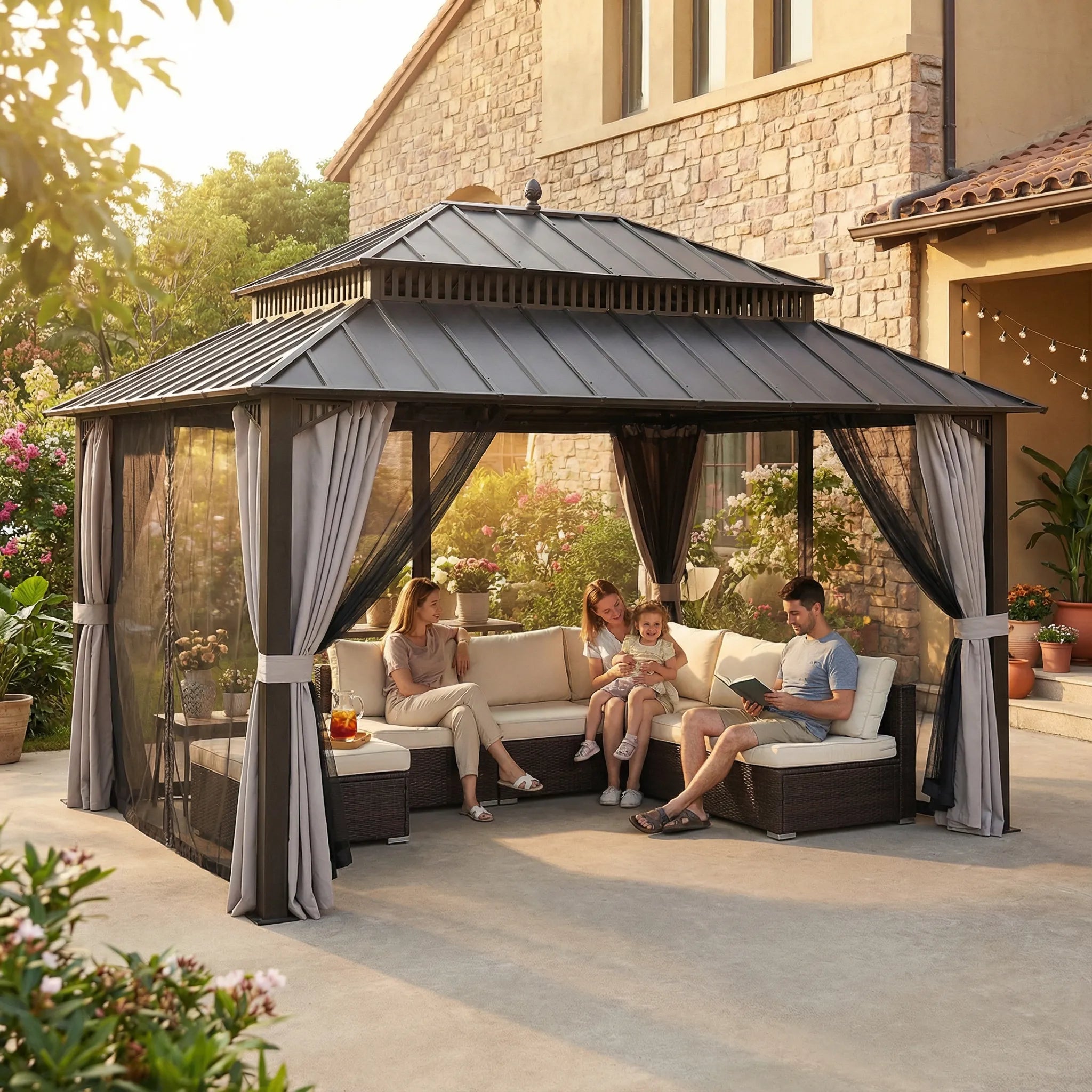
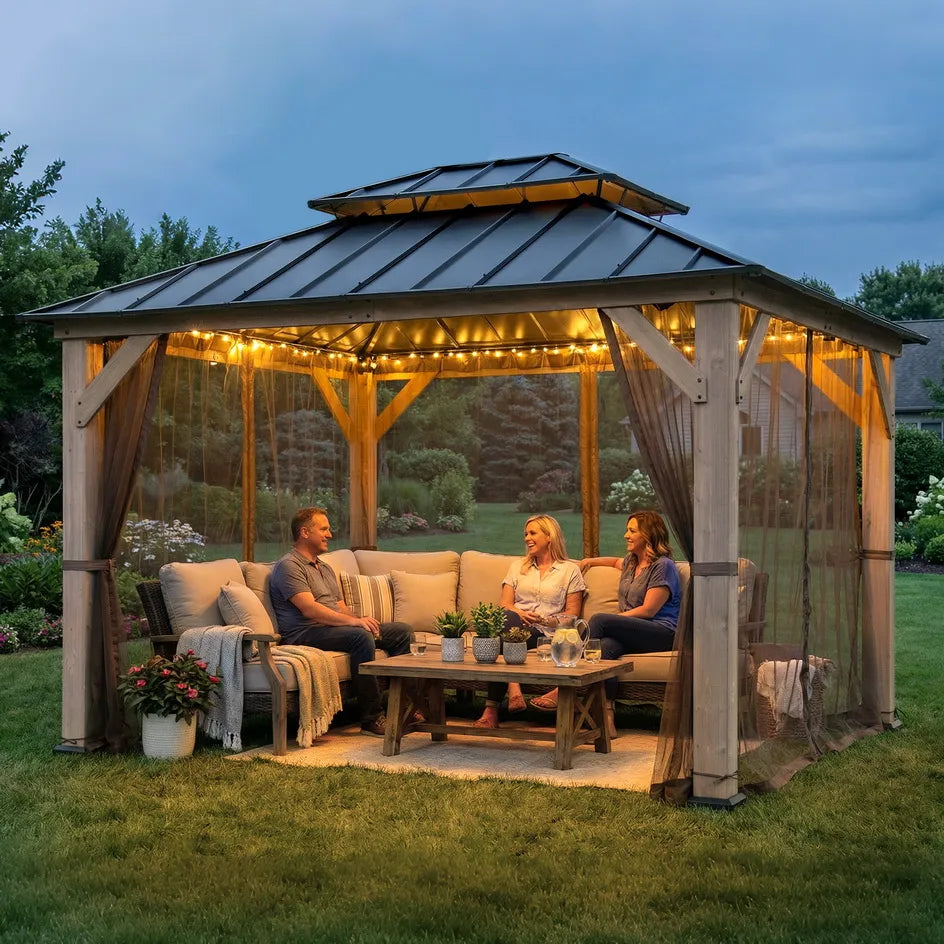
For example, SUNJOY gazebos are designed with tested wind and snow performance, reducing uncertainty compared to older, unverified frames.
SUNJOY Gazebo Comparison Table (Old Frame vs Modern Replacement)
|
Feature |
Old Metal Gazebo Frame |
Modern SUNJOY Gazebo |
|
Wind rating |
Often unknown |
Engineered & tested |
|
Corrosion protection |
Aging coating |
Galvanized / powder-coated |
|
Joint strength |
Manual assembly |
Reinforced connectors |
|
Maintenance |
Frequent |
Low |
|
Safety certification |
None |
Tested materials & structure |
|
Long-term value |
Limited |
High |
This comparison helps homeowners understand lifetime value, not just upfront cost.
FAQ: Is it cheaper to fix an old gazebo or buy a new one?
Short-term fixing can be cheaper.
Long-term, modern gazebos often cost less per year of use due to:
Lower maintenance
Better durability
Improved safety margins
FAQ: Can I reuse an old gazebo frame for a SUNJOY canopy?
In most cases, no. Modern canopies are designed for specific frame dimensions and load calculations. Mixing old frames with new covers can compromise safety and warranty coverage.
Decision Framework: What Should You Do?
Use this quick decision guide:
Frame is solid, minimal rust: Repair or repurpose
Frame is stable but outdated: Repurpose without roof
Frame shows deep corrosion or joint failure: Recycle
You want long-term safety and value: Replace with modern structure
Final Verdict: Don’t Guess—Decide With Data
An old metal gazebo frame isn’t automatically useless—but it’s not automatically safe either.
The smartest approach is to:
1. Inspect structural integrity
2. Compare repair cost vs replacement value
3. Factor in safety and long-term use
When durability, performance, and peace of mind matter, upgrading to a modern, engineered gazebo—such as those offered by SUNJOY—often delivers better value over time.

Leave a comment
All comments are moderated before being published.
This site is protected by hCaptcha and the hCaptcha Privacy Policy and Terms of Service apply.