

When homeowners search for outdoor structures that can handle unpredictable weather, one question comes up again and again:
Are metal gazebos actually good for rain, wind, and storms—or are they just for looks?
The short answer is yes, metal gazebos can perform very well in harsh weather, but only when the design, materials, and installation meet specific standards. Not all metal gazebos are built the same, and misunderstanding the differences often leads to disappointment.
This article breaks down how metal gazebos perform in rain, wind, and storm conditions, what technical details matter most, and when a metal gazebo is the right choice for long-term outdoor use.
Clear Conclusion First: Are Metal Gazebos Weather-Resistant?
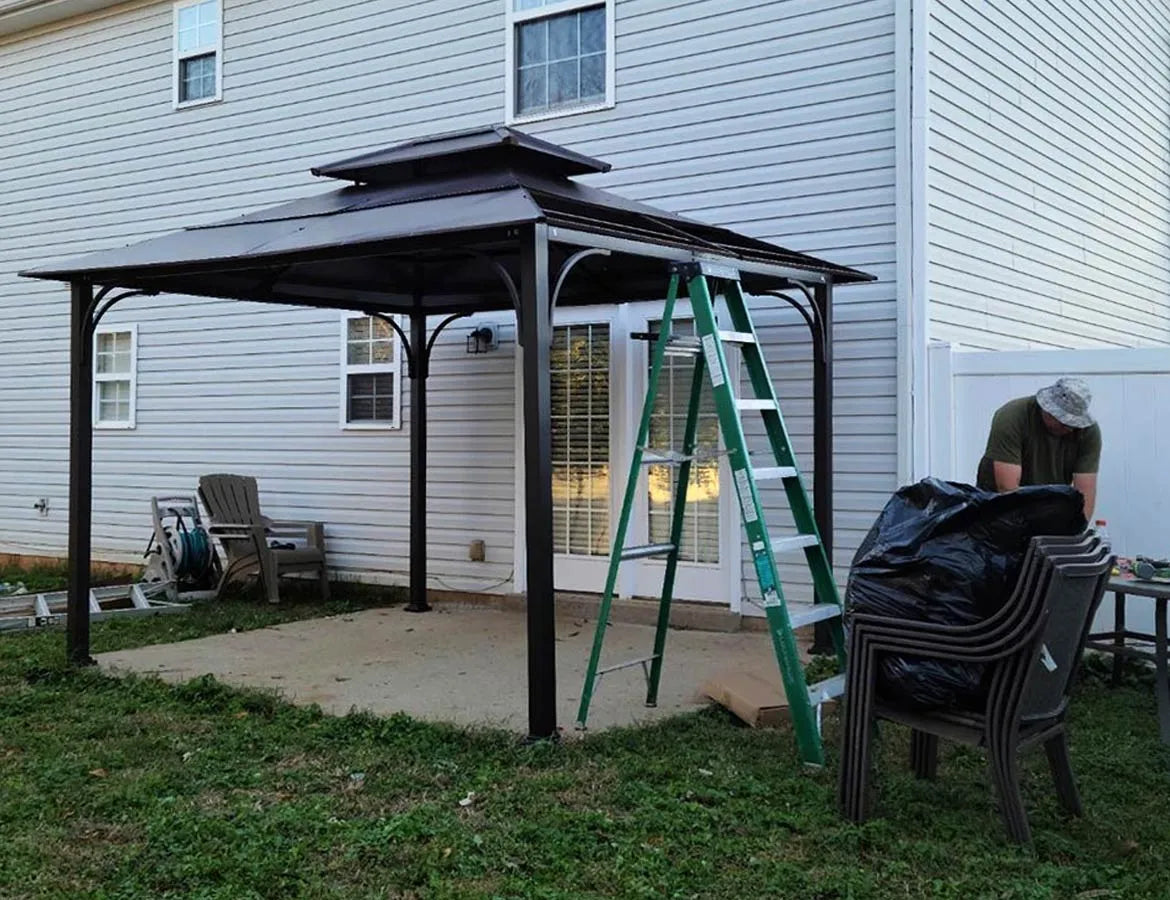
Yes—a well-designed metal gazebo is one of the most weather-resistant outdoor structures available.
Metal gazebos perform best when they include:
A rigid roof system
A reinforced metal frame
Proper anchoring to the ground
Thoughtful roof slope and drainage design
When these elements are present, metal gazebos outperform fabric or lightweight wood structures in severe weather.
Why Weather Performance Matters More Than Appearance
Many gazebo buyers focus on size or style first. However, rain, wind, and storms test a structure in ways that appearance never will.
Weather performance determines:
Whether the gazebo stays stable during storms
How long the structure lasts
Whether water pools, leaks, or drains properly
How safe the space remains during strong wind events
Metal gazebos are engineered to address these challenges—but only if the right specifications are met.
How Metal Gazebos Handle Heavy Rain
Why Roof Material Is Critical
Rain performance depends primarily on the roof system.
Metal gazebo roofs—especially steel or aluminum—offer several advantages:
They do not absorb water
They resist sagging under prolonged rain
They shed water efficiently when properly sloped
Unlike fabric roofs, metal panels do not stretch, fade, or develop low points where water collects.
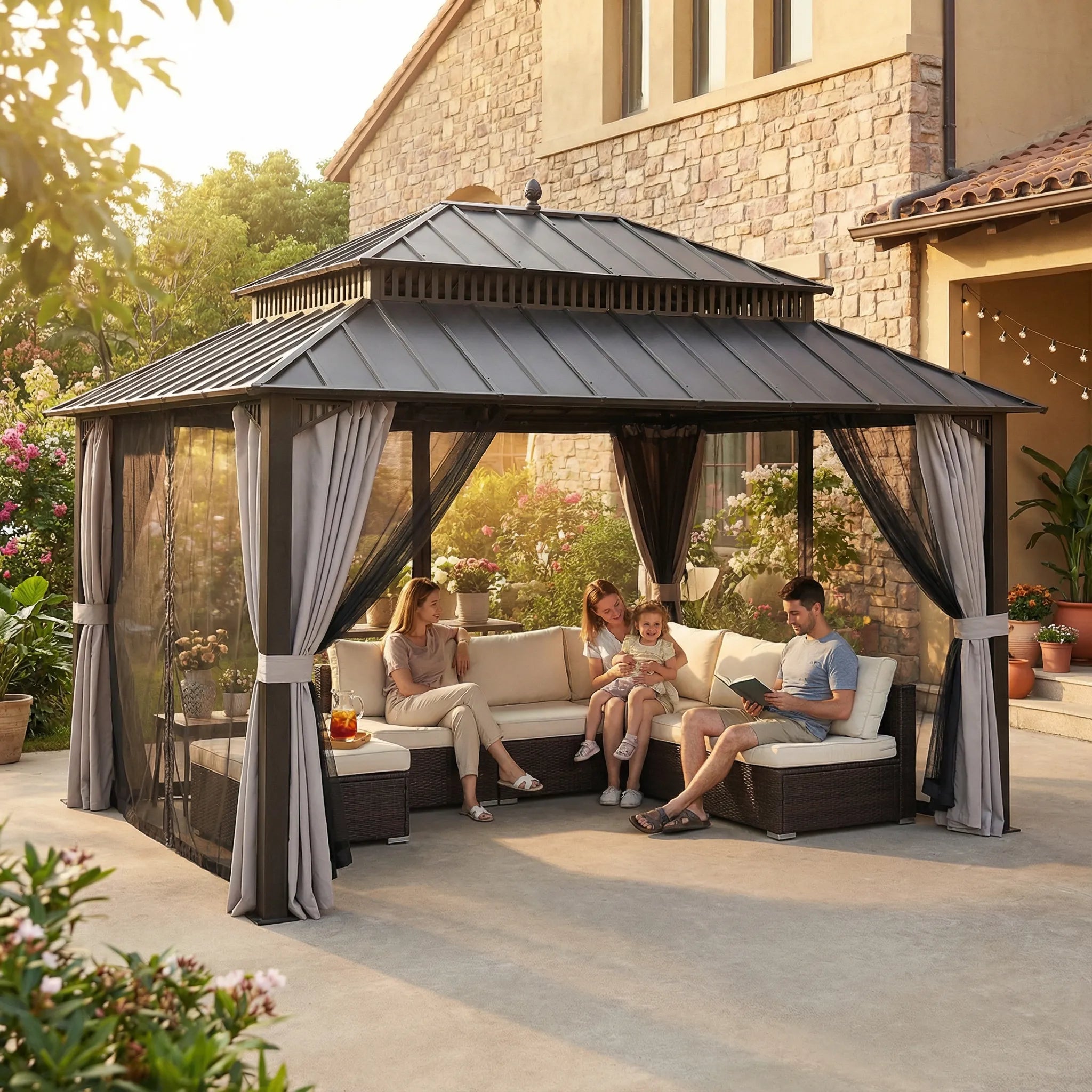
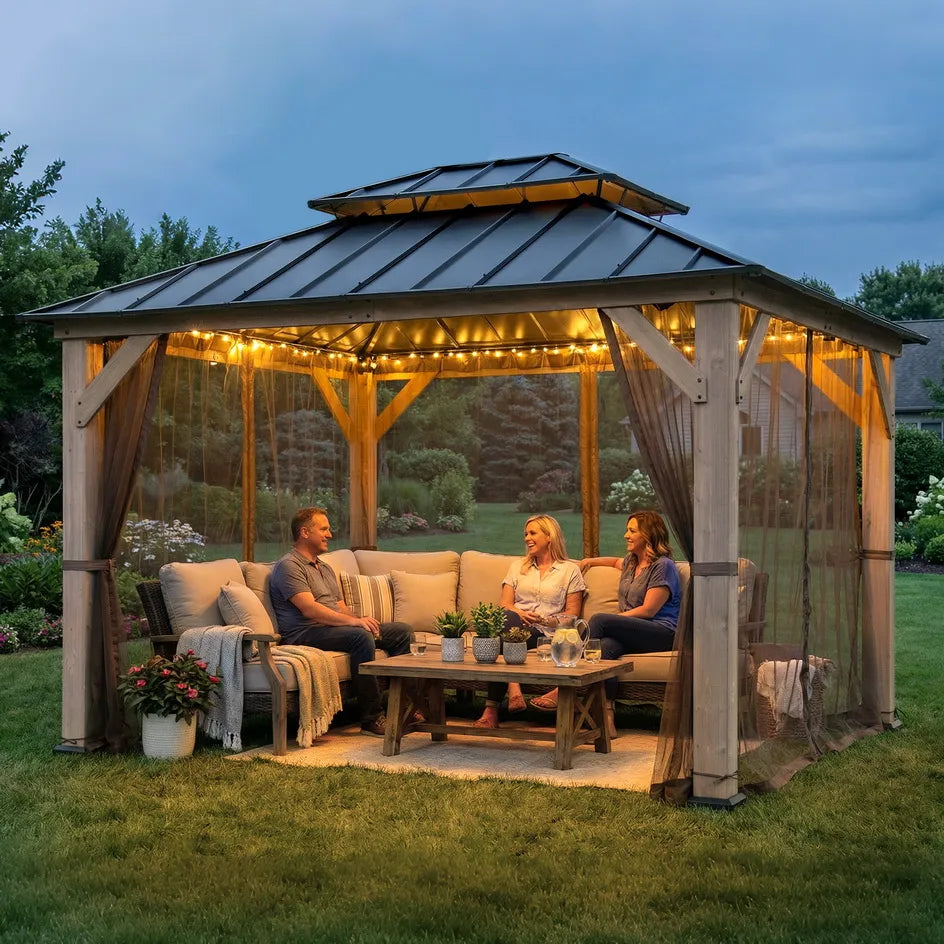
SUNJOY metal gazebos typically use hardtop roof designs that channel rain away from the seating area, helping keep the space dry even during extended rainfall.
FAQ: Do metal gazebos leak in heavy rain?
A properly installed metal gazebo with sealed roof panels and adequate slope should not leak. Leaks are usually caused by incorrect assembly or poor drainage design.
How Metal Gazebos Perform in Strong Wind
Wind Is the Biggest Threat to Outdoor Structures
Wind, not rain, causes the most structural failures in outdoor shelters. The key factors that determine wind resistance are frame strength, roof shape, and anchoring.
Metal gazebos perform well in wind because:
Metal frames resist flexing better than wood
Rigid roofs are less likely to lift than fabric canopies
Reinforced beams distribute wind load more evenly
In contrast, soft-top gazebos often fail when wind catches the fabric and creates uplift.
What Wind Ratings Really Mean
Some metal gazebos are tested for specific wind speeds under controlled conditions. While real storms vary, these ratings provide a baseline for comparison.
A higher wind rating usually indicates:
Thicker frame materials
Stronger connections
Better overall stability
SUNJOY metal gazebos are designed with reinforced frames and secure fastening systems to improve wind performance when properly anchored.
FAQ: Can a metal gazebo tip over in strong wind?
Any gazebo can tip if not anchored correctly. Metal gazebos rely on secure anchoring to concrete, wood decks, or ground foundations to resist uplift forces.
How Metal Gazebos Handle Storm Conditions
Storms combine rain, wind, and pressure changes, making them the most demanding test for outdoor structures.
Metal gazebos handle storms better than most alternatives because:
The roof remains rigid under pressure
The frame maintains structural integrity
Components are less likely to tear or detach
However, no gazebo is designed to withstand extreme weather events without maintenance or preparation.
Roof Design: The Hidden Factor in Storm Resistance
Why Roof Shape Matters
Roof design affects how wind and rain interact with the structure.
Effective metal gazebo roofs include:
Sloped panels to shed water
Vented designs to reduce pressure buildup
Secure panel connections to prevent lifting
Flat or poorly vented roofs are more likely to trap wind and water, increasing stress on the structure.
Metal vs Fabric Gazebos in Bad Weather
Rain Performance
- Metal: Excellent water resistance, no sagging
- Fabric: Prone to pooling, stretching, and leakage
Wind Performance
- Metal: Stable when anchored
- Fabric: High risk of tearing or uplift
Storm Durability
- Metal: Designed for repeated exposure
- Fabric: Often seasonal or temporary
This comparison explains why homeowners in storm-prone areas increasingly choose metal gazebos for permanent outdoor use.
Real-World Example: Storm Exposure Over Time
Homeowners who replace fabric gazebos with metal hardtop models often report:
Fewer repairs
Better comfort during storms
Increased confidence leaving the structure assembled year-round
The long-term performance difference becomes more noticeable after repeated weather exposure.
Installation and Anchoring: The Make-or-Break Factor
Even the strongest metal gazebo will fail if installed incorrectly.
Key anchoring considerations include:
Mounting to concrete footings or slabs
Using manufacturer-approved anchor kits
Ensuring all bolts and fasteners are tightened correctly
SUNJOY metal gazebos are designed to support secure anchoring, but proper installation remains essential for weather performance.
Maintenance: Keeping Metal Gazebos Storm-Ready
Metal gazebos are low maintenance, but not maintenance-free.
Recommended checks include:
Inspecting fasteners seasonally
Clearing debris from roof panels
Ensuring drainage paths remain clear
These simple steps help maintain weather resistance over time.
FAQ: Do metal gazebos rust?
High-quality metal gazebos use powder-coated or treated metal to resist corrosion. Routine inspection helps catch damage before rust develops.
When a Metal Gazebo Is the Right Choice
A metal gazebo is ideal if you:
Experience frequent rain or storms
Want year-round outdoor use
Prefer low maintenance structures
Need reliable wind resistance
It may not be necessary if you only need temporary shade in calm conditions.
How SUNJOY Metal Gazebos Fit Real Weather Conditions
SUNJOY metal gazebos are designed with:
Rigid roof systems
Reinforced frames
Compatibility with proper anchoring
These design choices support better performance in rain, wind, and storm conditions when installed and maintained correctly.
Final Verdict: Are Metal Gazebos Good for Rain, Wind, and Storms?
Yes—metal gazebos are among the most reliable outdoor structures for challenging weather, provided they are well-designed and properly installed.
They outperform fabric alternatives in rain, resist wind more effectively, and hold up better through repeated storms. For homeowners who want a durable, low-maintenance shelter that works beyond fair-weather use, a metal gazebo is a practical long-term solution.
With thoughtfully engineered options—such as those from SUNJOY—outdoor spaces can remain usable and protected even when the weather turns unpredictable.
Leave a comment
All comments are moderated before being published.
This site is protected by hCaptcha and the hCaptcha Privacy Policy and Terms of Service apply.