

When winter arrives, many homeowners mentally close off their backyard for the season. Patio furniture gets covered, tools are squeezed into garages, and outdoor storage is treated as something to “deal with later.”
But winter is actually when a garden shed matters most.
A properly designed winter garden shed protects equipment from moisture, keeps seasonal items organized, and relieves pressure on indoor storage at the time of year when space is already tight. More importantly, it allows the backyard to remain functional—even when temperatures drop.
This guide explains what makes a garden shed truly winter-ready, how homeowners actually use sheds during colder months, and why enclosed backyard structures are increasingly replacing basic storage sheds for winter use.
Winter Exposes Weak Storage Faster Than Any Other Season
Summer hides problems. Winter reveals them.
Cold weather introduces challenges that lightweight or poorly planned sheds struggle to handle:
Condensation forming inside walls and on tools
Snowmelt seeping in from the ground
Doors that stick, warp, or freeze
Rust, mildew, and material fatigue
A shed that performs well in summer but fails in winter isn’t reliable storage—it’s temporary shelter.
What “Winter Garden Shed” Really Means
A winter garden shed is not about heating the space like a home office. It is about environmental stability.
Winter-ready sheds focus on:
Moisture control
Protection from snow and wind
Structural reliability under cold stress
Consistent access in freezing conditions
The goal is to protect what’s inside and maintain usability, not to create indoor-level comfort.
Moisture Is the Real Winter Threat
Cold alone rarely damages tools or furniture. Moisture does.
During winter, moisture comes from:
Daytime melting followed by nighttime freezing
Warm air trapped inside cold walls
Wet equipment stored without airflow
Without ventilation and separation from the ground, even expensive tools can corrode in a single season.
Why Ventilation Matters Even When It’s Cold
Many homeowners assume sealing a shed tightly is best for winter. In reality, sealed sheds often trap moisture.
Controlled ventilation:
Allows humid air to escape
Reduces condensation buildup
Prevents mold and rust
Winter-ready sheds balance airflow with weather protection—keeping precipitation out while letting moisture move out.
Roof Design and Snow Load: Not Just a Structural Detail
Snow is heavy, especially after repeated freeze–thaw cycles.
A winter shed must manage:
Static snow load
Uneven accumulation caused by wind
Water weight during melt
Sloped or reinforced roofs reduce long-term stress and lower maintenance demands. Weak roof structures often show damage only after the second or third winter.
Ground Contact: The Overlooked Winter Failure Point
Many shed problems start from below.
Direct ground contact allows:
Snowmelt to seep upward
Cold to transfer directly into stored items
Persistent dampness at floor level
A winter-ready garden shed uses a raised or integrated floor system to keep contents dry and separated from frozen ground.
Doors and Access: Winter Usability Matters
A shed that can’t be opened in winter might as well not exist.
Cold weather exposes weaknesses in:
Door framing
Hinges and locks
Alignment and tolerances
Solid doors and proper framing ensure reliable access when snow and ice are present—especially important when storing winter equipment you need daily.
How Homeowners Actually Use a Garden Shed in Winter
Winter sheds support far more than storage.
Common cold-season uses include:
Housing snow blowers, shovels, and ice melt
Protecting outdoor furniture and grills
Storing holiday décor between uses
Acting as overflow storage when indoor closets fill up
Providing a sheltered space for winter projects
In winter, the shed becomes a functional extension of the home, not just a backyard accessory.
A Practical Example: When a Backyard Office Shed Becomes a Winter Garden Shed
Many homeowners now choose fully enclosed backyard structures instead of traditional storage sheds because they perform better year-round.
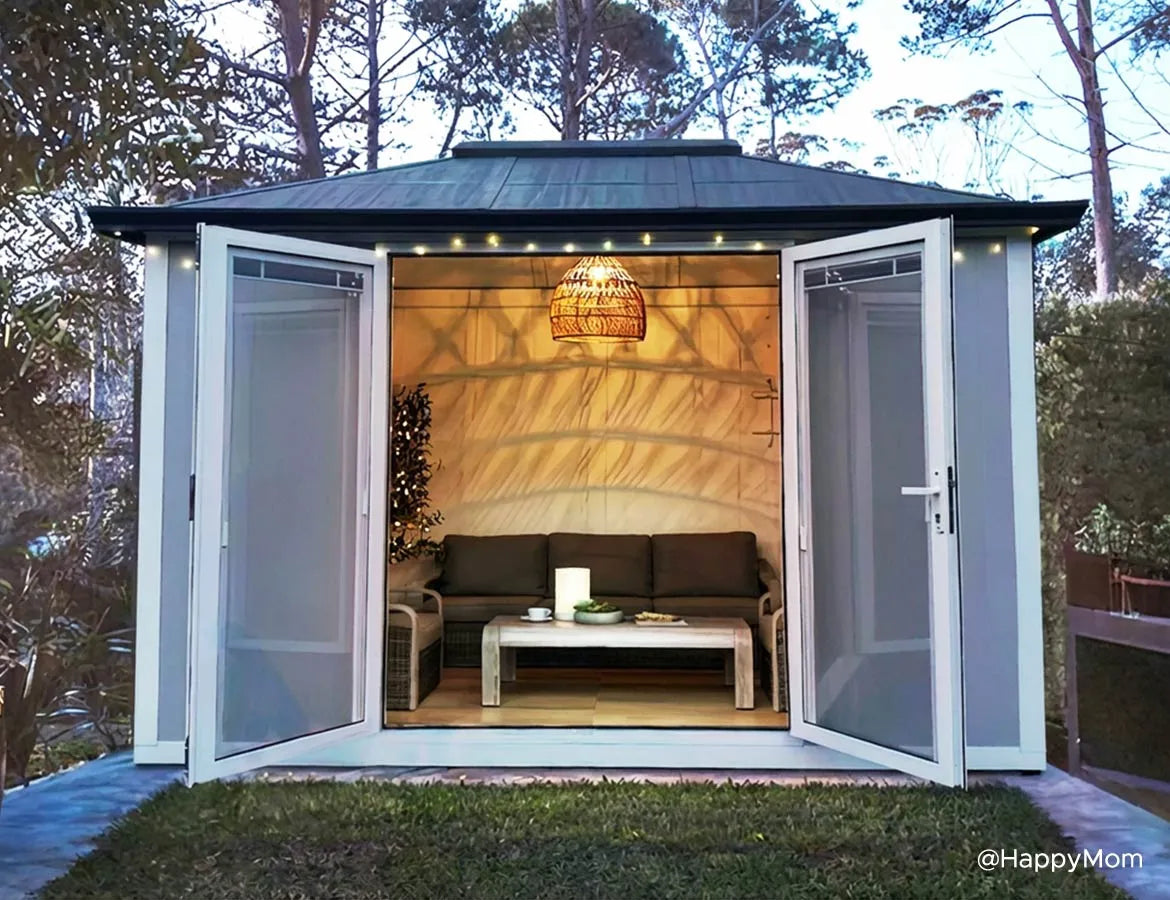
A good example is the SUNJOY Backyard Office Shed – Esquire (BEYOND SHED).
While designed as a backyard office or multi-use room, this type of structure naturally fits winter shed requirements far better than lightweight garden sheds.
Why This Design Works Better in Winter
From a winter-performance perspective, several features matter:
Fully enclosed walls that block wind-driven snow
Framed windows that allow light and airflow control
Lockable doors that remain usable during temperature swings
Integrated floor system that separates contents from wet ground
Instead of fighting winter conditions, the structure manages them.
Winter Use Is About Stability, Not Heat
A winter shed does not need to be heated to be useful.
What matters more is:
Reduced temperature fluctuation
Dry interior conditions
Protection from direct exposure
With these conditions met, the shed supports storage, hobbies, and workspace use throughout winter—especially on clear, calm days.
When an Enclosed Shed Makes More Sense Than a Basic Garden Shed
Upgrading to a more enclosed structure is especially practical when:
Winters are long or unpredictable
Stored items are moisture-sensitive
The shed doubles as workspace or utility space
You want minimal winter intervention
In these cases, the higher upfront cost often translates into lower replacement and repair costs over time.
Maintenance Expectations in Winter
No shed is maintenance-free, but winter-ready sheds reduce effort.
A good winter garden shed should:
Require minimal snow clearing
Maintain door function without force
Protect contents without constant monitoring
If a shed demands frequent winter fixes, it isn’t designed for the season.
How SUNJOY Approaches Winter-Ready Outdoor Structures
Rather than treating sheds as summer-only storage, SUNJOY designs enclosed backyard structures with year-round use in mind.
Key design principles include:
Durable materials that resist moisture
Roof structures that manage snow load
Ventilation to reduce condensation
Construction that maintains usability in cold weather
This approach aligns outdoor storage with real winter behavior—not ideal conditions.
A Simple Winter Garden Shed Checklist
Before choosing a shed, ask:
- Will this structure stay outdoors year-round?
- Can it handle snow accumulation without damage?
- Is ventilation built into the design?
- Will doors remain usable in freezing temperatures?
- Will stored items stay dry during snowmelt?
If the answer is “yes” to most of these, the shed is likely winter-ready.
Final Thought: A Winter Garden Shed Is a Year-Round Investment
Winter doesn’t end backyard use—it changes it.
A properly designed winter garden shed:
Protects tools and equipment
Reduces indoor clutter
Supports cold-season routines
Keeps the backyard functional beyond summer
When a shed performs well in winter, it delivers value all year long.
And that’s when a garden shed stops being just storage—and becomes a dependable part of how the home works, regardless of season.
Leave a comment
All comments are moderated before being published.
This site is protected by hCaptcha and the hCaptcha Privacy Policy and Terms of Service apply.