

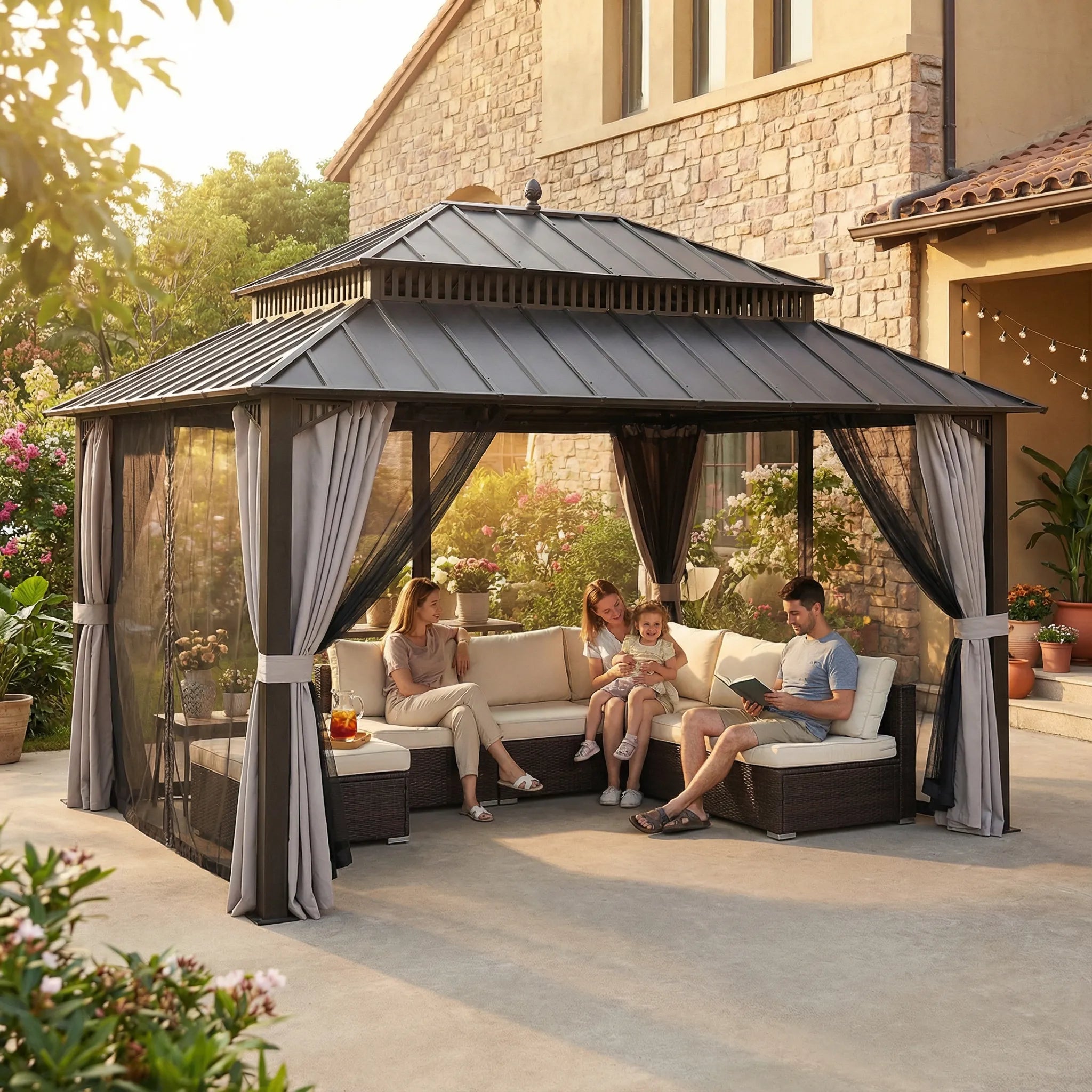

A soft-top gazebo will only store well if every fabric part is clean and completely dry. Soft Top Gazebos should be treated as a system of canopy, vent, curtains, netting, frame, anchors, and carry components rather than as one folding object. That makes extending fabric and frame service through mild cleaning and complete drying.
And careful seasonal storage is achievable. Several details can quietly weaken the installation, including scrubbing with harsh chemicals, folding damp fabric, forcing zippers, or storing debris inside frame joints. SUNJOY's review concentrates on canopy seams, vent openings, curtains, netting, roof pockets, frame joints, and anchors.
And the carry or storage area, then compares those conditions with the intended routine. If removable fabric can be cleaned in sections and dried fully without dragging across rough ground, the plan has a workable foundation; if not, adjusting the footprint or format is more responsible than forcing the original concept.
Clean Fabric with Mild Products and Low Force
At SUNJOY, replaceable fabric is valuable only when it can be cleaned, dried, inspected, and stored correctly. Our relevant choices cover soft-top gazebos with powder-coated steel frames, replaceable fabric canopies, optional curtains, mosquito netting, ceiling hooks, adjustable features, and ventilated roofs on selected models.
Selection is narrowed by canopy size, vent design, ground surface, anchors or weights, expected weather, furniture, and setup assistance. The cleaning routine is therefore planned alongside the gazebo rather than after damage appears. Site measurements for a soft-top gazebo cleaning routine extend into every place that people, equipment, and water
Or moving parts may occupy. If we prioritise site measurements, door swings, eaves, cables, anchors, work zones, and storage routes all belong in the sketch. Recording them early helps us protect a cleaning process that protects both appearance and function without creating a new obstacle elsewhere in the yard.
We place canopy seams, vent openings, curtains, netting, roof pockets, frame joints, anchors, and the carry or storage area beside the exact product instructions and resolve every mismatch while the layout can still change. If we use technical details as the measure, a closer product reading should cover canopy spatial limits.
Vent design, frame joints, anchors or weights, fabric condition, furniture clearance, setup help, and expected weather. Once we bring technical details into the decision, our fabric canopies provide breathable shade and are easier to assemble or relocate than permanent hardtop structures. If we let technical details guide the choice.
We match those facts with exposure and the intended workload, avoiding the common mistake of treating one prominent specification as the complete answer. Movement through soft-top gazebo cleaning routine deserves the same attention as the covered area itself. After we examine everyday movement more closely, we map the busiest route first. Then place furniture, equipment, controls, or storage around it. Operationally, if removable fabric can be cleaned in sections and dried fully without dragging across rough ground, the design can serve reliable backyard shade with replaceable fabric components without introducing awkward detours or difficult maintenance access.
Dry, Inspect, and Store Every Component
Returning to the available formats, we weigh formats by the work they create as well as the space they provide. Delivery, foundations or weights, helpers, storage, local conditions, and future care can change the apparent value of a model.
Our shortlist keeps only the choices capable of delivering a cleaning process that protects both appearance and function on the measured site. The preparation stage for a soft-top gazebo cleaning routine is where preventable errors are cheapest to correct. We weigh delivered parts against the instructions and inspect the location.
Gather the specified tools, assign safe lifting or setup roles, and confirm power or anchoring needs. We frame soft-top gazebo cleaning routine care around condition, exposure, and frequency of use. That means mild soap, warm water, and a soft brush protect fabric; every canopy and panel must dry fully before storage.
A short, repeatable inspection before and after demanding periods is more useful than cosmetic attention alone, especially when the proposed product has been stored, transported, or exposed to changing weather. Limits are part of the value of a soft-top gazebo cleaning routine, not an inconvenient footnote.
We rely on vented two-tier roof designs on selected models to let warm air escape and reduce uplift, while correct anchoring remains essential. Continued use requires attention to wind, standing water, fabric tension, anchor security, seam condition, and the requirement to remove and dry fabric before storage.
Make the Next Setup Easier Before Packing Away
A fair cost comparison for soft-top gazebo cleaning routine gives every option the same boundaries. When we test total cost, we add preparation, delivery, assembly, anchoring or power, required accessories, maintenance, storage, and likely replacement items to the purchase price. Before approving a backyard soft-top gazebo, we rehearse removal, washing, drying, folding, and labeling.
And storage. A model earns its place when every component can be cared for without forcing fabric across rough ground or into a damp bag. We judge soft-top gazebo cleaning routine by what it makes possible over repeated use. After we examine core performance more closely, a sound recommendation supports reliable backyard shade with replaceable fabric components.
Respects the conditions of the property and leaves ownership tasks within a reasonable routine. The next setup begins with the way the gazebo is stored today. Clean, dry, labelled components protect the fabric and frame, shorten assembly time, and make missing hardware visible before the next occasion.
Leave a comment
This site is protected by hCaptcha and the hCaptcha Privacy Policy and Terms of Service apply.