

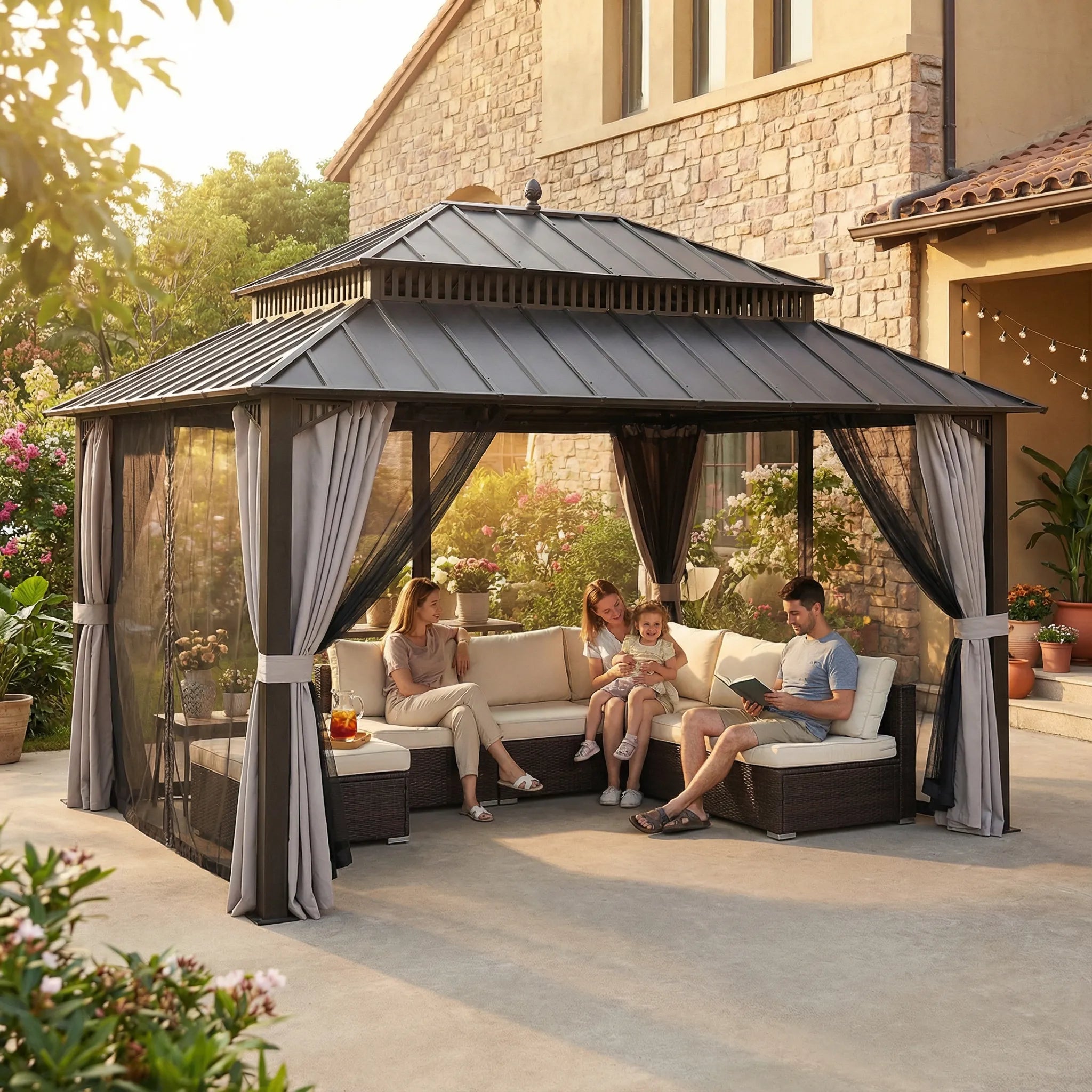
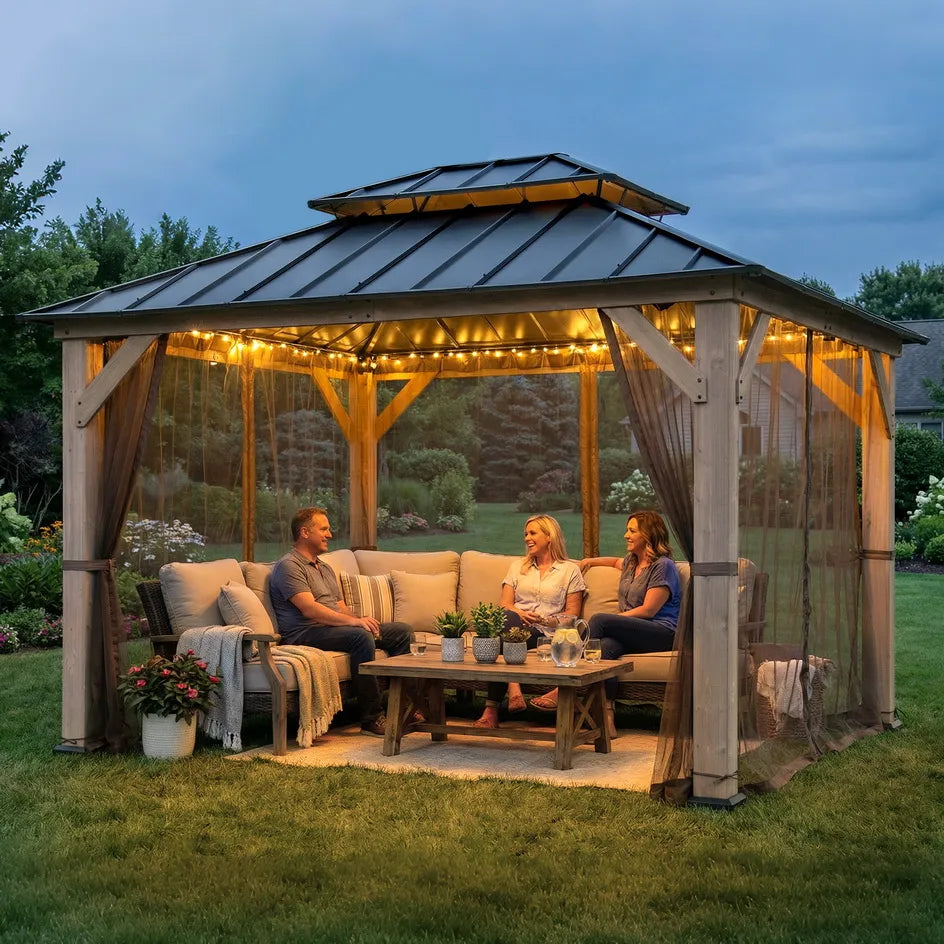

Creating a comfortable outdoor structure that can be used in every season starts with understanding how to properly upgrade a carport. Many homeowners exploring a enclosed carport want to extend its usability beyond basic shelter, especially for storage, hobbies, or relaxation. At SUNJOY, we often see that insulation is not just about temperature control, but also about improving durability, comfort, and overall usability throughout the year.
Understanding the Structure Before Insulation
Before adding insulation, we always recommend evaluating how your carport is built. An open-frame structure behaves differently from a enclosed carport, which typically includes side panels or walls that allow for better environmental control. Materials such as metal frames and roofing—commonly used in our designs—offer strength and stability, but they can transfer heat or cold if left untreated.
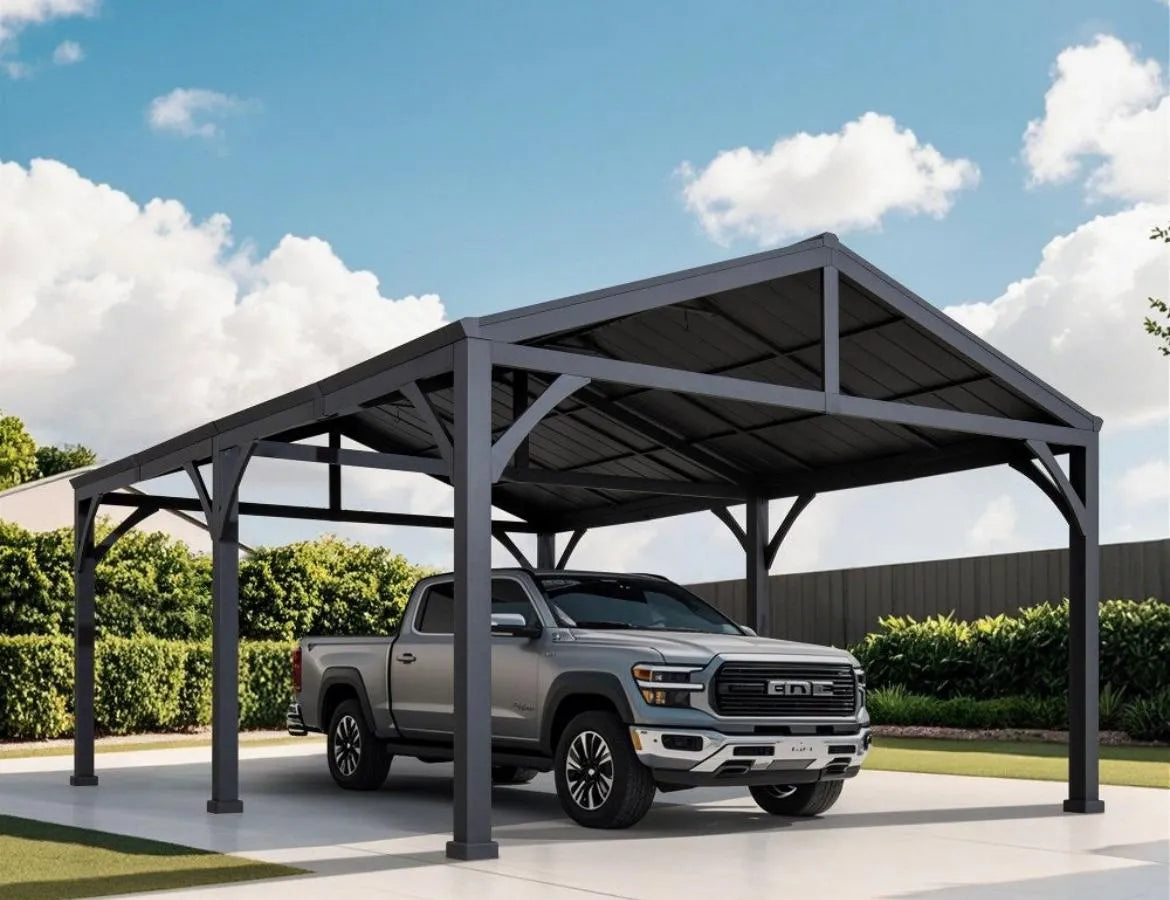
When we design outdoor structures, we focus on balance: solid construction combined with adaptability. For example, a gable-roof metal structure provides effective water runoff and structural support, which also makes it more suitable for insulation upgrades. Understanding these basics helps ensure that any insulation added later performs as expected without compromising airflow or moisture control.
Choosing the Right Insulation Materials
Selecting appropriate insulation materials is essential when upgrading a enclosed carport. Many homeowners consider rigid foam boards, fiberglass batts, or reflective insulation depending on their climate and usage needs. Each option works differently, and the choice often depends on whether the carport is used for parking, storage, or as a semi-outdoor living area.
We often guide users to think about moisture resistance and ease of installation. In metal-based structures, condensation can occur, so insulation layers should include vapor barriers where necessary. At the same time, maintaining ventilation is important to prevent trapped humidity. This balance allows the space to remain functional without overcomplicating the setup.
Installation Tips for Year-Round Comfort
Once materials are selected, proper installation determines how effective the enclosed carport will be. Insulating the roof is usually the first step, as it directly affects heat gain and loss. Wall panels can then be lined internally to create a more stable interior environment, while gaps and joints should be sealed carefully to reduce drafts.
In our experience, structures like a 12x20 metal carport with a reinforced roof design offer a practical base for these upgrades. The defined frame makes it easier to attach insulation panels and maintain structural integrity. Simple additions such as weather stripping, insulated doors, or partial wall enclosures can further improve usability without requiring major reconstruction.
Conclusion: Making Your Enclosed Carport Work All Year
A well-planned enclosed carport can become much more than a seasonal shelter. By understanding the structure, selecting suitable materials, and installing insulation carefully, a standard carport can be adapted for year-round use. At SUNJOY, we approach these improvements with a focus on practicality, helping homeowners create outdoor spaces that remain comfortable, functional, and aligned with everyday living needs.
Leave a comment
This site is protected by hCaptcha and the hCaptcha Privacy Policy and Terms of Service apply.