

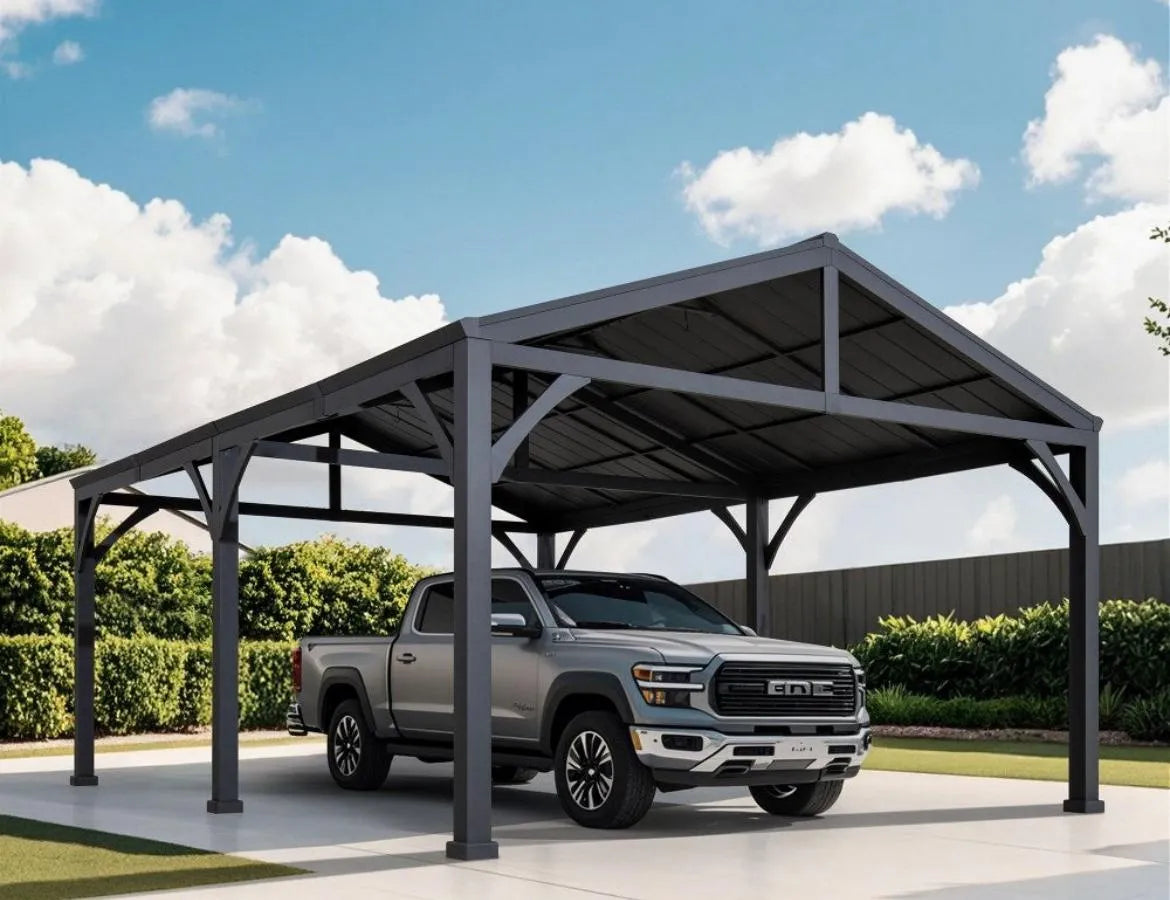
When we talk with homeowners about building a carport, especially an enclosed carport, the question about flooring usually comes up after structure and size are decided. It sounds like a small detail, but in daily use, the ground surface is what people interact with most. We’ve seen how different materials behave over time, and that experience shapes how we think about a practical carport setup.
How Real Use Changes What “best” Actually Means
In theory, many materials can work inside an enclosed carport, but real-life use tends to narrow the options. Vehicles bring weight, moisture, and repeated movement. Over time, softer surfaces can shift or settle, especially in areas with changing weather. That’s why we often see homeowners leaning toward concrete—it feels stable under pressure and doesn’t require frequent adjustment.
That said, not every carport needs a fully poured surface. Some homeowners prefer gravel because it allows water to drain naturally and can be easier to install. In an enclosed carport, this can still work if the structure above provides consistent coverage and reduces direct exposure to rain.
When Design and Daily Habits Come into Play
We also notice that flooring decisions are not only about strength. People think about how the space looks and how they use it beyond parking. An enclosed carport often becomes a flexible area—sometimes for storage, sometimes for small outdoor projects.
In these cases, materials like pavers come into the conversation. They offer a more defined look and can be adjusted if needed. From our side, we design structures that support this kind of flexibility. For example, steel-framed models with overhead hooks can help organize tools or seasonal items, making the carport feel like an extension of the backyard rather than a separate structure.
Thinking Long Term Instead of Quick Installation
One thing we always suggest is to think beyond the initial setup. An enclosed carport is not just about covering a vehicle—it’s about how the space will function over the years. Concrete tends to require less ongoing attention, while gravel may need occasional leveling. Pavers sit somewhere in between, offering both structure and adjustability.
The choice often comes down to how much time homeowners want to spend maintaining the space. A well-planned carport floor supports not just weight, but also everyday convenience. When the surface feels stable and easy to manage, the whole enclosed carport becomes more usable.
Conclusion
So, what is the best floor material for an enclosed carport? From what we’ve seen, it depends less on finding one “perfect” option and more on matching the material to real use. Concrete works well for stability, gravel offers flexibility, and pavers bring a balance of structure and appearance.
At SUNJOY, we focus on designing outdoor structures that work naturally with these different flooring choices. When the structure and ground surface support each other, a carport becomes a space people actually enjoy using, not just a place to park.
Leave a comment
This site is protected by hCaptcha and the hCaptcha Privacy Policy and Terms of Service apply.