

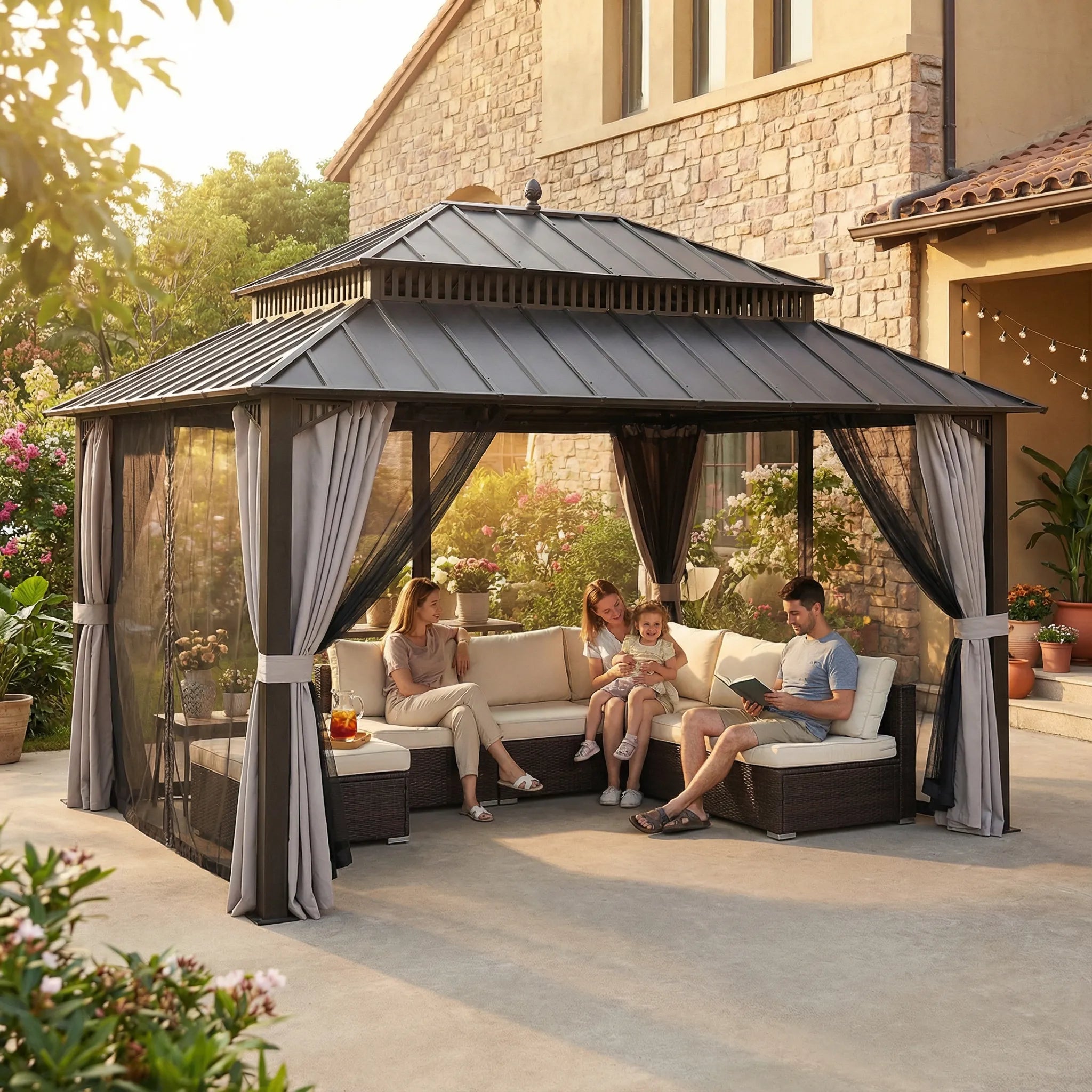
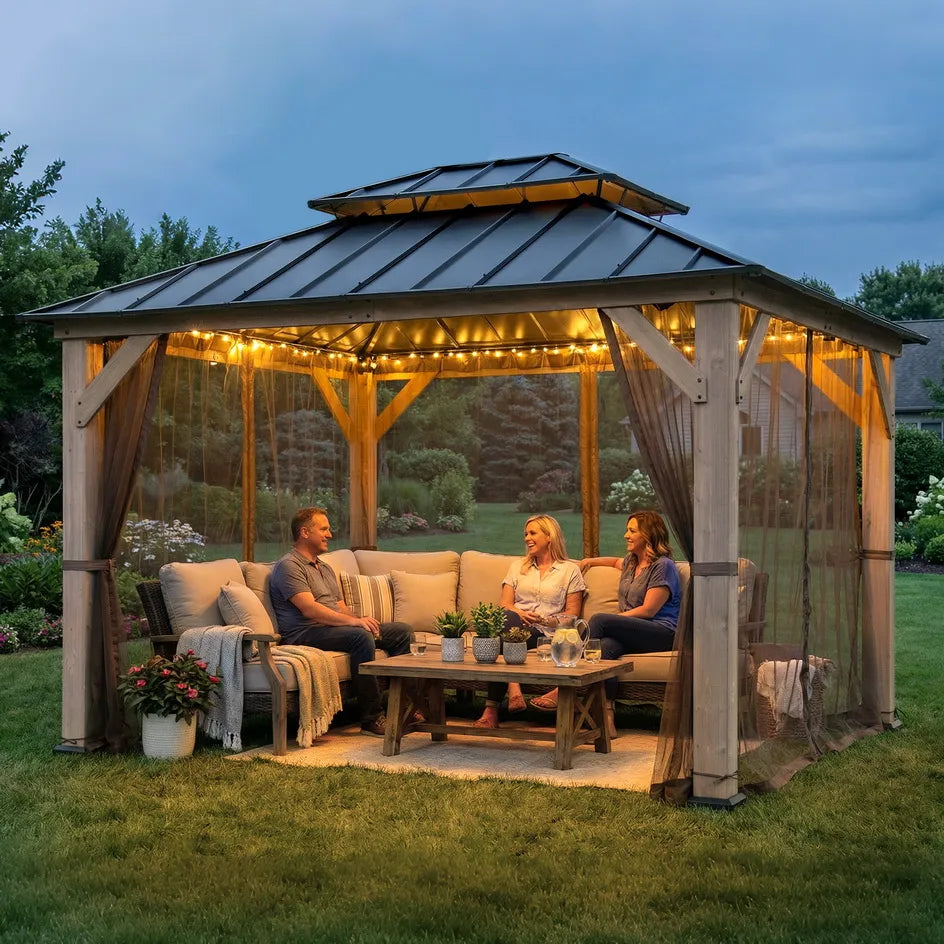
Outdoor furniture lasts longer when shelter, placement, covers, drainage, and routine care work as one system. Outdoor Structures may provide the overhead layer, yet side exposure and low-angle sun still influence the result. The plan therefore starts with the furniture dimensions, roof overhang, sun direction, storm approach, and floor drainage.
And storage route and the goal of reducing direct exposure around furniture while preserving airflow, access, and realistic maintenance. Looks alone do not address the risk of assuming a roof eliminates wind-driven rain, low-angle sun, humidity, or the need to store cushions. The useful evidence comes from the furniture spatial limits and roof overhang.
Sun direction, storm approach, floor drainage, and storage route, observed at the times and in the weather when the area is actually used. With that evidence, we can shape an arrangement in which tables and seating remain within useful cover with space to move pieces away from exposed edges, giving the plan a practical outcome, not merely a decorative one.
Measure Exposure Around the Entire Furniture Set
Within SUNJOY, furniture protection is considered across the whole exposure pattern. Products from gazebos, pergolas, carports, sheds, heating, cooling, lighting, furniture, and garden accessories for varied outdoor routines can provide useful cover, yet the decision still depends on use and site dimensions.
Weather, foundation, access, furniture, and the level of installation commitment. We use that evidence to combine shelter with practical placement, storage, and care. The footprint of an outdoor-furniture protection plan is only one part of the proposal. We additionally note overhead reach.
Access between the home and vehicle route, floor or ground conditions, water movement, furniture clearance, and maintenance space. These details prevent a protection strategy that combines shelter, placement, covers, and routine care from being undermined by a fit problem that could have been seen on paper.
Our written site brief brings the furniture dimensions, roof overhang, sun direction, storm approach, floor drainage, and storage route into the same decision, giving installers and household members a shared picture of the intended result. As we reconsider technical details, a closer product reading should cover intended use.
A thorough product assessment should address intended use, overall footprint, materials, foundation, access, drainage, furniture clearance, installation complexity, and local climatic conditions. Our outdoor product portfolio includes both permanent and portable solutions for shade, storage, weather shielding, and outdoor entertaining. Rather than relying on a single key specification as a definitive solution, we cross-reference these parameters against site exposure and expected operational workload.
Circulation within the outdoor furniture protection scheme merits equal consideration to the covered footprint itself. We first chart hightraffic pathways, then situate furniture, equipment, control hardware and storage peripherally to these routes. When tables and seating sit within adequate shelter, with room to shift furnishings clear of exposed perimeters, the design extends furniture service life, simplifies cleaning, and enables reliable everyday outdoor use — all while eliminating cumbersome detours and impeded maintenance access.
Choose Coverage That Supports Daily Care
As we reconsider configuration choices, we narrow the available choices by asking how long the shelter stays in place, how it reaches the location, what supports or anchors it, and how it will be cleaned or stored. When we test configuration choices, those questions reveal the real differences between models and point toward a protection strategy that combines shelter.
Placement, covers, and routine care matter more reliably than a single stated dimension. Installation or setup for an outdoor-furniture protection plan should feel uneventful because the preparation has already done the difficult work. We review the manual, count hardware, protect the work area, and arrange help.
And verify the surface, power, anchors, and forecast. Any unresolved requirement is addressed before components are lifted, unfolded, or connected. Our guidance continues after purchase. For an outdoor furniture protection plan, care must follow the material, roof, fabric, hardware, and exposure of that individual product.
We schedule inspections around actual exposure and use, paying special attention after severe weather, storage, transport, heavy operation, or any change in appearance, alignment, sound, airflow, drainage, or stability. Every format discussed under the outdoor-furniture protection plan has operating limits.
Our position is reflected in this category principle: we design outdoor products around useful gathering, dining, lounge, and retreat spaces. We therefore monitor structural condition, anchoring, drainage, roof or fabric condition, surface movement, and the weather limits of the chosen format.
Protect the Routine as Well as the Furniture
At SUNJOY, the value of an outdoor-furniture protection plan extends beyond the proposed product itself. We record delivery, site preparation, foundation or anchors, assembly help, accessories, power where relevant, cleaning, storage, replacement parts, and the expected frequency of use.
A lower initial figure represents value only when the complete arrangement can still deliver a protection strategy that combines shelter, placement, covers, and routine care. We test the carport against sun, wind-driven rain, furniture dimensions, drainage, and the storage route for cushions.
A useful structure improves the complete protection routine; it is not expected to eliminate every form of outdoor exposure. We judge an outdoor furniture protection plan by what it makes possible over repeated use. A sound recommendation supports longer furniture service, easier cleaning, and more consistent outdoor use.
Respects the conditions of the property and leaves ownership tasks within a reasonable routine. Furniture protection is strongest when overhead cover, sensible placement, covers, storage, and maintenance reinforce one another. That layered approach extends useful service while keeping the patio flexible through changing sun and weather.
Leave a comment
This site is protected by hCaptcha and the hCaptcha Privacy Policy and Terms of Service apply.