
Outdoor structures must balance strength, weather resistance, maintenance, and everyday usability. When we compare aluminum and steel hardtops, we find that the better choice depends less on a simple “stronger material” label and more on how each material performs within the complete structure. At SUNJOY, we use this principle to develop outdoor living environments where the frame, roof, ventilation, anchoring, and accessories work together. Understanding these differences helps homeowners choose hardtop gazebos with realistic expectations.
Why Material Choice Matters in a Hardtop Gazebo
A gazebo roof and frame perform different structural jobs. The roof must resist environmental exposure and carry its own weight plus applicable weather loads, while the frame transfers those forces to the ground. Material selection should therefore be considered alongside geometry, connections, coatings, and anchoring.
Steel is valued for structural strength and stiffness, making it useful where substantial load resistance is needed. Aluminum offers a high strength-to-weight ratio and strong corrosion resistance. The Aluminum Association identifies lightweight strength, durability, and corrosion resistance as important advantages of aluminum in construction. For outdoor structures, these properties can help reduce structural weight while providing corrosion resistance for exposed applications.
Aluminum Frames: Lightweight and Corrosion-Resistant
One major advantage of aluminum is its relatively low weight. A lighter frame can make handling and assembly more manageable, particularly for ready-to-assemble outdoor structures. Aluminum also naturally forms a protective oxide layer, contributing to its corrosion resistance. This matters when a gazebo remains exposed to rain, humidity, and seasonal conditions.
However, aluminum should not be treated as automatically stronger than steel. Its performance depends on alloy, section design, connections, and engineering. For a gazebo, reinforced posts, braces, and connection points can be just as important as the base material. We therefore evaluate the complete frame rather than judging durability from material type alone.
Steel Hardtops: Strength Where the Roof Needs It
Steel can provide an excellent solution for hardtop roofing because it combines rigidity with substantial load-bearing capability. The key issue outdoors is corrosion protection. The American Institute of Steel Construction notes that exposed steel requires appropriate corrosion protection, with the protection system selected according to environmental exposure and service requirements.
A powder-coated or galvanized steel roof can therefore combine structural performance with a protective surface. Roof shape also matters. A pitched or ventilated design can help manage rain, snow, heat, and airflow. For this reason, comparing an “aluminum roof” and a “steel roof” in isolation can be misleading: the roof profile, coating, connections, and intended climate all affect practical performance.
Why a Hybrid Aluminum-and-Steel Design Can Make Sense
Rather than forcing every component to use one metal, we can assign materials according to their strengths. An aluminum frame can provide a lightweight, corrosion-resistant support structure, while a steel roof can deliver a rigid hardtop surface. This hybrid approach is especially practical for outdoor structures needing manageable installation and dependable overhead protection.
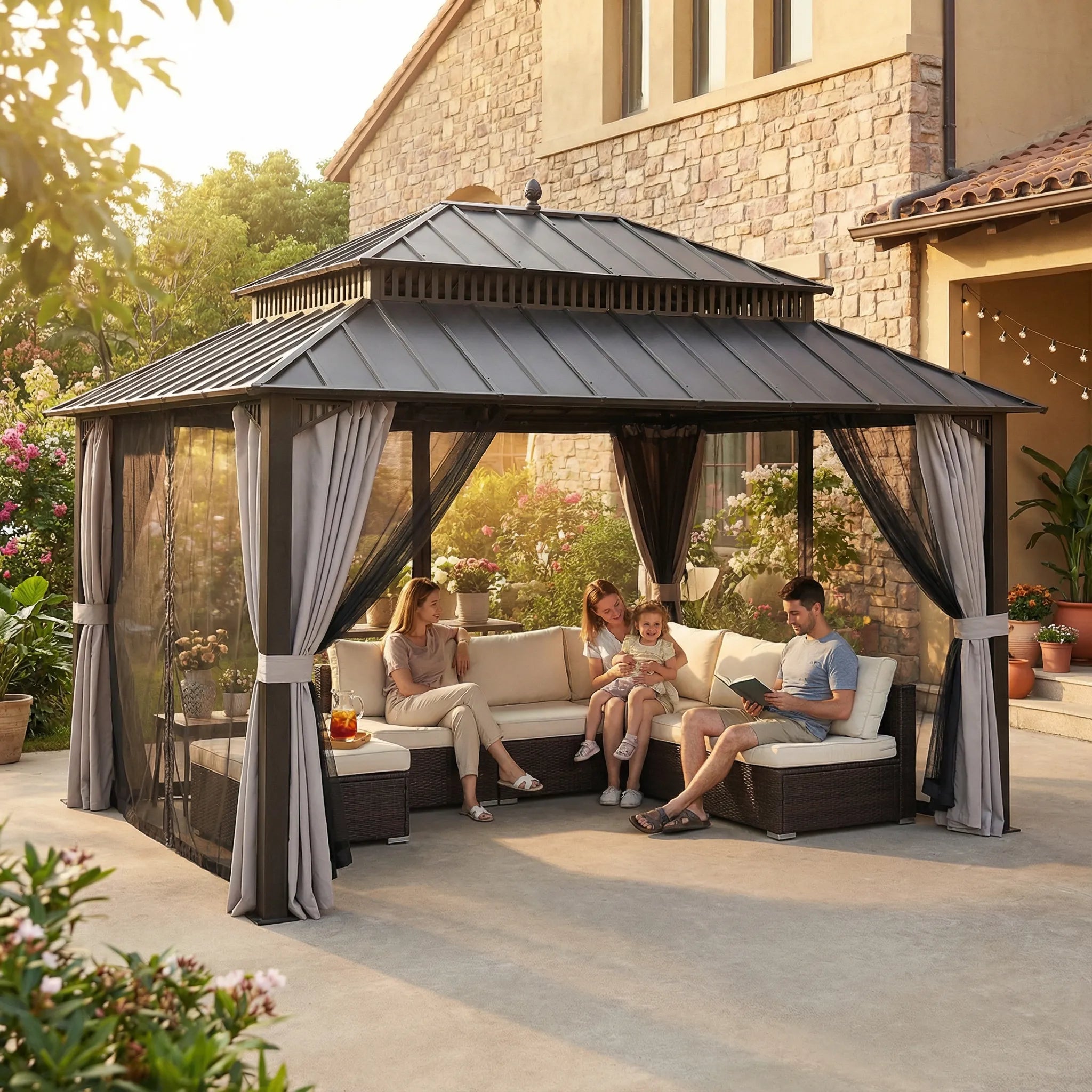
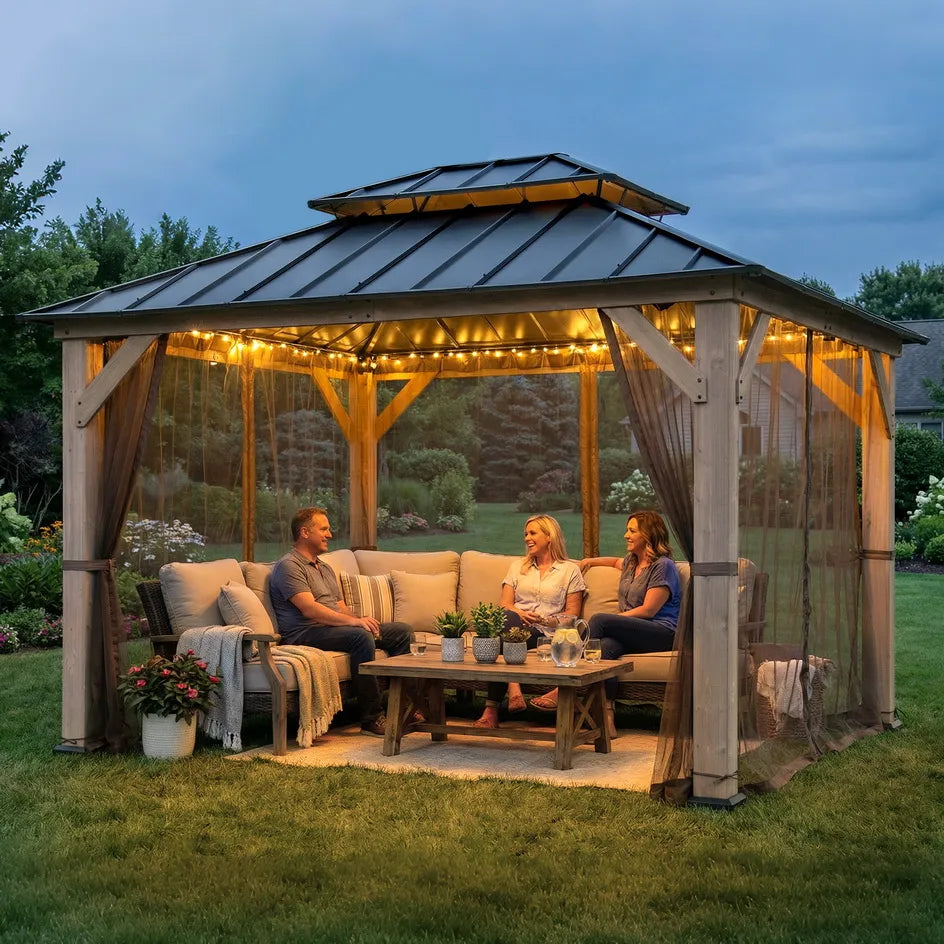
Our SUNJOY 11x13 Metal Gazebo with Aluminum Frame and Privacy Netting illustrates this approach. The product uses a rust-resistant aluminum frame and a powder-coated steel roof, with a ventilated two-tier top designed to promote airflow while providing protection from sun and weather. Its reinforced triangular frame, dual rail system, and anchoring plates are part of the overall structural solution rather than standalone features.
Comparing Hardtop Gazebos by Real-World Priorities
When selecting hardtop gazebos, we recommend evaluating five practical factors. First is weather exposure: coastal air, high humidity, snow, and frequent rainfall can change corrosion and maintenance requirements. Second is expected loading, because roof capacity must match local conditions. Third is assembly and handling, where frame weight can influence installation effort.
Fourth is maintenance. Aluminum’s corrosion resistance can be attractive for exposed frames, while steel components depend more heavily on appropriate protective finishes. Finally, consider the structure as a system. Connections, roof geometry, anchoring, drainage, ventilation, and surface finishes can influence performance just as much as the material itself.
Our 11x13 model has an 11 x 13 ft roof, an overall size of 12.6 x 10.6 x 10.1 ft, and a listed product weight of 350.53 lb. SUNJOY specifies a 50 MPH wind rating and a 3,400 lb snow load capacity for the entire roof. These figures are product specifications, not universal ratings for every gazebo or installation environment.
Choosing the Right Hard Roof Gazebo
The best hard roof gazebo is not necessarily the one made from the heaviest material. Instead, we should match the material system to the intended use, local weather, installation surface, maintenance expectations, and required load performance. Aluminum is compelling for lightweight, corrosion-resistant framing, while steel can be advantageous for rigid roof construction when properly protected.
We also need to avoid assuming that a coating eliminates every maintenance concern. AISC emphasizes that corrosion protection depends on the exposure environment and proper application, while details that trap water or contaminants can create problems. Good gazebo design therefore combines suitable materials with sound connections, drainage, protective finishes, and appropriate anchoring.
Building Outdoor Spaces with the Right Structural Balance
Material selection becomes more useful when we stop asking whether aluminum or steel is universally better and start asking where each material performs best. For many outdoor living applications, combining a corrosion-resistant aluminum frame with a durable steel hardtop creates a practical balance of weight, rigidity, weather protection, and maintenance considerations. SUNJOY follows this system-oriented approach to create outdoor spaces designed for comfortable, dependable use.
Leave a comment
This site is protected by hCaptcha and the hCaptcha Privacy Policy and Terms of Service apply.