

Outdoor structures face a difficult combination of moisture, insects, sunlight, and changing temperatures. When we choose materials for a wood Gazebo, we therefore need more than appearance; we need a material that can handle outdoor exposure with appropriate care. At SUNJOY, we use cedar framing in selected outdoor structures because cedar has natural properties that help it resist decay and make it well suited to exterior applications.
Why Cedar Naturally Resists Decay
Cedar’s reputation for durability comes largely from compounds naturally present in its heartwood. Research from the USDA Forest Service identifies thujaplicins and related extractives as important contributors to western redcedar’s natural durability. These compounds have antifungal properties and help slow the biological processes associated with fungal decay. This natural chemistry is one reason cedar is frequently considered for exposed, above-ground construction where moisture and biological deterioration are ongoing concerns.
That distinction matters because wood decay is strongly connected to fungi. When wood stays damp for extended periods, fungi can colonize it and gradually break down its structure. Cedar’s natural extractives do not make the material immune to decay, but they can give it a useful advantage over less naturally durable woods in suitable outdoor applications.
Moisture Management Still Matters
Natural resistance should not be confused with maintenance-free performance. Even durable wood can deteriorate when exposure conditions are unfavorable for long periods. The USDA Forest Service describes western redcedar as naturally durable, but environmental exposure and moisture conditions still affect how wood performs outdoors.
For us, this is why a cedar structure should be designed and maintained as an outdoor system rather than treated as a material that needs no attention. Good roof coverage, drainage, ventilation, and routine surface care all help reduce prolonged moisture exposure. Regularly treating the wooden frame with an outdoor wood oil, as recommended for the product, can help maintain the wood's exterior surface.
How Cedar Helps Against Pests
Cedar is also valued because its natural aromatic extractives can make it less attractive to some insects. However, we should be precise: cedar is not universally pest-proof. The USDA Forest Service reports that western redcedar generally suffers relatively little insect damage, but it can still host or be attacked by several insect species.
This nuance is important when evaluating an outdoor structure. We see cedar’s pest-related benefits as one part of a broader material strategy, not as a substitute for inspection or maintenance. Keeping the structure dry, checking joints and exposed areas, and addressing signs of insect activity early remain sensible practices for long-term outdoor use.
Why Cedar Works Well in a Wood Gazebo
A gazebo combines structural, aesthetic, and environmental demands. We want the frame to look natural while remaining suitable for exposure to weather. Cedar’s decay resistance and workability have helped make it a longstanding choice for exterior building applications, including siding, shingles, posts, and other outdoor uses.
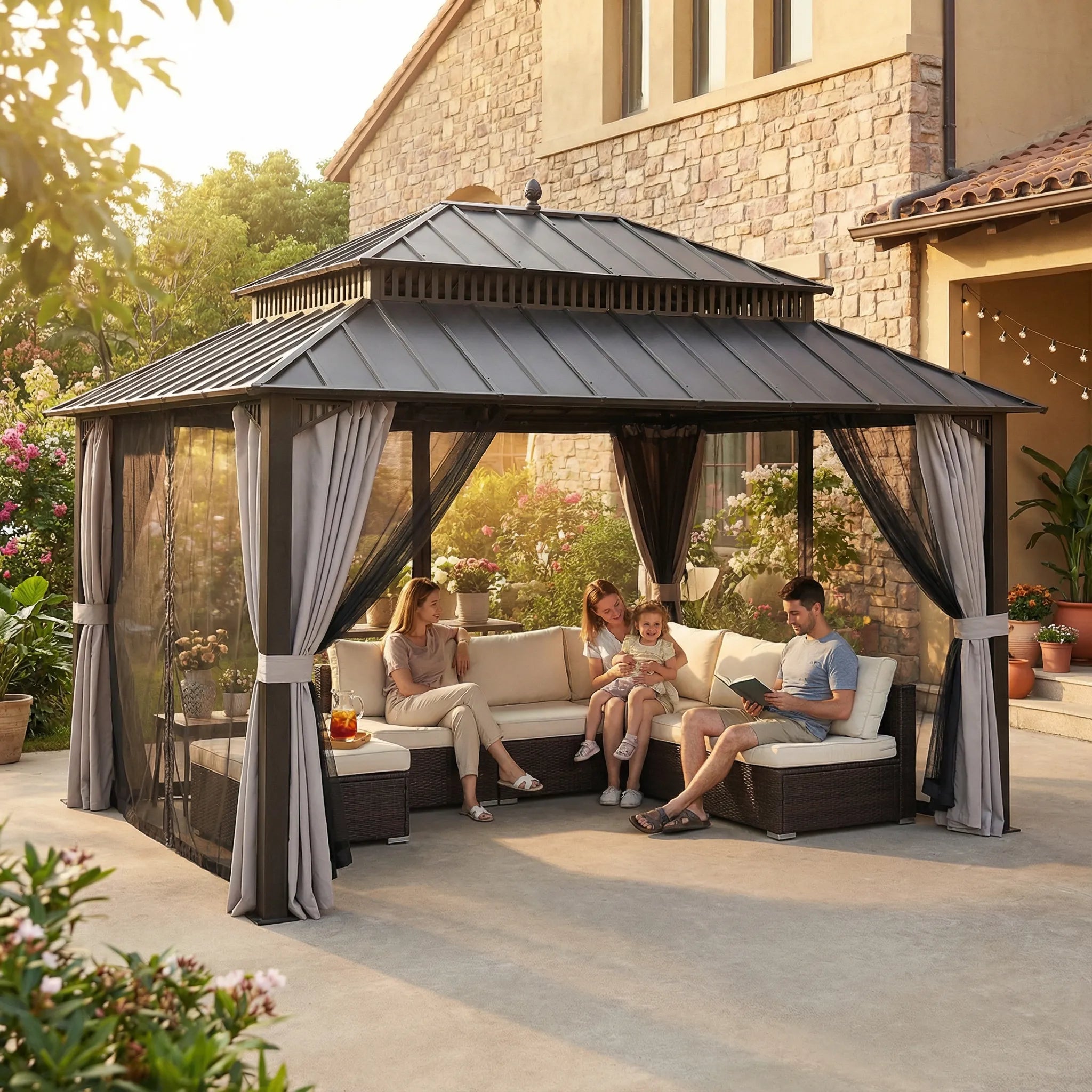
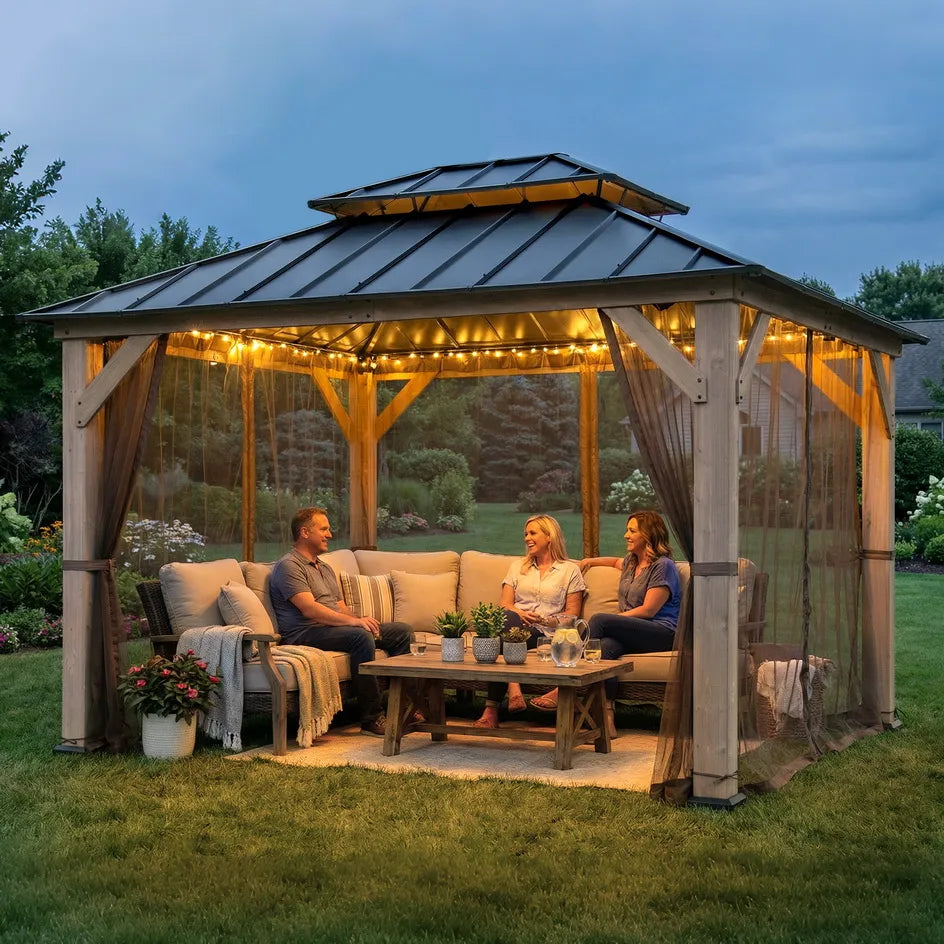
Our Hampton Double-Roof Cedar Gazebo, 12x16, applies this material choice to a complete outdoor living structure. The product uses a cedar wood frame with a powder-coated steel roof, combining the natural character of wood with a roof material designed for outdoor protection. Its two-tier roof is also designed to promote airflow while providing overhead coverage from rain.
Looking Closely at Our Cedar Structure
When we evaluate a cedar structure, we consider how the material works together with the overall design. Our Hampton model has overall dimensions of 15.8 ft. L × 11.8 ft. W × 10.2 ft. H, with a 16 ft. L × 12 ft. W roof and 14 ft. L × 10.1 ft. W interior post-to-post dimensions. Its posts measure 4.56 in. × 4.56 in.
The structure withstands winds up to 50 mph and supports snow loads of 3,500 lb. It also includes built-in utility ceiling hooks for compatible lighting or outdoor fans. These specifications help us evaluate the gazebo as a complete outdoor environment rather than judging cedar performance in isolation.
Maintenance Protects Cedar’s Natural Advantages
Even naturally durable wood benefits from practical care. We recommend treating the wooden frame regularly with outdoor wood oil for weather protection. Routine cleaning and visual inspections can also help us identify areas where dirt, standing moisture, surface wear, or hardware issues may need attention.
We also need to remember that local climate and installation conditions influence performance. A structure exposed to frequent rain, high humidity, or poor drainage may require more attentive maintenance than one in a relatively dry environment. Cedar’s natural properties give us a strong starting point, while proper upkeep helps preserve that advantage.
Making Cedar a Practical Outdoor Choice
Cedar’s resistance to decay comes from naturally occurring extractives, while its relationship with insects can provide another practical benefit. Neither property means cedar cannot deteriorate or be attacked, but both help explain why cedar remains relevant for exterior applications.
For us, material selection works best when natural durability is combined with thoughtful design and maintenance. SUNJOY’s Hampton Double-Roof Cedar Gazebo, 12x16, applies these material and maintenance considerations to a complete outdoor living structure. By understanding what cedar can—and cannot—do naturally, we can make more informed decisions about durable, comfortable outdoor living spaces.
Leave a comment
This site is protected by hCaptcha and the hCaptcha Privacy Policy and Terms of Service apply.