

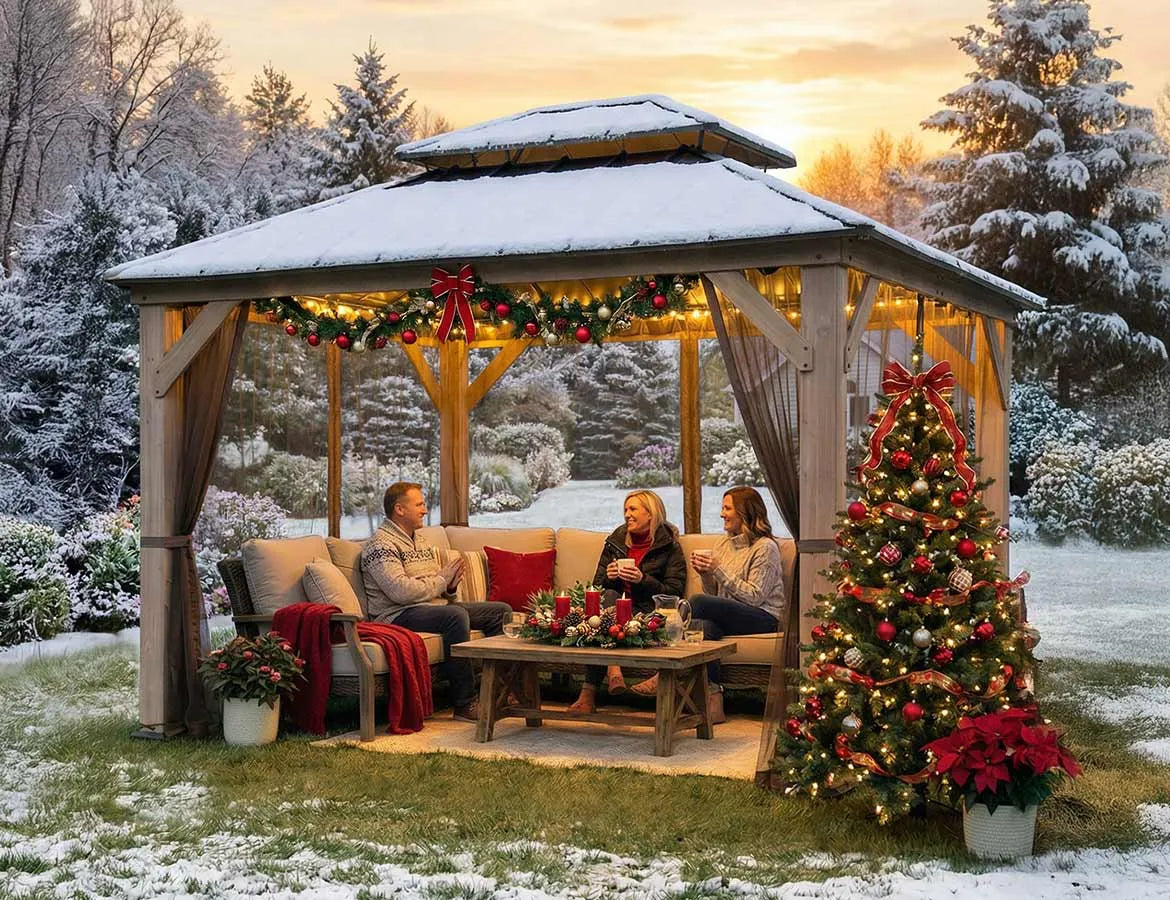
How the Right Structure Turns a Backyard into a Year-Round Living Space
Outdoor living in the United States has always followed an unofficial rule: enjoy it while it lasts. Spring feels brief, summer intense, fall short-lived, and winter largely off-limits. Yet this pattern isn’t dictated by the weather alone—it’s shaped by how our outdoor spaces are built.
A gazebo quietly changes that equation. Not by forcing year-round use, but by softening seasonal limits. It blocks wind without sealing you in, filters sunlight without cutting off fresh air, and provides just enough protection to make “almost comfortable” days fully enjoyable. Over time, homeowners begin to notice something subtle: they’re outside more often, for longer stretches, and across more months of the year.
Extending the outdoor season isn’t about defeating nature. It’s about working with it—and a well-designed gazebo is one of the most effective tools for doing exactly that.
Spring Begins Earlier When the Space Feels Sheltered
Early spring is defined less by temperature and more by unpredictability. A sunny afternoon can turn cold the moment clouds roll in. Wind sneaks between patio furniture. Light rain ends plans prematurely.
Under a gazebo, those early spring days feel different.
The overhead roof absorbs the instability of spring weather, while side netting or curtains interrupt chilly crosswinds. You’re not exposed to every shift in temperature, which means your body relaxes instead of bracing. A coffee break becomes an hour. A short call outdoors turns into a work session.
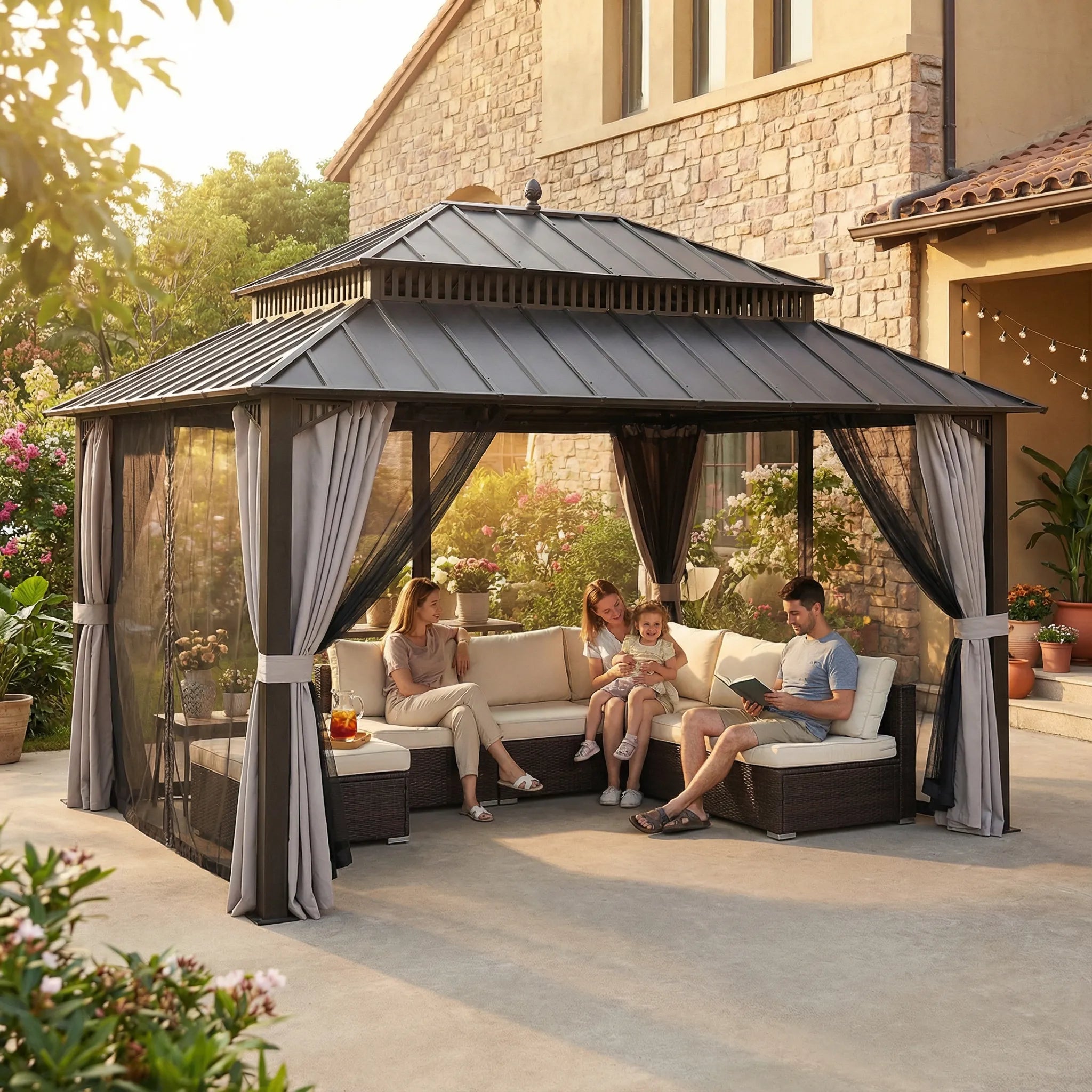
This is where all-season metal gazebos quietly shine. For example, structures like the SUNJOY 11x13 All-Season Metal Gazebo with Aluminum Frame and Privacy Netting are designed specifically for transitional weather. The rigid metal roof offers consistent coverage, while privacy netting reduces wind exposure without sealing airflow—ideal for spring days when warmth fluctuates but fresh air still matters.
Spring doesn’t arrive earlier on the calendar, but it arrives earlier in how you live.
Summer Comfort Isn’t Just About Shade—It’s About Control
Summer outdoor living often swings between two extremes: too much sun or too many bugs. Shade alone doesn’t solve either problem completely.
A gazebo adds layers of control.
The roof blocks harsh UV rays, making midday use realistic. Ventilation openings release heat that would otherwise trap under solid surfaces. Netting keeps insects out during dinner hours, while curtains soften glare during late afternoons.
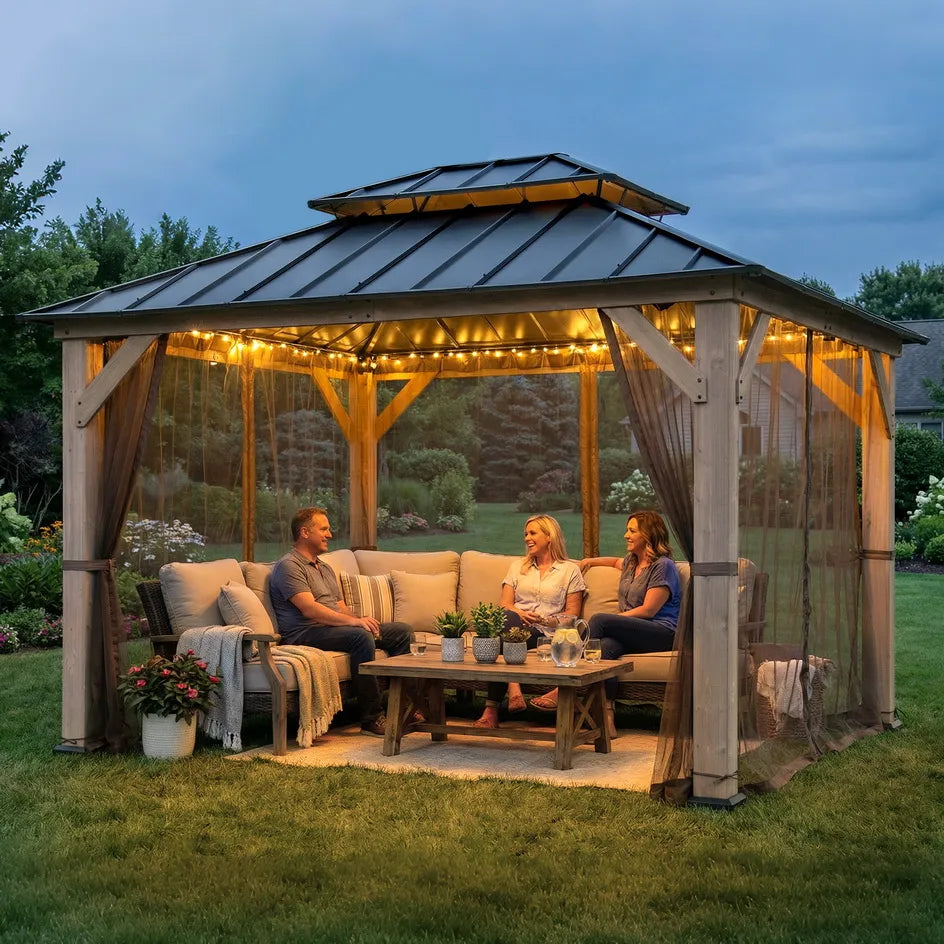
Wood gazebos play a unique role here—not because they’re stronger than metal, but because they change how heat and light are perceived. A structure like the SUNJOY 11x13 Wooden Gazebo with Solar Panel, LED Lights and Ceiling Hook introduces a warmer, more breathable visual environment. During summer evenings, integrated solar-powered LED lights naturally extend use past sunset without harsh brightness or cords running across the yard.
Summer under a gazebo isn’t about escaping heat—it’s about managing it, so outdoor time feels effortless instead of exhausting.
Why Ventilation Design Determines How Long You Stay Outside
One of the most overlooked reasons gazebos extend outdoor seasons is roof geometry.
Heat doesn’t just dissipate on its own—it needs a path. Well-designed vented roofs allow warm air to rise and escape, reducing pressure buildup during summer and preventing stagnant air during shoulder seasons.
This is where advanced roof designs make a tangible difference. The SUNJOY Kingston 12x14 Gazebo with Netting & Curtain, featuring a steel roof with an extra-tall, oversized vent top, demonstrates how ventilation isn’t just a summer feature—it’s a year-round comfort mechanism. During warm months, excess heat exits upward. In cooler seasons, the vent reduces wind pressure without turning the space into a draft tunnel.
Combined with curtains and netting, this kind of roof creates a controlled microclimate—cooler in summer, calmer in fall, and far more predictable across changing conditions.
Fall Is Where Gazebos Prove Their True Value
Fall is the season most homeowners unintentionally surrender. Evenings cool faster than expected. Wind cuts through open patios. Darkness arrives early.
A gazebo turns fall into a highlight instead of a farewell.
Curtains block low-angle breezes. Warm-toned lighting softens dusk. The roof traps just enough warmth to make sitting outside comfortable long after sunset. A blanket feels intentional, not necessary.
Hybrid gazebos excel here. A model like the SUNJOY 10x12 Cedar Wood Gazebo with Galvanized Steel Roof, LED String Lights & Mosquito Netting blends the psychological warmth of wood with the structural reliability of a galvanized steel roof. The built-in string lights naturally encourage longer evenings, while mosquito netting keeps late-season insects from ending gatherings early.
Fall becomes slower, calmer, and far more usable—often becoming the most enjoyed outdoor season of the year.
Evening Lighting: The Invisible Season Extender
Many outdoor spaces fail not because of temperature, but because of darkness. When visibility drops, people instinctively retreat indoors—even if the air is still pleasant.
Gazebos reverse that habit.
Lighting transforms the structure into a visual anchor. Soft overhead glow creates intimacy. String lights trace the roofline, making the space feel enclosed even without walls. A ceiling hook allows flexible placement of pendants or lanterns that adapt to different seasons.
Once lighting is introduced, the outdoor “day” stretches well into the night. Conversations don’t end when the sun sets. Meals linger. Quiet moments expand.
Lighting doesn’t fight the seasons—it redefines when the day feels finished.
Winter Use Isn’t About Comfort—It’s About Shelter
While winter lounging isn’t practical everywhere in the U.S., gazebos still play a valuable seasonal role.
They protect grills from snow, shelter hot tubs from falling ice, and provide covered walkways during storms. Some homeowners use gazebos as winter viewing shelters—watching snowfall, decorating for holidays, or enjoying fire features with proper ventilation.
The key is structural reliability. Roof pitch, material strength, and anchoring determine whether a gazebo remains an asset or a liability in winter. Gazebos designed with metal or steel roofs maintain their integrity when conditions shift.
Even when you’re not sitting outside, the gazebo continues working—protecting, organizing, and shaping your backyard year-round.
Why People Spend More Time Outside Once a Gazebo Is Added
Over time, gazebo owners notice behavioral changes:
Outdoor time becomes routine, not occasional
Evening use increases naturally
Backyard gatherings feel easier to host
Seasonal transitions feel less abrupt
The backyard feels like part of the home, not separate from it
The gazebo doesn’t just extend the outdoor season—it reshapes habits.
Extending the Season Is About Design, Not Endurance
Using a gazebo to extend outdoor living isn’t about tolerating discomfort longer. It’s about designing a space that adapts as conditions change.
The right roof reduces unpredictability.
Ventilation manages heat.
Curtains and netting control exposure.
Lighting stretches the day.
Materials influence how warmth and shelter are perceived.
Together, these elements allow outdoor living to flow naturally from early spring into late fall—and sometimes beyond.
A gazebo doesn’t ask you to endure the seasons.
It allows you to experience them more fully
Leave a comment
All comments are moderated before being published.
This site is protected by hCaptcha and the hCaptcha Privacy Policy and Terms of Service apply.